



Georgian Style Walnut Console
A georgian style walnut console brings warmth and refined proportion to a hallway or drawing room.
Georgian Style Walnut Console
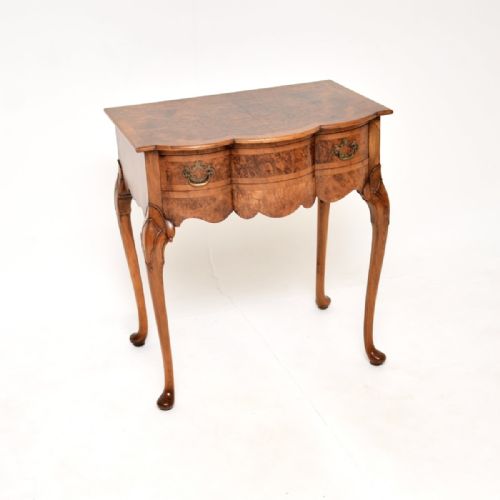
When you search for a georgian style walnut console, you encounter pieces designed to stand against a wall, often taking the form of console tables, side tables, lowboys, or serving tables. These objects derive their aesthetic from the eighteenth century, drawing on George II and Queen Anne designs that prioritise clean lines and rich timber surfaces.
The selection ranges from early examples dating to the eighteenth century through to revival pieces produced during the Edwardian era and the interwar decades of the twentieth century. While eighteenth-century originals exist, the majority of pieces available combine historical styling with the craftsmanship of later revival periods.
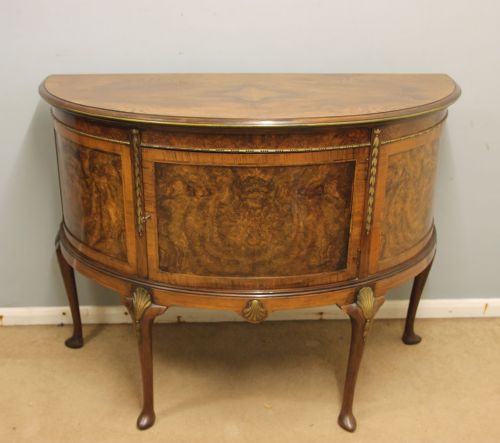
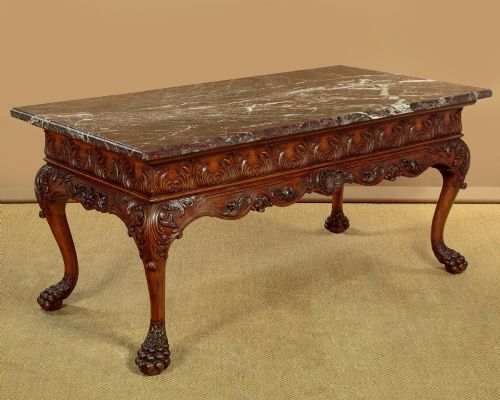
Makers produced these forms in various configurations, including fold-over card and games tables, demi-lune side cabinets, and sophisticated tables featuring marble tops. This variety allows a buyer to find a piece suited to specific domestic functions, whether as a lamp table, a server, or a decorative console.
Distinctions in Quality
Quality rests in the selection of the timber veneer and the precision of cabinetmaking techniques. Pieces featuring highly figured burr walnut, intricate crossbanding, and deliberate attention to grain matching occupy the upper tier of craftsmanship.
Proportion and decorative restraint also separate standard production from superior examples. Finely carved details, substantial marble slabs, and balanced proportions reflect a higher standard of design execution, whether the piece originates in the eighteenth century or during a subsequent revival.
The listings span from the eighteenth century through to nineteen-thirty, encompassing Edwardian and interwar revival periods alongside original pieces.
Maple and Co
The Georgian Style Walnut Console Glossary
- Burr walnut
- Timber taken from a growth on a walnut tree, yielding highly decorative, swirling grain patterns. Cabinetmakers sliced this wood into veneers for table tops and cabinet fronts.
- Lowboy
- A small table with drawers, resembling the lower section of a tallboy, typically used as a side table or dressing table. These pieces often feature cabriole legs.
- Crossbanding
- A strip of veneer applied around the border of a table top, laid so the grain runs at right angles to the central panel. This technique frames the primary timber surface.
- Demi-lune
- A half-moon shape characteristic of certain side tables and cabinets designed to sit flush against a wall. Such tables often feature folding tops for dual use as card tables.
- Fold-over games table
- A table with a hinged top that opens to double the surface area, frequently lined with baize for card playing. These tables date extensively from the eighteenth century and subsequent revivals.
Georgian Style Walnut Console: Frequently Asked Questions
What is a georgian style walnut console used for?
These pieces function primarily as decorative and practical surfaces in entrance halls, living rooms, and dining spaces. Historically, they served as serving tables or display surfaces for decorative objects.
Many variations include fold-over tops designed specifically for card and board games, offering versatile use in a modern interior.
How do I identify an eighteenth-century original?
Authenticating an eighteenth-century piece requires examining the construction methods, timber ageing, and secondary woods used in the drawer linings. Originals often display hand-cut dovetails and timber characteristics consistent with eighteenth-century workshop practices.
Revival pieces from the Edwardian era or the nineteen-twenties frequently imitate these stylistic markers but utilise machinery and assembly techniques characteristic of their actual manufacturing date.
Where should I place a console table?
A console table sits best against a flat wall in a hallway, landing, or living room, where it provides a surface for lamps, mirrors, or small objects. Narrower versions fit easily into restricted spaces without impeding movement.
Pairing a console with a matching mirror or placing it beneath a framed artwork creates a balanced focal point in a room.