
Queen Anne Style Side Table
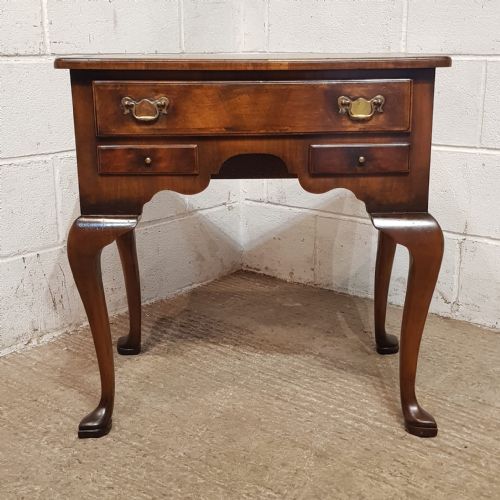
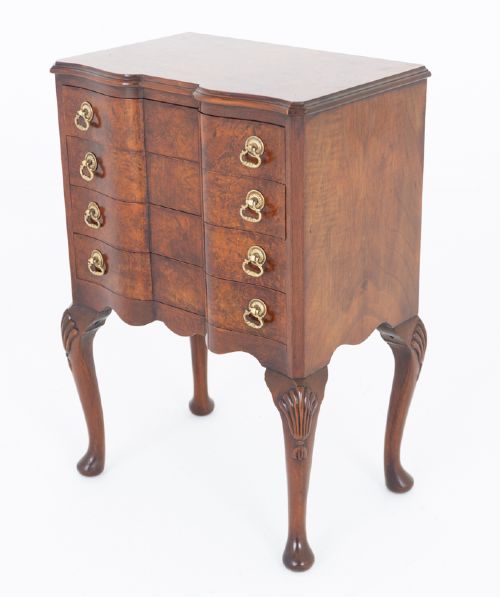
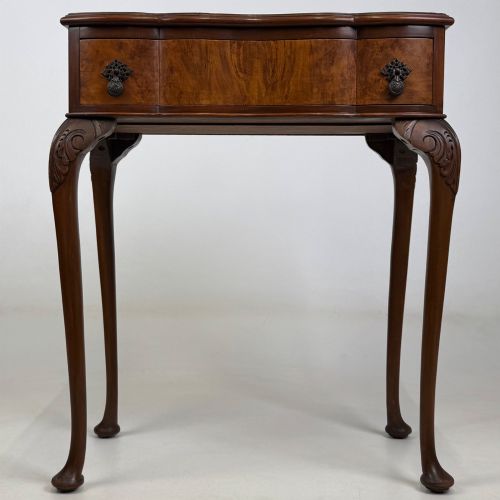
A queen anne style side table brings graceful cabriole legs and rich walnut grain to an interior.
Queen Anne Style Side Table
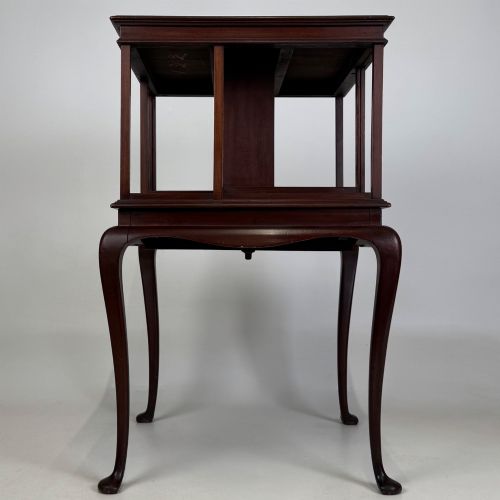
A queen anne style side table reflects a design vocabulary originating in the early eighteenth century but most commonly encountered in twentieth century revivals. When searching for a queen anne style side table, buyers frequently find early twentieth century pieces, particularly from the 1920s and Edwardian eras, alongside pieces spanning the nineteenth century to the 1930s.
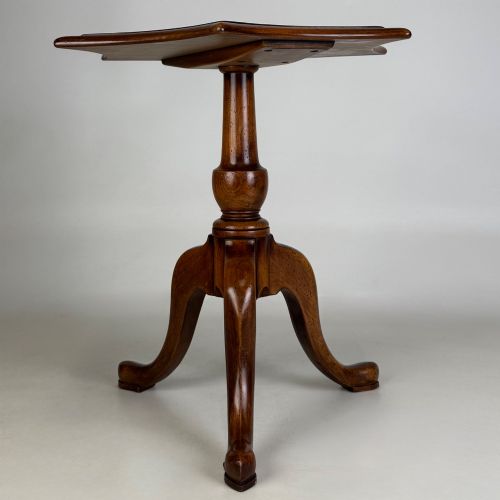
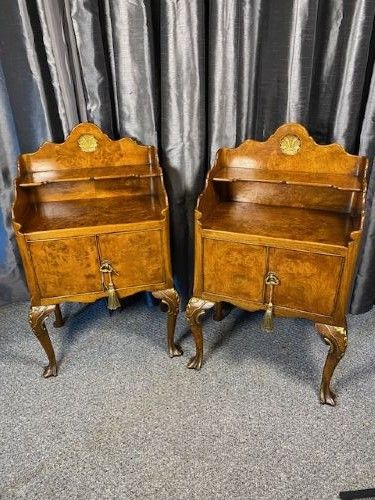
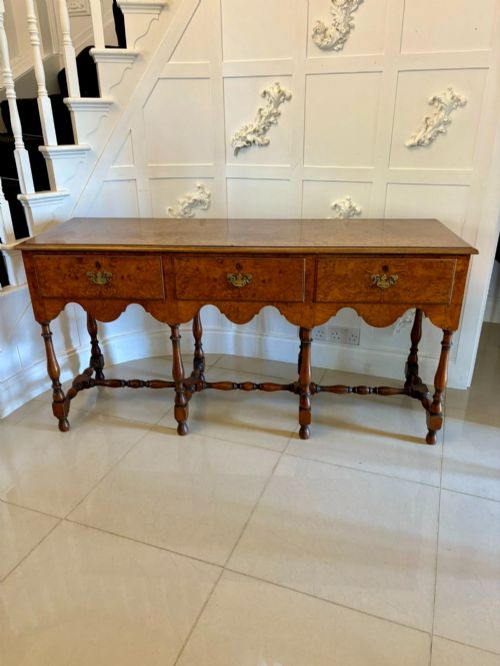
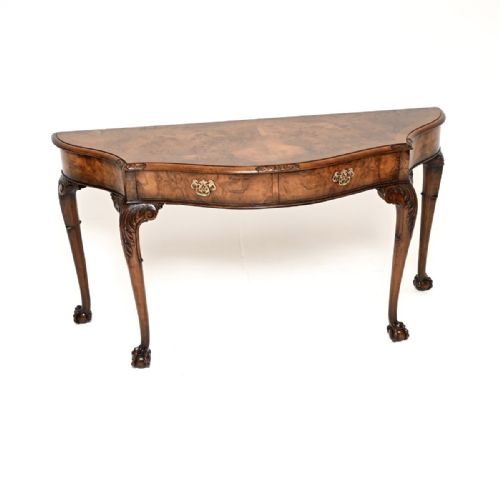
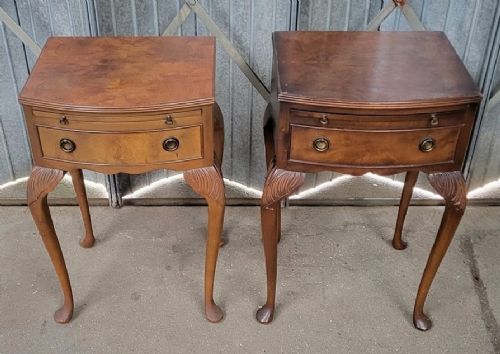
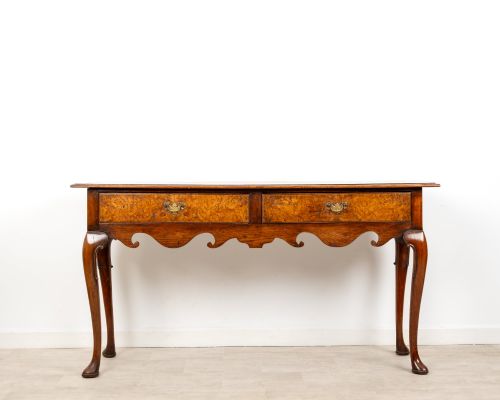
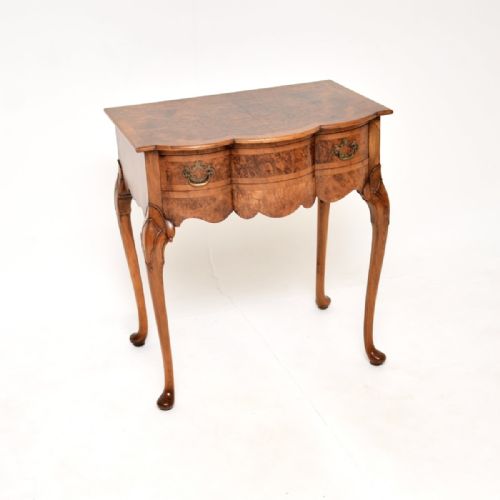
These tables serve various domestic functions beyond the basic side table format. Listings demonstrate related forms including lowboys, console tables, coffee tables, card tables, and bedside cabinets.
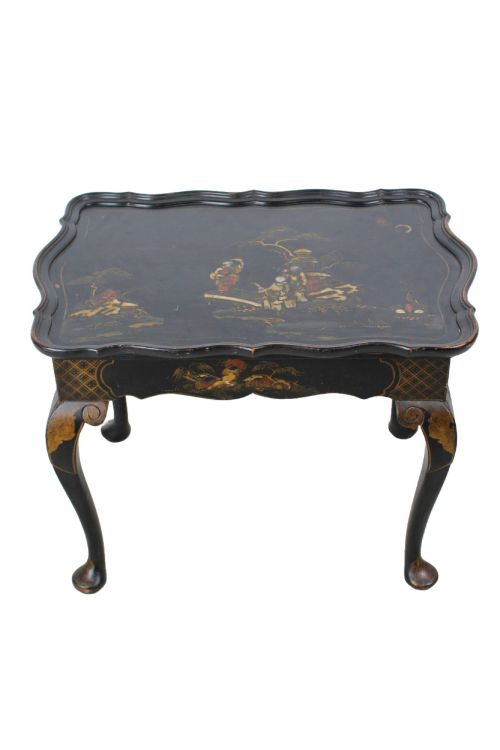
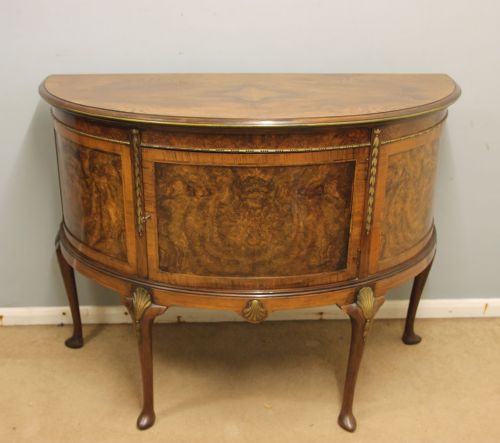
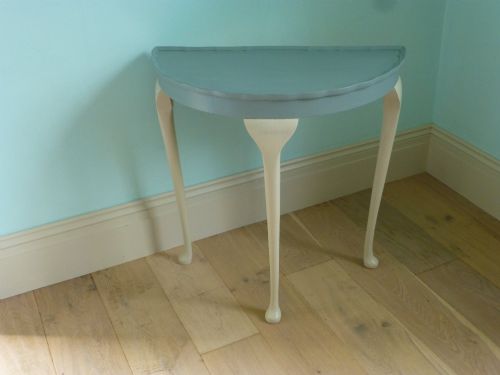
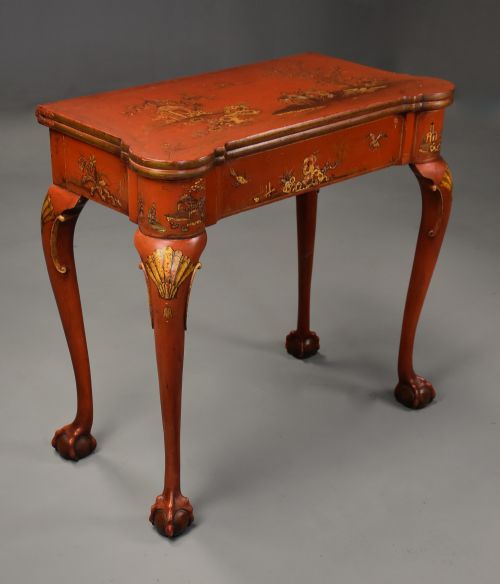
The dominant aesthetic draws upon walnut timbers, often utilising figured or burr veneers to create decorative surface patterns. Occasional examples incorporate painted finishes, red lacquer, or chinoiserie decoration alongside traditional wood surfaces.
Materials and Construction
Cabinetmakers utilised walnut as the primary timber, frequently selecting burr walnut or figured walnut veneers for top surfaces to display complex grain patterns. Solid walnut and mahogany also appear across various periods and table formats.
Decorative enhancements include brass hardware, gilt accents, and lacquer work, particularly on Edwardian chinoiserie pieces. Carving is typically restricted to specific details such as knees on cabriole legs or edge mouldings.
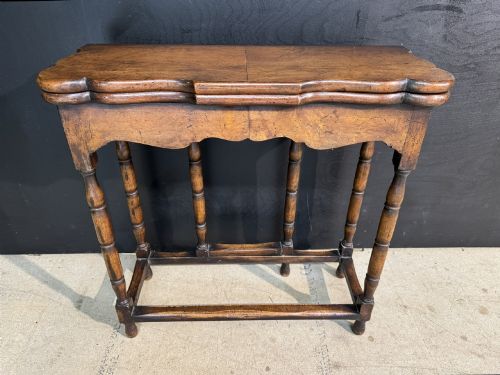
Some tables double as card games surfaces, hiding secret folds for an impromptu evening of eighteenth century entertainment.
Evaluating Quality and Craftsmanship
Quality rests upon the selection and matching of timber veneers across the top and drawer fronts. Superior pieces exhibit symmetrical burr walnut grain patterns that demonstrate careful planning by the maker.
Construction standards appear in the execution of the characteristic cabriole legs and the integration of drawer framing. Well made examples display balanced proportions, clean joinery, and substantial timber thickness rather than thin applied skins.
Maple and Co.·Shoolbred and Co
The Queen Anne Style Side Table Glossary
- Cabriole leg
- A furniture leg that curves outward at the knee and tapers inward toward the ankle, typically ending in a pad or hoof foot. This form defines the silhouette of the queen anne style.
- Burr walnut
- Timber harvested from walnut tree growths or burls, producing intricate and swirling grain patterns. It is sliced into thin veneers for decorative table tops.
- Lowboy
- A small table with one or more drawers and long legs, resembling the lower section of a tallboy chest. They frequently function as side tables or dressing tables.
- Console table
- A table designed to stand against a wall, sometimes secured to it. These pieces often feature shaped fronts and decorative carving.
Queen Anne Style Side Table: Frequently Asked Questions
What defines a queen anne style side table?
These tables are primarily characterised by their distinctive cabriole legs, curved profiles, and the frequent use of figured walnut or burr walnut veneers. They combine functional surface areas with graceful, flowing lines derived from early eighteenth century British furniture design.
Most examples encountered today date from the early twentieth century revival periods rather than the original reign of Queen Anne. The form adapts easily to various rooms, serving as lamp tables, hall tables, or small servers.
How do I date my table?
Dating relies on examining construction methods, secondary timbers used in drawer linings, and the style of the veneer work. Tables from the early twentieth century often display twentieth century hardware alongside traditional cabinetmaking techniques.
Comparative pieces from the Edwardian era and the 1920s show specific interpretations of the earlier aesthetic. Looking at the underside and interior joinery helps distinguish original period revival pieces from later reproductions.
Are these tables solid walnut?
The majority of these pieces utilise walnut veneers applied over stable secondary wood substrates such as oak or pine. This technique prevented warping while allowing makers to display highly decorative burr walnut figures on the tops and drawer fronts.
Solid walnut was generally reserved for structural elements like legs, frames, and mouldings. Examining the edges and grain direction reveals where veneers meet solid timber.
Where should I place a console table?
Console tables fit naturally against flat walls in hallways, living rooms, or dining spaces where floor space is restricted. Their shallow depth allows them to function without obstructing walkways while providing a surface for lamps or decorative objects.
Pairing a console table with a mirror or hanging artwork creates a traditional focal point in an entryway. They also work effectively behind sofas to anchor seating arrangements in larger rooms.