



Queen Anne Painted Table
When you search for a queen anne painted table, you enter a world of lacquer, chinoiserie decoration and curved timber forms that define early eighteenth-century taste.
Queen Anne Painted Table
A queen anne painted table combines the distinct cabriole lines of the period with decorative surface schemes such as lacquer and painted wood. Buyers searching this phrase look for furniture that brings traditional form together with ornamental finishes.
The selections available here span actual eighteenth-century pieces alongside revival works from the Edwardian era and the nineteen-twenties. Side tables, low boys, coffee tables and games tables represent the primary forms you are most likely to encounter on this page.
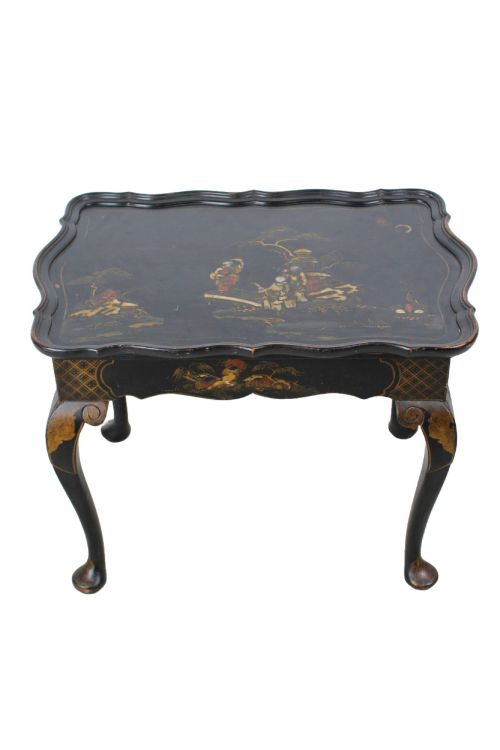
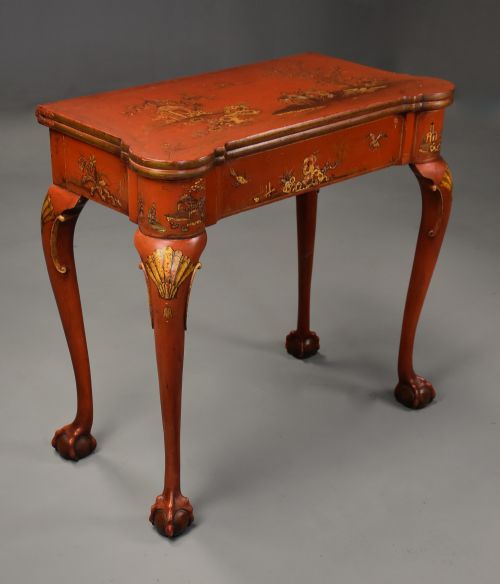
Chinoiserie ornamentation frequently characterises these items, featuring gilt and painted motifs upon black or red lacquer grounds. This aesthetic reflects a historical fascination with oriental design reinterpreted through British craftsmanship.
Materials and Construction
Construction relies upon traditional timbers such as pine and general wood substrates prepared to receive decorative schemes. Artisans applied layers of paint and lacquer to timber surfaces, often incorporating gilt highlights to define pictorial scenes.
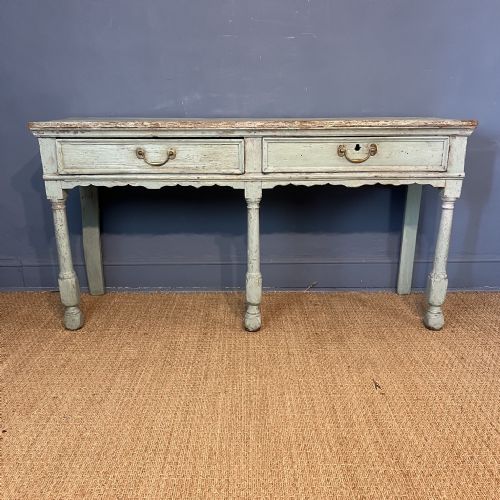
Brass hardware such as drawer pulls frequently accompanies these pieces on low boys and dressing tables. The finishing process demands careful building of lacquered surfaces, characteristic of both genuine eighteenth-century production and later revival craftsmanship.
Materials recorded across these items include lacquer, wood, brass, gilt, and paint.
Assessing Quality and Execution
Quality reveals itself in the crispness of the painted or lacquered decoration and the depth of the finish. Finer examples display intricate detail within their chinoiserie motifs and careful preservation of the underlying timber structure.
The integrity of the form matters just as much as the surface, with well-proportioned cabriole legs and solid joinery distinguishing superior pieces. Revival items from the twentieth century vary in how convincingly they capture the spirit and weight of the original eighteenth-century aesthetic.
Maple & Co
The Queen Anne Painted Table Glossary
- Cabriole leg
- A furniture leg featuring a double curve, bulging outward at the knee and tapering inward toward the foot. This shape is a defining characteristic of the period.
- Chinoiserie
- European theatrical interpretations of Chinese and East Asian artistic traditions. It appears widely on lacquered furniture and decorative objects.
- Low boy
- A small English table with drawers, typically used as a dressing table or side table. It stands on four relatively tall legs.
- Lacquer
- A durable finish applied in multiple layers and polished to a smooth surface. It serves as the base for decorative painting on many items here.
- Demi-lune
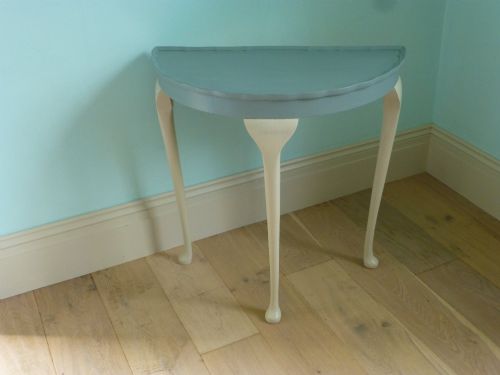
- Half-moon shaped, commonly used to describe console or side tables designed to sit flush against a wall.
Queen Anne Painted Table: Frequently Asked Questions
How do I spot an eighteenth-century original?
Examine the timber construction beneath the surface, hand-cut joinery and the natural ageing of the lacquer. Eighteenth-century pieces show authentic wear patterns and material characteristics distinct from later revival work.
Compare the proportion of the cabriole legs and the execution of any painted motifs with documented examples from the same decade to confirm age.
What is the difference between revival and period pieces?
Period pieces date from the early eighteenth century, while revival items usually originate from the Edwardian period or the nineteen-twenties. Both share stylistic roots but differ in age and material maturity.
Revival furniture often utilises twentieth-century construction methods while successfully replicating the decorative allure of earlier generations.
Where should I place a painted table at home?
These tables work well as accent pieces in hallways, living rooms or bedrooms where their decorative surfaces can be appreciated. A demi-lune console suits a narrow hall, while a low boy functions effectively as a side table.
Keep them away from direct sunlight and extreme temperature fluctuations to protect the delicate lacquer and painted finishes.
How should I clean a lacquered surface?
Dust gently with a soft, dry microfibre cloth to remove surface particles without scratching the finish. Avoid using chemical sprays, abrasive cleaners or excess water.
Professional restoration is recommended if the lacquer develops cracks or loses its structural stability over time.