
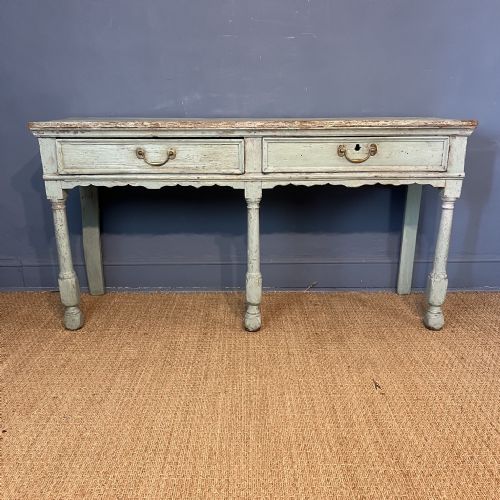
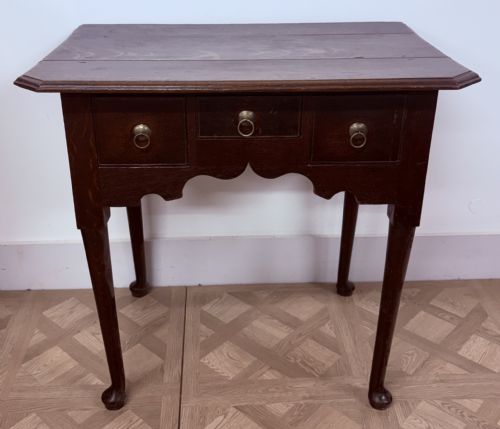
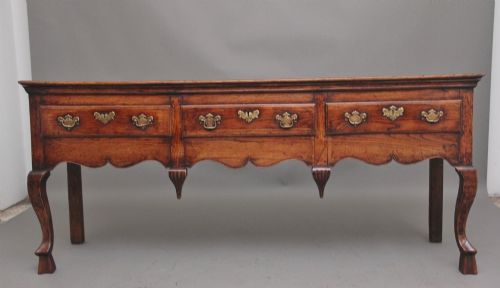
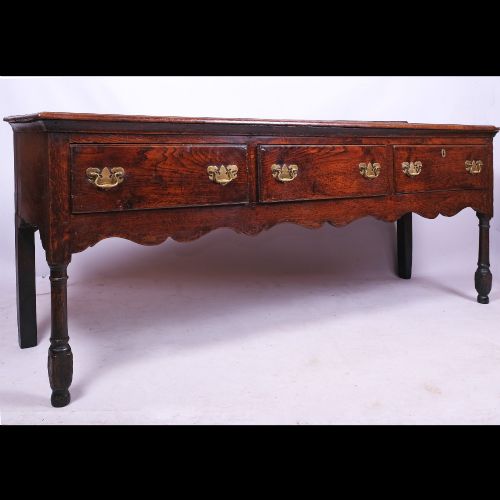
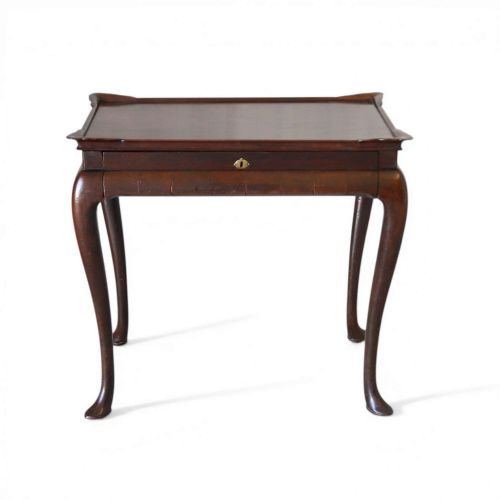
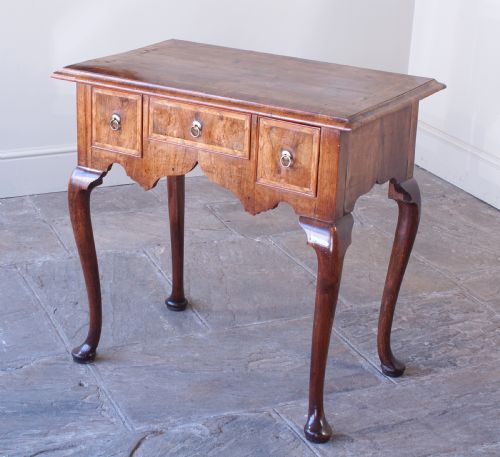


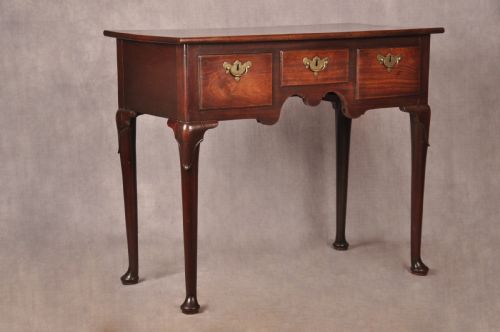


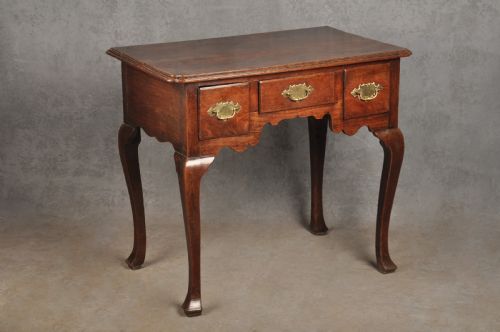

Early 18th Century Server
An early 18th century server brings genuine period presence into a room, offering surface space and storage shaped by early Georgian craftsmanship.
Early 18th Century Server
When searching for an early 18th century server, buyers encounter forms that include side tables, dresser bases, lowboys, and sideboards originating from the 18th century and Georgian periods. These pieces serve as practical serving furniture or display surfaces, reflecting the domestic habits of the era.
Oak, walnut, mahogany, and painted pine are the primary woods found across these forms, often showing regional variations such as Welsh vernacular construction. Lowboys and side tables predominate, alongside broader dresser bases designed for utilitarian or dining use.
Stylistic markers span Queen Anne, George I, and George II periods, displaying cabriole legs and restrained decorative carving. A buyer is most likely to meet an oak or walnut lowboy or side table dating from the early decades of the 1700s.
Materials and construction
Makers utilised solid timbers such as native oak and walnut, alongside imported Cuban mahogany as trade routes expanded during the Georgian era. Pine served frequently for secondary framing or painted surfaces, while silver plating appeared on related metalware such as coffee pots.
Joinery relied on pegged mortise and tenon frames, hand-cut dovetails for drawer construction, and turned or cabriole legs shaped manually with drawknives and chisels. Surfaces were finished with wax, oil, or early paint layers that accumulated character over centuries.
Listings span oak, walnut, mahogany, and painted pine, reflecting the shift from native timbers to imported mahogany across the 18th century.
Judging quality in early serving pieces
The standard of timber selection and grain figuring marks the distinction between standard utilitarian furniture and higher-status commissions. Walnut veneers and choice cuts of Cuban mahogany denote a finer workshop origin compared to plain domestic oak.
Proportion and the handling of legs, whether simple tapered forms or carved cabriole supports with pad feet, determine visual success. Original hardware, untouched surface patination, and minimal timber replacement preserve the integrity of the piece.
The Early 18th Century Server Glossary
- Cabriole leg
- A furniture leg that curves out and then in, resembling the leg of an animal. This form became prominent during the Queen Anne and early Georgian periods.
- Dresser base
- A low wooden unit with drawers and sometimes cupboards or potboards underneath, used for storing and serving food in early kitchens and dining rooms.
- Welsh vernacular
- Furniture made in regional workshops outside metropolitan centres, often utilising local oak and distinct construction methods suited to rural homes.
- Old Sheffield plate
- An early composite material made by fusing a thin sheet of silver to a copper base, developed in the 18th century for tableware and serving vessels.
Early 18th Century Server: Frequently Asked Questions
What is an early 18th century server used for?
These pieces functioned primarily as side tables or serving surfaces in dining spaces and halls, holding dishes and utensils before formal sideboards became widespread.
Today, they adapt readily as hallway consoles or living room display surfaces while retaining their original proportions.
How do I distinguish Queen Anne from George II styles?
Queen Anne furniture typically displays clean, curved lines with restrained ornamentation and pad-footed cabriole legs dating from the early 1700s.
George II pieces, emerging later in the period, often introduce heavier proportions, Cuban mahogany, and more pronounced carving influenced by Palladian design.
Can I use an oak lowboy as a desk?
Many lowboys possess kneehole spaces and working drawer depths suitable for occasional writing or laptop use, provided the height matches your chair.
Checking the internal drawer clearance helps ensure modern stationery fits comfortably inside the historical framework.
Why do some servers have painted pine finishes?
Pine served as an accessible softwood that accepted pigment well, often used in vernacular pieces where exotic hardwoods were unavailable or too costly.
Original painted surfaces provide direct evidence of early interior decoration schemes applied before natural wood finishes became standard fashion.