




Quarter Chiming Clock
These quarter chiming clock examples strike the quarters with distinct melodies or chords, offering a sophisticated timekeeping tradition for domestic spaces.
Quarter chiming clock forms
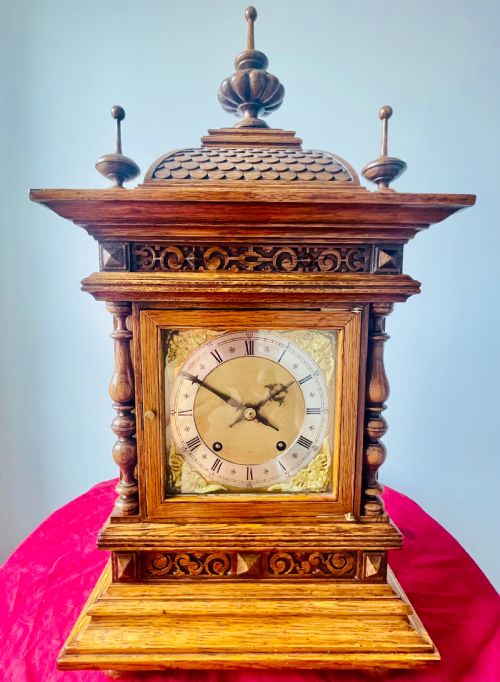
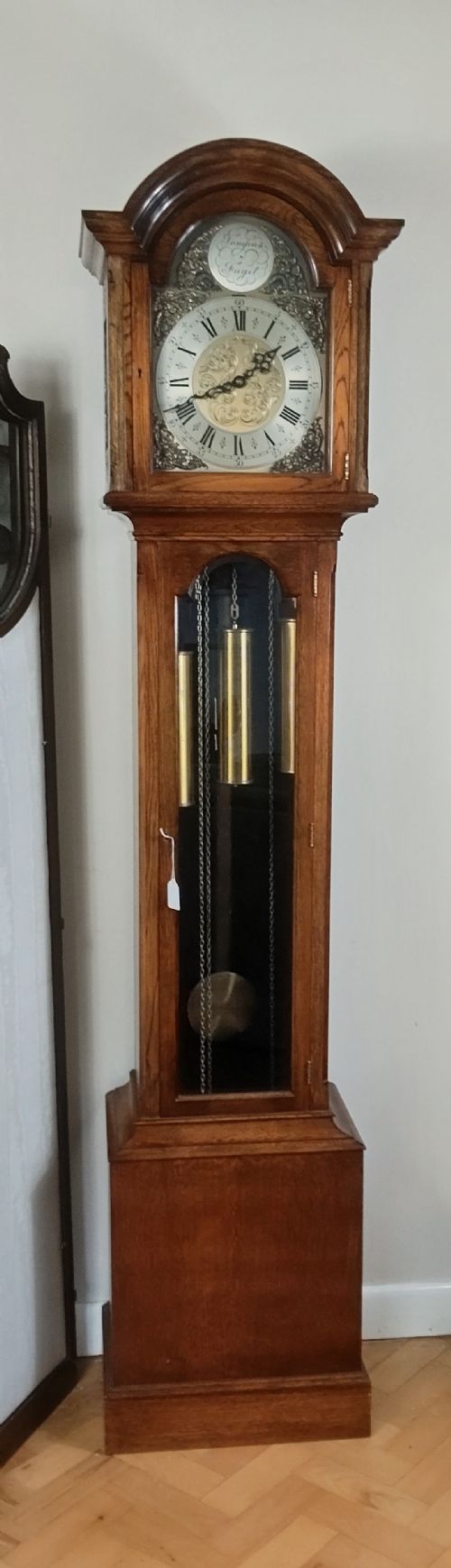
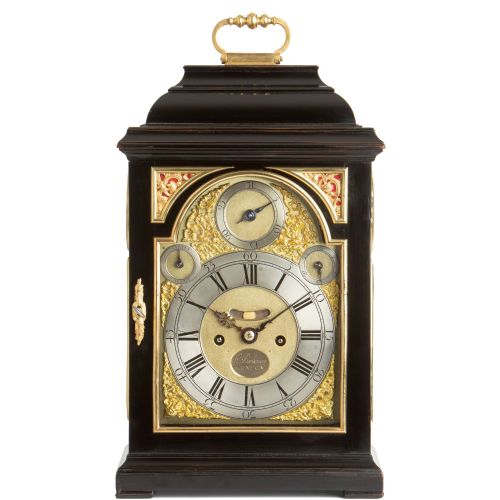
A quarter chiming clock encompasses tall longcase clocks, often termed grandfathers or grandmothers, alongside compact bracket and mantel designs. These timepieces originate primarily from the Edwardian period and the early twentieth century, spanning styles such as Georgian Revival, Jacobean, and Art Deco.
Floor-standing longcases dominate the selection, frequently housed in timber cases of oak, mahogany, or walnut. These tall examples appear alongside smaller table clocks designed for placement on mantels or brackets.
Materials and movement construction
Cases combine solid woods and veneers including mahogany, oak, walnut, and ebonised timber, complemented by brass dials, steel components, and glass panels. Movement mechanisms incorporate intricate trains of gears, weights or springs, and chime using bells, tubular gongs, or rods.
Dial faces feature brass chapter rings, silvered metal, and glazed doors, often with astragal framing. Cabinetry relies on traditional joinery methods to house heavy mechanical movements and complex chiming gear securely.
Retail Price Guide 2026
Typical UK retail prices for quarter chiming clock, calculated from the Sellingantiques database of over a million retail prices indexed since 2003. This retail price guide relies exclusively on Sellingantiques data; no external sources or auction records are used, so the figures do not describe the wider market.
The archive includes longcase forms alongside smaller bracket and mantel clocks utilising tubular gongs and bells.
Distinctions in construction and mechanics
Superior examples separate themselves through the complexity of their musical movements, offering multiple tunes, triple weight systems, or tubular bell arrays rather than simple chime variations. The precision of the escapement and the resonance of the gongs or bells dictate the acoustic quality.
Cabinet craftsmanship dictates the grade of the piece, with choice veneer selections, fine carving work, and substantial brass mounts elevating the visual presence of the timber case above standard production models.
Allam and Caithness·Joseph Jessner·S Smith and Son·Christopher Pinchbeck·Lenzkirch·John Taylor·Benjamin Grey and Justin Vulliamy·John Ellicott·Eardley Norton·Winterhalder and Hofmeier·Gravell and Tolkien·Elliott
The Quarter Chiming Clock Glossary
- Grandmother clock
- A smaller version of the longcase clock, typically standing under seventy inches in height. It retains the mechanical complexity of its larger counterpart in a reduced scale.
- Bracket clock
- A portable table clock designed originally to sit on a wall bracket. Many examples feature carrying handles and glazed side panels to expose the movement.
- Ting-tang
- A two-hammer chiming mechanism that sounds two different notes on the quarters. It produces a distinct double stroke before the full hour strike.
- Escapement
- The mechanical linkage that controls the descent of the weights or the unwinding of the spring. It gives the clock its regular ticking motion.
- Fusee
- A conical pulley connected to the mainspring by a chain or cord. It equalises the driving force as the spring winds down.
Frequently Asked Questions
What is a quarter chiming clock?
A quarter chiming clock is a timepiece engineered to strike a melody or sequence of notes at each quarter hour, in addition to striking the full hours. These mechanisms range from compact table models to tall floor-standing longcases.
Such movements utilise multiple hammers and gongs, bells, or rods to produce complex acoustic patterns like the Westminster chime.
How do I wind a longcase clock?
Winding involves raising the weights suspended inside the trunk using a winding key inserted into holes on the dial face. Care must be taken not to overwind the mechanism.
For spring-driven bracket clocks, a key is used similarly at the dial face to tension the internal springs.
Where should I place a longcase clock?
Longcase clocks require a stable, dry interior wall away from direct sunlight and major draughts to maintain timber condition and movement accuracy. Placing the case on a level floor ensures the pendulum swings evenly.
Securing tall cases to the wall using hidden brackets prevents accidental tipping in homes with children or pets.
How do I tell an Edwardian clock from a Georgian one?
Edwardian and early twentieth-century clocks often incorporate revival styles, borrowing decorative motifs from Georgian or Jacobean periods while employing modern machine-assisted manufacturing techniques. True Georgian pieces exhibit the hand-tooled joinery, timber patination, and specific brass casting methods characteristic of the eighteenth century.
Examining the interior movement, dial mounting, and timber ageing helps distinguish original period pieces from later revivals.