
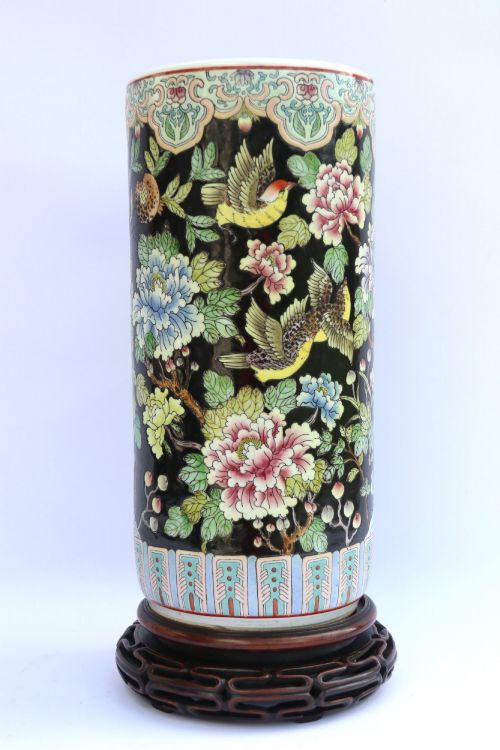

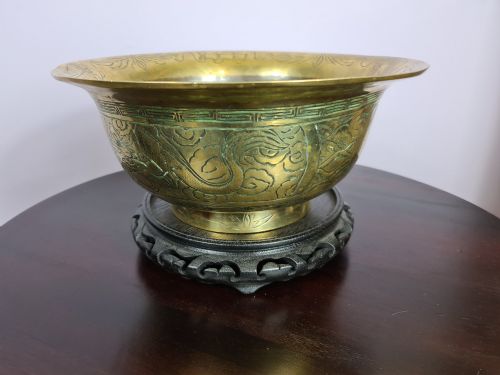
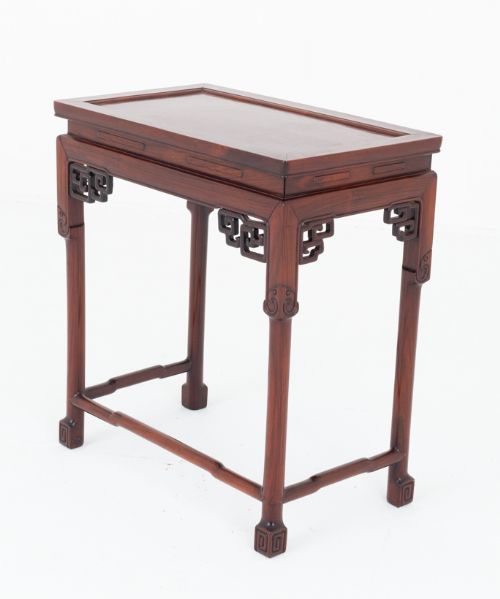


Qing Style Carved Stand
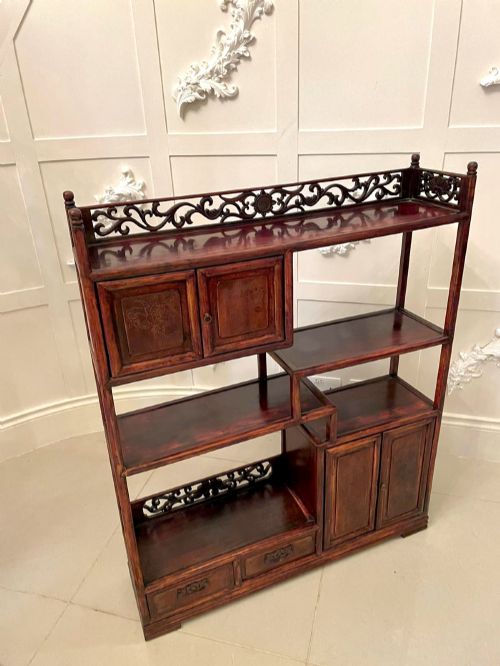
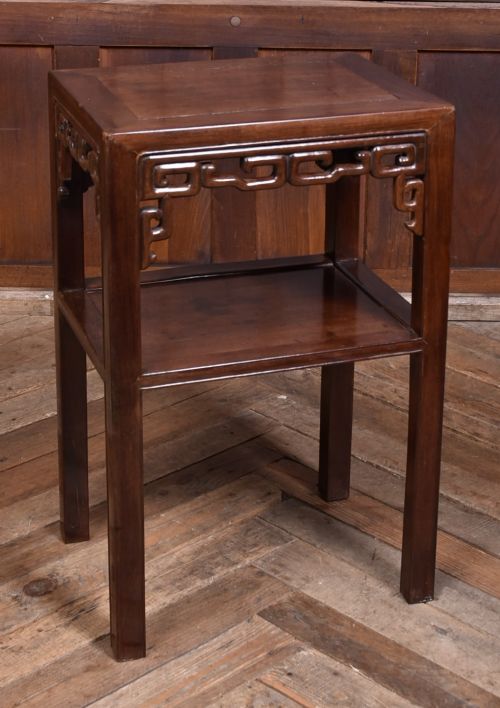
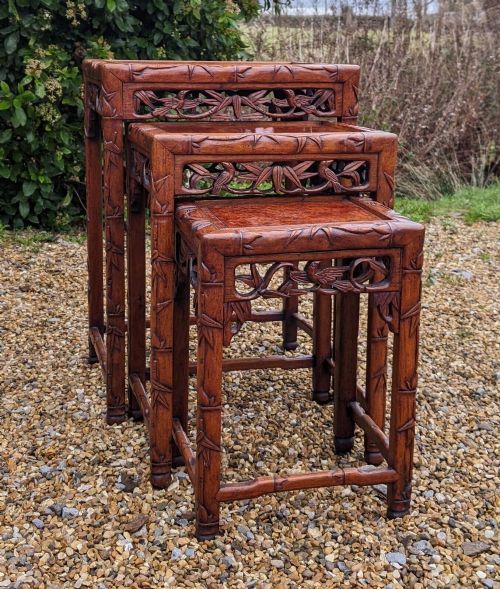
A qing style carved stand brings heavy timber and intricate joinery into a room, designed to elevate plants or porcelain.
Qing Style Carved Stand
When you search for a qing style carved stand, you encounter pieces intended to display decorative objects, from plant pots to large vases. These items span the nineteenth century, with examples dating from eighteen eighty through to nineteen thirty, alongside Victorian interpretations.
The most common forms on this page include plant stands, jardiniere stands, pedestal tables, and occasional tables. Makers built these using dense timbers designed to support heavy porcelain and marble.
These objects reflect traditional Chinese aesthetics, often categorized under Chinese export or Chinese traditional styles. They function as solid display furniture that anchors a corner or serves beside a seating arrangement.
How they were made
Carpenters utilised dense tropical timbers such as hardwood, rosewood, huanghuali, padouk, and hongmu, selecting them for their heavy weight and deep colour. These woods were carved with organic motifs and pierced details that showcased the grain.
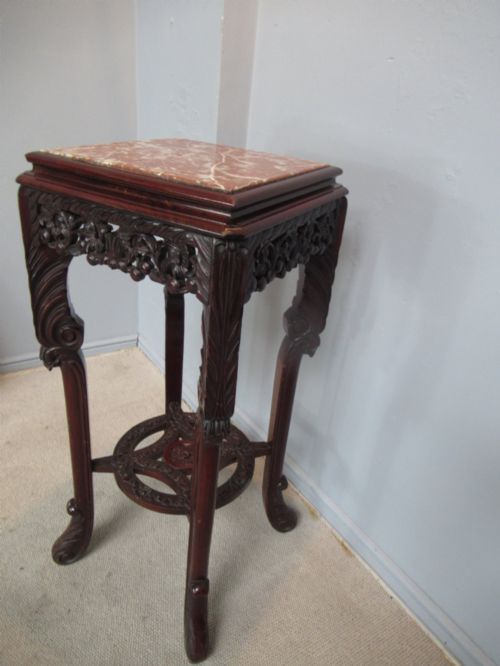
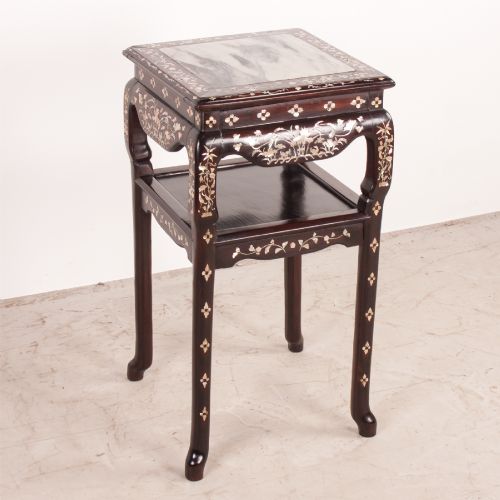
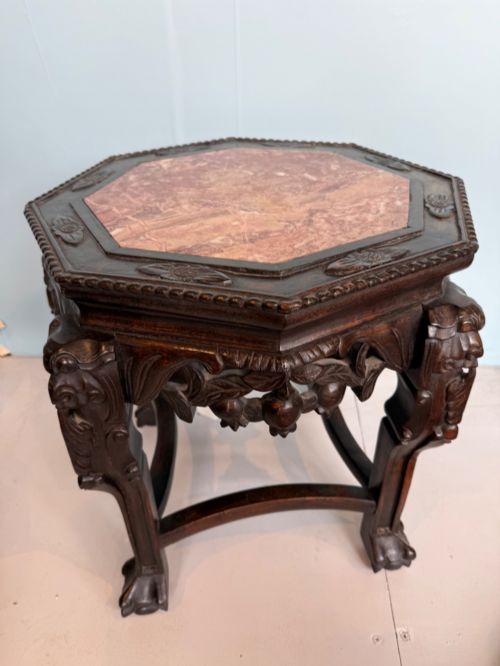
Many tables and stands incorporate inset panels of white, grey, or rouge marble into the timber top. This provided a cool, durable surface impervious to moisture from plant pots and vases.
Construction frequently employed traditional joinery techniques without metal nails, allowing the hardwood frames to expand and contract with environmental changes. Some surfaces received ebonising or detailed mother-of-pearl inlay to accent the carved framework.
Materials span hardwood, rosewood, marble, brass, porcelain, enamel, and burrwood across nineteenth and early twentieth-century dates.
What varies in quality
The distinction between ordinary and superior pieces rests on the depth and crispness of the wood carving. Fine examples display undercut foliage and dragons with distinct claws, whereas lesser items rely on shallow, machine-like incisions.
Timber selection and grain figure heavily in overall merit, with dense rosewood and well-figured huanghuali sitting above standard mixed hardwoods. The exact fit of inset marble tops and the tightness of the frame joints further separate workshop output.
The Qing Style Carved Stand Glossary
- Jardiniere stand
- A tall, slender table specifically designed to hold a ceramic flower pot or plant bowl. These pieces usually feature a round or square top raised on carved legs.
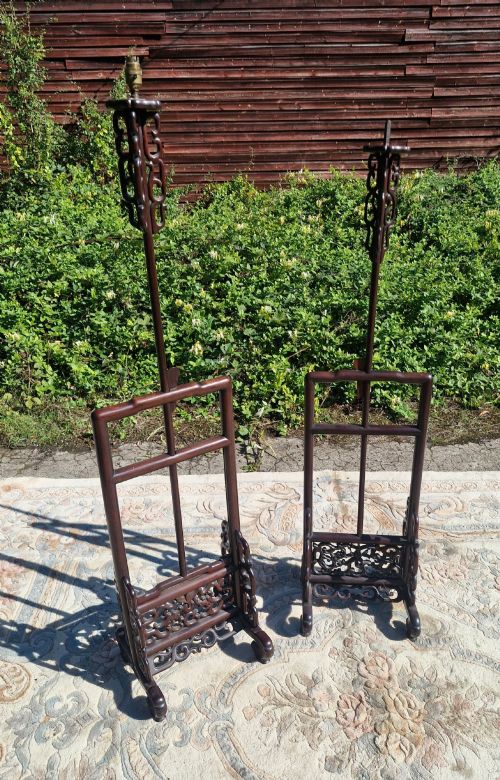
- Torchere
- A tall stand intended to support a lamp, candle, or small decorative vessel. They typically feature an elevated platform supported by a single carved column or pillar legs.
- Hongmu
- A dense, heavy red-brown hardwood utilised by Chinese cabinetmakers for formal furniture. It translates literally to red wood and holds intricate carved detail exceptionally well.
- Marble top
- A polished stone insert fitted flush into the wooden frame of a table or stand. This surface protects the timber from dampness and provides a stable display area.
Qing Style Carved Stand: Frequently Asked Questions
What is a jardiniere stand?
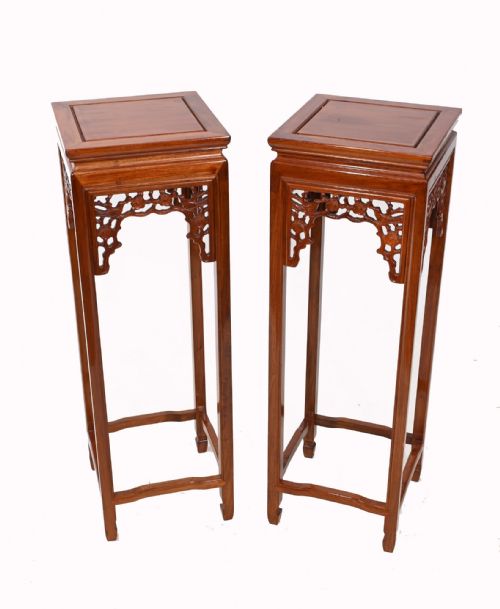
A jardiniere stand is a tall table designed to hold a heavy ceramic plant pot or decorative bowl. These pieces elevate greenery to eye level within a room.
They usually feature a compact footprint with a circular or square top, making them suitable for corners or empty wall spaces.
How do I style a carved stand?
These stands work best when supporting a single substantial object, such as a bronze bowl, a porcelain vase, or a trailing plant. The intricate woodwork provides a visual anchor that benefits from a clean surrounding space.
Pairs of stands look balanced placed on either side of a low cabinet or fireplace, while single pieces suit dark hallway corners.
How do I care for hardwood furniture?
Maintain dense hardwoods by keeping them away from direct heat sources and sudden temperature swings. Dust regularly with a dry cloth and avoid silicone-based polishes that build up over time.
Wax can be applied sparingly to nourish rosewood and hongmu surfaces, helping preserve the natural sheen of the timber.
How do I date a Chinese stand?
Dating relies on examining the timber weight, tool marks, and style characteristics. Nineteenth-century examples often display hand-carved joinery and dense, aged patina across the hardwood.
Later pieces from the early twentieth century may show different finishing techniques or machine assistance in the repetitive geometric carved borders.