



Qing Dynasty Silk Artwork
Qing dynasty silk artwork brings centuries of imperial craftsmanship into a room, offering rich textiles and hand-painted panels that anchor a traditional interior.
Qing Dynasty Silk Artwork
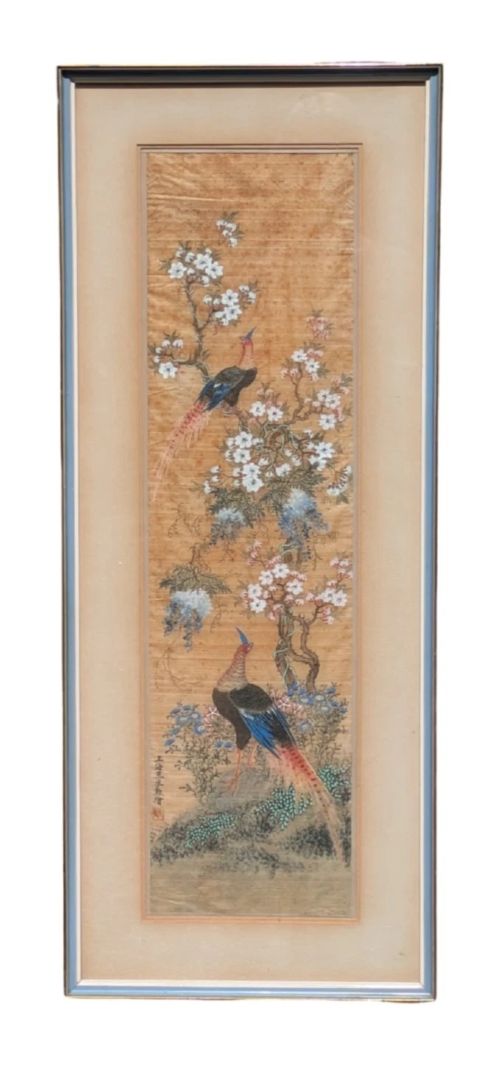
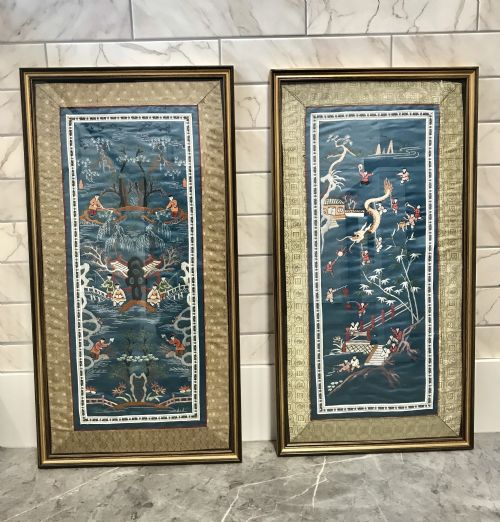
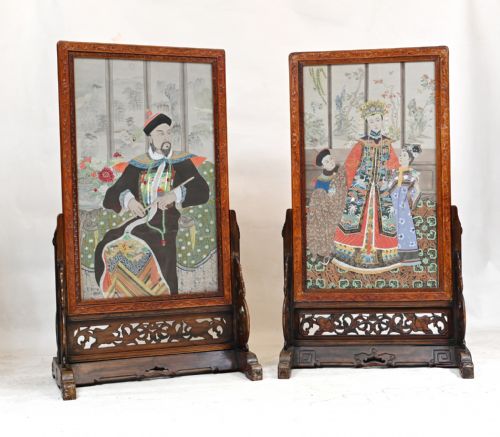
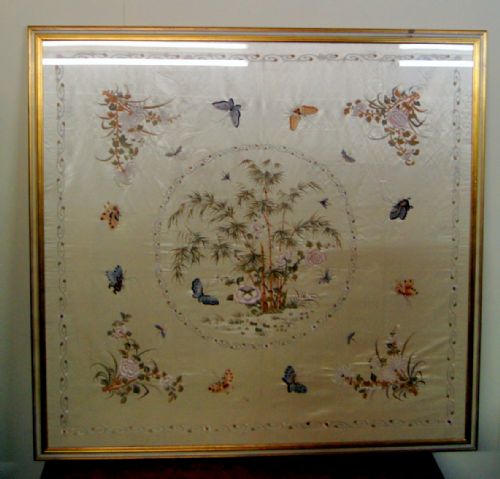
When you search for qing dynasty silk artwork, you encounter wall art, scroll paintings, framed watercolours, and textile panels originating primarily from the nineteenth century. The selection ranges from intricate hand-embroidered panels depicting figures, dragons, and garden birds to large ancestor portraits and table screens.
You are most likely to meet nineteenth-century watercolours and embroidered textiles mounted under glass or set within hardwood frames. These works showcase the diverse visual culture of the period, spanning court art, export pieces, and traditional religious subjects such as scroll paintings of the Daoist Immortal Jade Emperor.
How they were made
Makers utilised fine silk grounds for both painting and needlework, applying water-based or mineral pigments alongside dense silk thread embroidery. Many pieces combine ink and pigment on silk or paper, housed within wooden frames or incorporated into woven hardwood table screens.
Techniques relied on meticulous hand-sewn stitching for detailed panels and precise brushwork for watercolours, gouache paintings, and ancestor portraits. The structural framing often utilised glass to protect delicate textile surfaces and painted details from environmental wear.
Mandarin ducks appear frequently in the embroidery, serving as traditional symbols of lifelong fidelity and happy unions in Chinese art.
What varies in quality
The standard of execution in brushwork and needlework determines the visual impact of each piece, distinguishing fine court or workshop productions from standard export items. Finer works display superior control of pigment density and exceptionally intricate thread work in depictions of figures, dragons, and flora.
The condition of the silk ground and the vibrancy of the pigments or embroidery threads heavily influence the overall coherence of the artwork. Original framing, such as period hardwood surrounds or original glass, adds integrity to surviving wall art and panels.
The Qing Dynasty Silk Artwork Glossary
- Gouache
- An opaque water-based pigment used on silk or paper to create flat, vibrant areas of colour. It appears frequently in nineteenth-century Chinese paintings.
- Scroll painting
- A traditional format where artwork on silk or paper is mounted onto flexible backing materials for vertical suspension. These often depict deities or formal portraits.
- Ancestor painting
- A formal portrait commissioned to honour family lineage, typically depicting seated subjects in detailed ceremonial robes. These works served ritual purposes within households.
- Table screen
- A portable decorative panel supported by a wooden stand, often featuring carved hardwood framing and inset silk embroidery or painted panels.
Qing Dynasty Silk Artwork: Frequently Asked Questions
How should I display qing dynasty silk artwork?
Keep these pieces away from direct sunlight to protect delicate silk grounds and fugitive pigments from fading. Hanging them in rooms with stable humidity prevents the textile and wooden framing from warping.
Ensure that pieces framed under glass have sufficient clearance so the surface does not touch the glass directly. This protects the delicate embroidery threads and painted layers over time.
What subjects typically appear on these silk artworks?
Common motifs include garden birds, mandarin ducks, trees, flowers, and narrative scenes featuring embroidered figures or dragons. Religious subjects also appear, such as scroll paintings depicting the Daoist Immortal Jade Emperor.
Formal ancestor portraits capture seated lineage members in detailed traditional attire. These varied subjects reflect both domestic decorative tastes and formal ritual traditions of the era.
How do I identify a nineteenth-century piece?
Examine the materials and mounting styles, as nineteenth-century works frequently utilise period hardwood frames, early glass, and traditional scroll mountings. Pigments and silk threads also show the distinct characteristics of nineteenth-century Chinese workshop production.
Titles and descriptions point to dates spanning the 1850s through to the early twentieth century. Comparing the style of brushwork and embroidery helps contextualize the piece within this timeframe.
Are these pieces painted or embroidered?
Both methods are common, as makers produced pieces using either fine brushwork with water-based and mineral pigments or meticulous hand-sewn silk embroidery. Some works combine painted details with embroidered elements on the same silk ground.
Descriptions specify whether a piece is a watercolour, gouache painting, or hand-embroidered panel under glass. This distinction defines the primary technique used by the maker.