



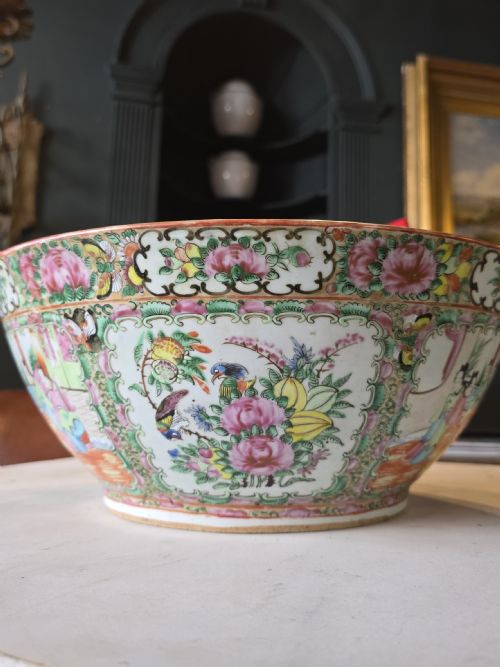


Qing Dynasty Rose Medallion
These vibrant Qing dynasty rose medallion pieces bring intricate hand-painted storytelling and rich polychrome enamel into domestic interiors.
Qing Dynasty Rose Medallion
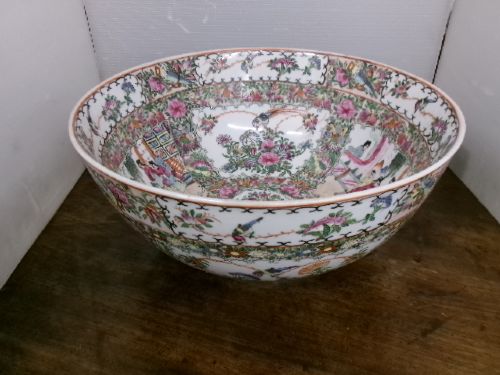
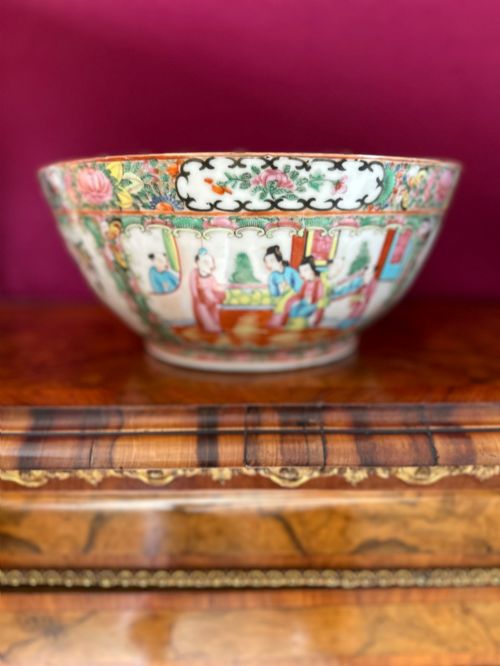
When searching for qing dynasty rose medallion, buyers encounter brightly coloured porcelain objects painted with alternating panels of figures, birds, flowers, and butterflies. These decorated items emerge primarily from the nineteenth century, originating as Chinese export wares destined for Western markets.
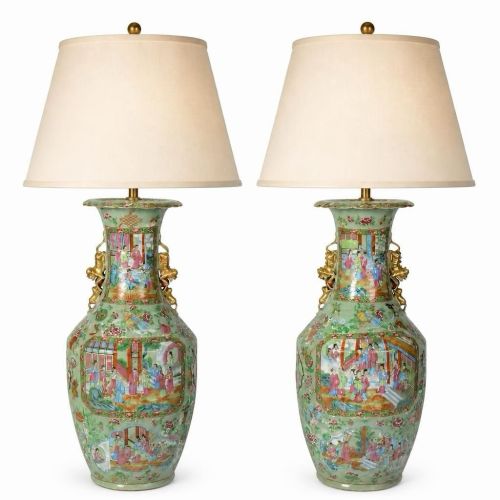
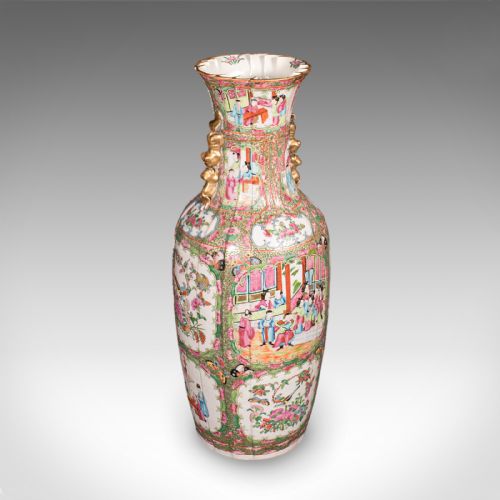
The domestic forms appearing on this page range from monumental baluster vases and punch bowls to large decorative plates, garden seats, and umbrella stands. Many nineteenth-century vessels have subsequently been adapted into table lamps while retaining their original hand-painted porcelain bodies.
Most examples connect directly to the Canton region, where workshops produced export ceramics decorated with extensive overglaze enamel and gilt details. Collectors also find related famille rose and famille verte wares spanning the Victorian era up to the early twentieth century.
Materials and Methods
Potters shaped these ceramics from fine white porcelain before applying dense overglaze enamels by hand. Artisans utilised bright pinks, greens, and other polychrome pigments to fill the characteristic medallion panels.
Gilding and gold leaf often accentuate the borders and division lines between the painted scenes. Some heavier forms integrate brass, ormolu mounts, or custom wooden stands to support the porcelain structures.
Garden seats designed for humid courtyards now serve as indoor occasional tables supporting afternoon cups of tea.
Assessing Craftsmanship
Execution of detail separates standard export items from superior examples. Finely rendered facial expressions and crisp separation between individual enamel panels indicate higher artistic skill.
The preservation of the overglaze enamels and the brightness of the gilding determine the visual impact of each piece. Intact hand-painted surfaces without heavy rubbing demonstrate careful historical handling.
The Qing Dynasty Rose Medallion Glossary
- Overglaze enamel
- A coloured glass-like decoration applied on top of fired porcelain and fixed with a secondary, lower-temperature firing. This technique allowed makers to achieve vibrant palettes including the dominant pink tones.
- Famille rose
- A major palette of Chinese porcelain defined by an opaque pink enamel introduced during the Qing dynasty. The term encompasses rose medallion and rose mandarin export wares.
- Canton
- A major southern Chinese port city where workshops decorated porcelain blanks for international trade. Much of the export pottery reaching Western markets originated from these urban painting studios.
- Ormolu
- Finely ground cast brass mounted onto decorative objects as a decorative and structural embellishment. Nineteenth-century workshops occasionally applied these mounts to large vases and bowls.
- Baluster
- A tall vase form with a rounded body that tapers toward the base and neck. This classic silhouette provides a generous surface area for narrative panel paintings.
Qing Dynasty Rose Medallion: Frequently Asked Questions
What is rose medallion porcelain?
Rose medallion porcelain is a distinct style of Chinese export ware featuring panels filled with painted figures, birds, and flowers. The designs rely heavily on pink enamel and gold details.
These pieces were produced primarily in the nineteenth century for international export. The compartmentalised layout remains the key visual identifier for the type.
Were these pieces used in dining rooms?
Large punch bowls and deep dishes served functional roles during formal dining and entertaining. Their generous proportions accommodated food and drink presentation.
Over time, many of these vessels transitioned into purely decorative objects displayed on tables, stands, or mantels.
How should I clean my vase?
Dust porcelain surfaces gently with a soft, dry cloth to prevent accumulation. Avoid abrasive materials that might scratch the delicate overglaze enamels.
Keep gilded vessels away from direct moisture and harsh chemical cleaning agents. Proper handling preserves the hand-painted details for the future.
How do I date these ceramics?
Dating relies on stylistic markers, baseline porcelain characteristics, and historical production periods such as the nineteenth century or Victorian era. Form variations and enamel opacity offer additional clues.
Export records and manufacturing techniques help separate nineteenth-century items from twentieth-century reproductions.