


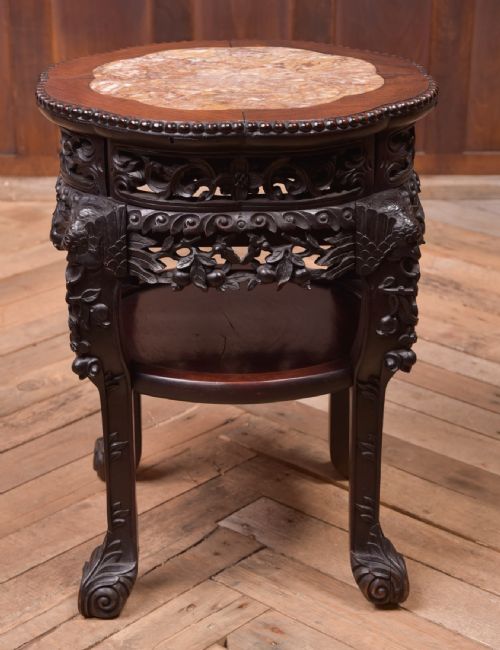
Qing Dynasty Pot Stand
A qing dynasty pot stand brings carved hardwood and inset marble together to elevate plants, vases and scholars' objects.
Qing Dynasty Pot Stand
When you search for a qing dynasty pot stand, you are looking at nineteenth-century Chinese hardwood furniture designed to hold planters, brush pots and vases. These pieces appear as low tables, freestanding stands and shaped plant holders originating from the Qing Dynasty and Victorian periods.
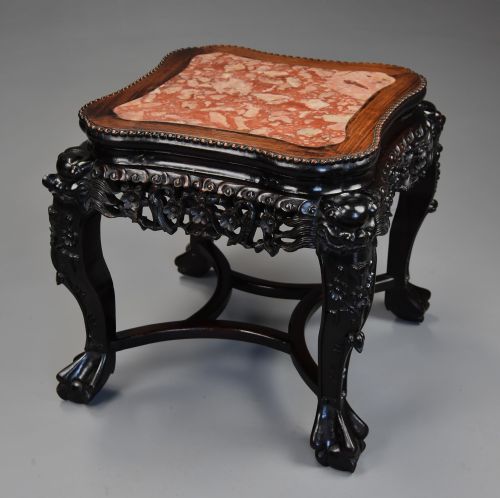
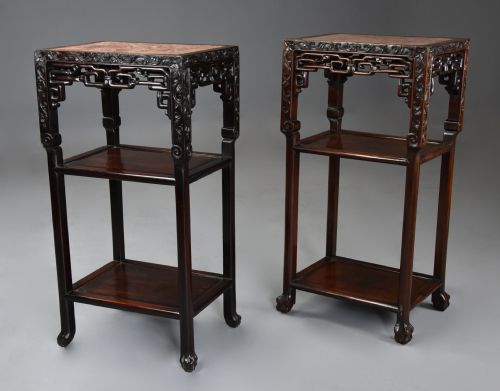
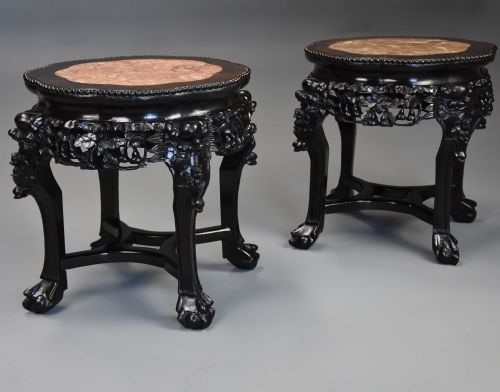
The versions you are most likely to meet on this page include hardwood jardiniere stands with shaped marble inset tops and carved wooden frames. They serve equally well as lamp tables or side tables in contemporary interiors.
How they were made
Makers fashioned these stands primarily from dense hardwood, often combining the carved wooden frames with inset panels of marble. Some examples incorporate brass, copper and enamel elements, particularly on cloisonne jardiniere pieces.
Joinery and carving form the core of the construction, featuring detailed floral and structural motifs carved directly into the hardwood. Ebonised finishes also appear on specific nineteenth-century examples alongside natural wood grains.
What varies in quality
Quality rests in the crispness of the wood carving and the character of the marble inset top. Finer examples display deeply undercut floral or geometric motifs in the hardwood rather than shallow surface incisions.
The density and figuring of the timber, alongside the harmonious integration of marble tops into the wooden frame, distinguish the better pieces from standard utility stands.
The Qing Dynasty Pot Stand Glossary
- Jardiniere
- A decorative ceramic or metal pot for holding plants or flowers. It sits upon the stand.
- Brush pot
- A cylindrical vessel used in a scholar's studio to hold writing brushes. It shares materials with larger stands.
- Cloisonne
- An enamelwork technique where wires form compartments on a metal base before filling with paste and firing. This method appears on specific jardiniere pieces.
- Hardwood
- Dense, slow-growing timber selected for durability and fine grain. Makers relied on this material to support heavy stone and ceramic vessels.
Qing Dynasty Pot Stand: Frequently Asked Questions
What is a qing dynasty pot stand used for?
These pieces were originally built to elevate heavy planters, jardiniere bowls and scholar's objects off the floor or table surface. They showcase the items placed upon them while protecting the underlying furniture or room.
Today, buyers frequently utilise them as compact side tables, lamp tables or dedicated plant stands in living spaces.
How do I date a hardwood pot stand?
Dating relies on examining the construction methods, timber density and decorative styles recorded in the nineteenth-century evidence. Pieces often correspond to the Victorian era or the late nineteenth century.
Stylistic cues include specific carving depths and the presence of integrated marble tops associated with Chinese export work.
Are these stands sturdy enough for daily use?
Hardwood construction and inset marble tops provide substantial weight and structural stability. They are engineered to bear the considerable load of large ceramic pots and stone elements.
Routine placement of lamps, vases or plants presents no structural challenge to these well-built nineteenth-century supports.
What timber was used for these stands?
Makers utilised dense hardwoods to achieve intricate carved details and support heavy stone inserts. The grain and finish vary across individual pieces from the period.
Ebonised treatments also appear alongside natural hardwood surfaces in the historical record.