


Qing Dynasty Lacquer Cupboard
A qing dynasty lacquer cupboard brings vibrant colour and century-old craft into a room, offering practical storage disguised as art.
Qing Dynasty Lacquer Cupboard
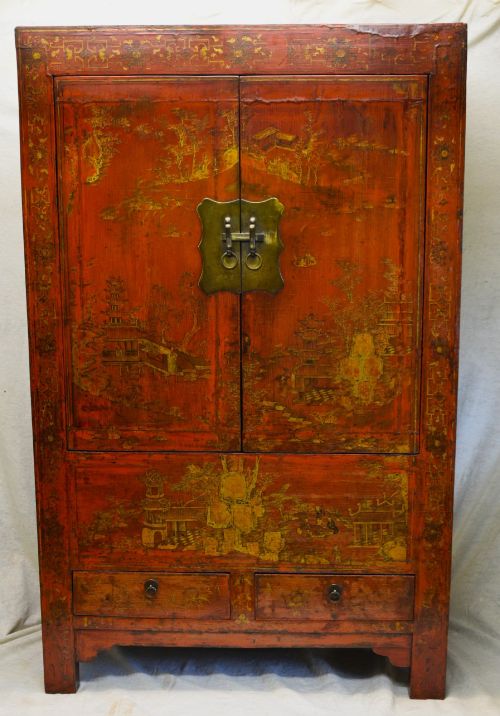
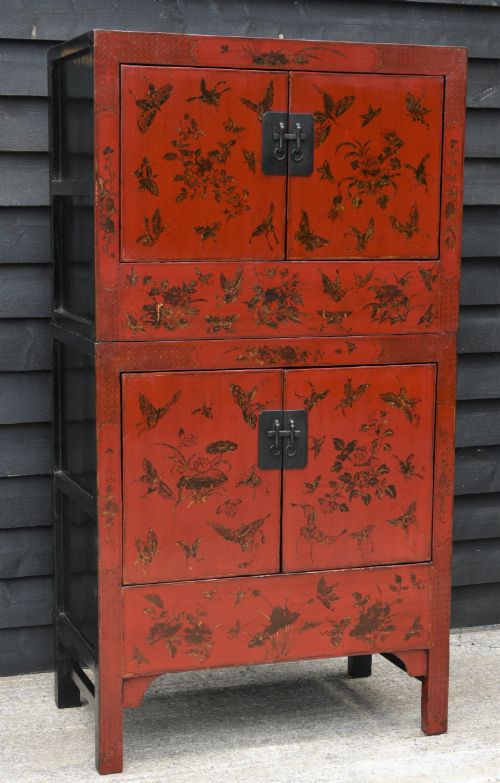
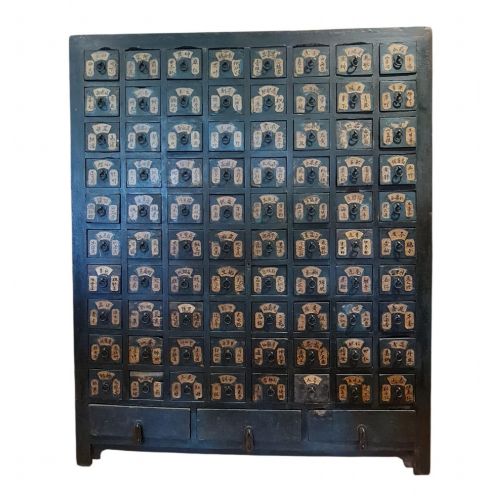
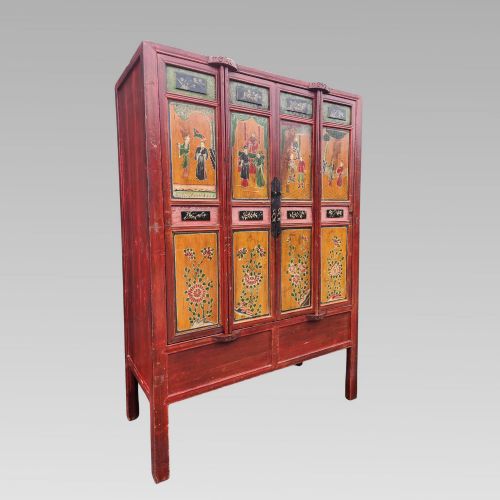
When you search for a qing dynasty lacquer cupboard, you encounter a range of forms designed for storage, from towering marriage cabinets and compound wardrobes to multi-drawer apothecary chests and small table cabinets. These pieces originate primarily from the nineteenth century, including works attributed to provinces such as Shanxi and Fujian.
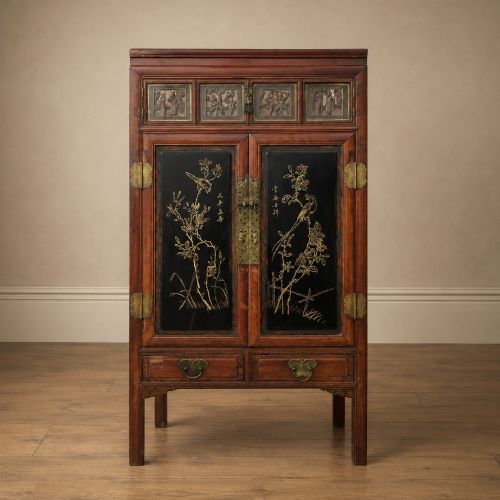
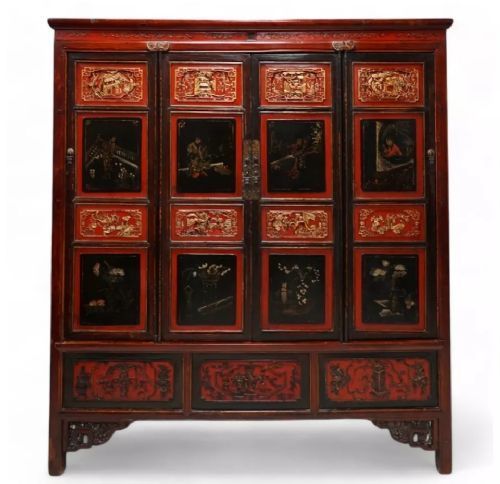
The most common versions on this page are red lacquered wedding and marriage cabinets, alongside black lacquered storage units and intricate apothecary chests. They function equally well as statement side cabinets or practical display cabinets in contemporary interiors.
How they were made
The construction of these pieces relies heavily on durable timbers like elm, which serves as a sturdy structural base for the outer layers. Artisans then applied multiple coats of lacquer to the wooden frame, frequently incorporating carved details and metal hardware made from brass or iron.
Decoration often involved gold leaf and gilded techniques applied over red or black lacquer backgrounds. Some examples also feature inlaid elements or intricate carving executed during the late nineteenth and early twentieth centuries.
Listings feature items from the nineteenth and early twentieth centuries, spanning periods up to nineteen-twenty and incorporating elm, brass, iron, and gold leaf.
What varies in quality
The distinction between standard examples and superior pieces rests largely on the preservation of the original surface finish and the complexity of the ornamentation. Richness in the application of gold leaf, depth of carved detailing, and crispness in gilded decoration elevate certain items above simpler provincial variants.
Hardware preservation also dictates value, where original brass or iron hinges, lock plates, and drawer pulls remain intact on the cabinet. Additionally, the structural integrity of the underlying elm framework and the subtlety of the lacquer coloration separate monumental storage pieces from everyday utilitarian chests.
The Qing Dynasty Lacquer Cupboard Glossary
- Lacquer
- A durable resin finish applied in multiple layers to wood surfaces. It provides a glossy, protective coating that resists moisture and wear.
- Apothecary chest
- A multi-drawer storage cabinet traditionally used by herbalists and practitioners of Chinese medicine. These pieces feature dozens of small drawers for sorting ingredients.
- Marriage cabinet
- A large storage cupboard traditionally given as a wedding gift. They often display red lacquer and symbolise prosperity for the newly wed couple.
- Compound cabinet
- A tall wardrobe constructed in two separate stacking sections. This modular design allowed for easier transport within traditional households.
- Gilded decoration
- The application of gold leaf or powder onto a surface to highlight carved motifs. This technique adds luminous contrast against red or black lacquer backgrounds.
Qing Dynasty Lacquer Cupboard: Frequently Asked Questions
How do I use a lacquer cupboard at home?
These cabinets work exceptionally well as standalone storage units in living rooms, hallways, or bedrooms. Their deep shelves and internal space easily accommodate modern belongings while adding historical character to the interior.
Smaller variants, such as table cabinets or side cabinets, sit comfortably on sideboards or desks. They provide convenient compartments for smaller items without dominating the floor space of a room.
Are these cupboards purely decorative?
While their striking red and black finishes make them visual centerpieces, they are fundamentally practical storage furniture. The interiors are built with shelves and compartments designed to hold household goods.
Apothecary chests offer a completely different storage dynamic through their numerous small drawers. They suit the organisation of smaller collections, stationery, or accessories rather than bulky garments.
How do I date a qing dynasty cabinet?
Dating relies on observing construction methods, provincial styles, and material combinations recorded across nineteenth-century examples. Elements like hand-forged iron or brass hardware and the wear patterns of the lacquer provide physical clues to their age.
Pieces originating around the transition from the nineteenth to the twentieth century often display specific regional carvings. Comparing the style of the gilded decoration and the type of wood, such as elm, helps place the object within its historical period.
What is the difference between red and black lacquer?
Red lacquer finishes on these pieces are frequently associated with wedding cabinets and celebratory domestic items. They introduce a warm, vibrant tone into a room and often feature detailed gold leaf work.
Black lacquer surfaces offer a more subdued aesthetic, sometimes enhanced with inlaid materials or subtle carved relief. Both finishes utilise the same protective resin techniques but serve different visual roles in traditional Chinese interior design.