

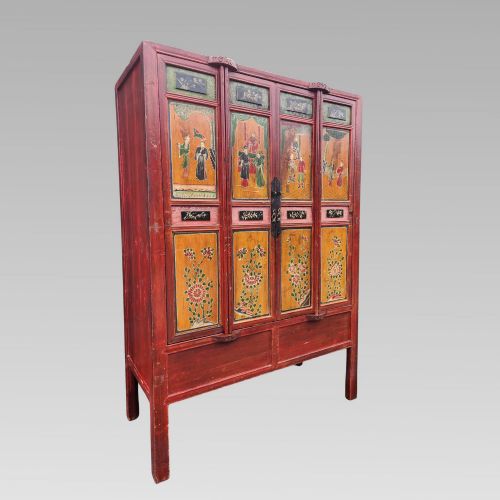


Antique Oriental Wedding Cabinet
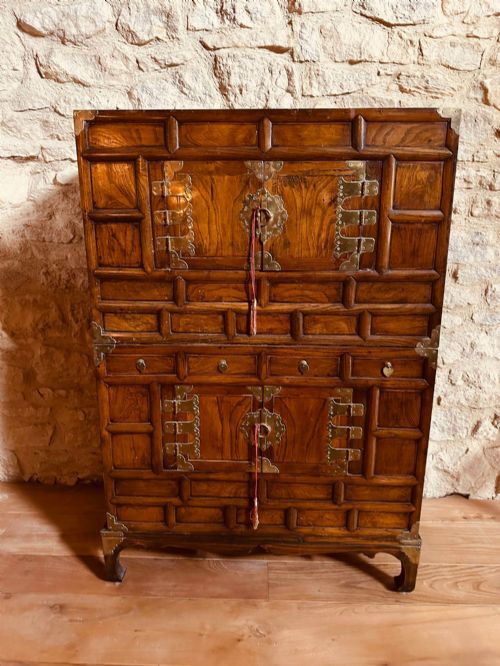
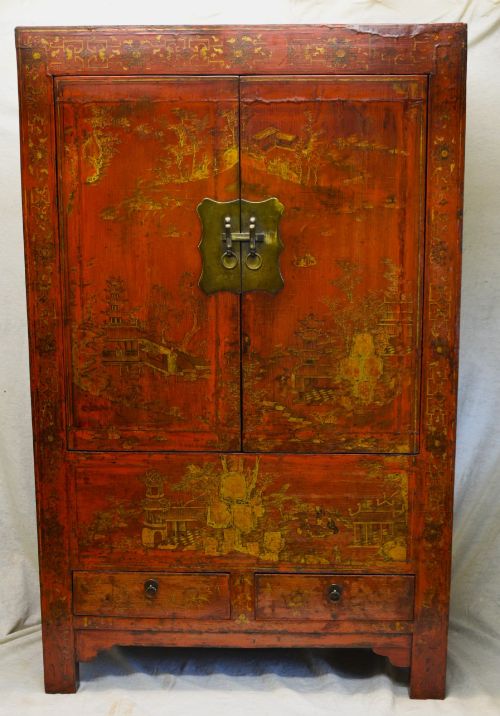
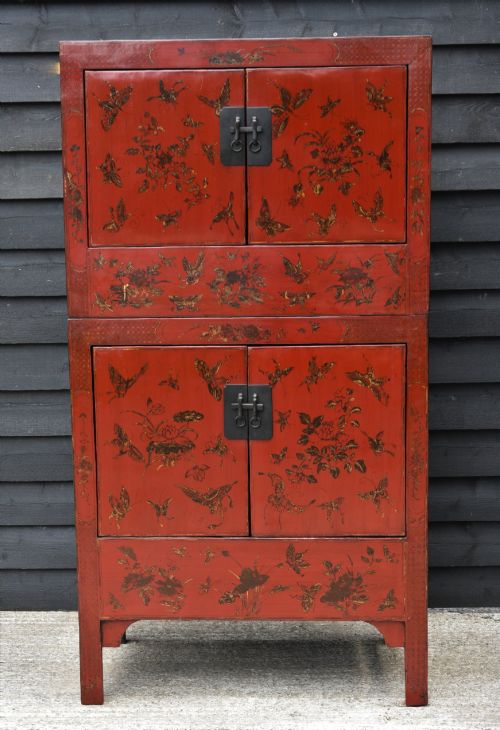
These antique oriental wedding cabinets bring striking red and black lacquered finishes, brass hardware, and traditional craftsmanship directly into modern interiors.
Antique Oriental Wedding Cabinet
When searching for an antique oriental wedding cabinet, buyers encounter substantial storage furniture originating from China during the nineteenth century. These pieces primarily date from the nineteen-hundreds, eighteen-eighties, and the broader Qing Dynasty period, reflecting traditional Chinese domestic forms.
The versions most commonly met on this page include red lacquered marriage cabinets, black lacquer storage cupboards, and sideboards displaying regional styles such as those associated with Fujian and Shanxi provinces. Their substantial proportions serve as focal points for large rooms while providing functional enclosed shelving.
Materials and construction methods
Makers utilised wood, softwood, and carved hardwood as foundational structures, often layering them with red or black lacquer to achieve deep, lustrous surfaces. These finishes frequently incorporated gold leaf highlights and intricate carvings executed across panels and doors.
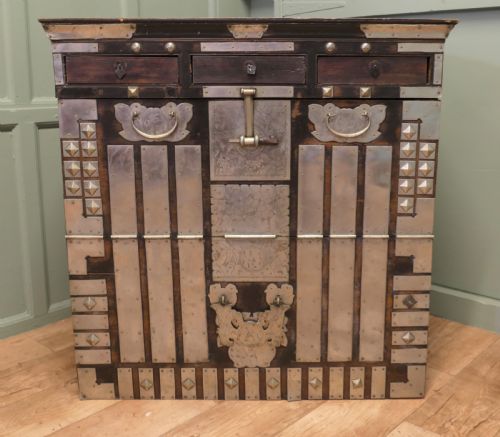
Iron and brass hardware, including decorative lock plates and hinges, secure the heavy doors while providing functional contrast to the smooth lacquered panels. Artisans during the Qing Dynasty applied these specialised techniques across regional workshops to produce durable storage vessels.
Antique Oriental Wedding Cabinet Retail Price Guide 2026
Typical asking prices for oriental wedding cabinet among the pieces listed under this phrase on Sellingantiques today, from the lower quarter to the upper quarter. They describe what is for sale here now, not the wider market.
Marriage cabinets were originally packed with auspicious linens and precious items to wish newlyweds a lifetime of domestic harmony.
Distinguishing quality across the range
The distinction between standard examples and superior pieces rests upon the complexity of the surface decoration, particularly the depth of the red and black lacquer layers and the presence of fine gold leaf detailing. Master carvers produced intricate relief work on doors and panels that elevate certain side cabinets above plain storage forms.
The integrity of the original wood structure and the preservation of traditional brass or iron hardware also determine the standing of an individual cupboard. Pieces retaining their authentic regional characteristics and well-maintained lacquer finishes occupy the upper tier of the range.
The Antique Oriental Wedding Cabinet Glossary
- Lacquer
- A durable resin finish applied in multiple layers to wood surfaces, creating a smooth and glossy protective coating. This technique defines the visual appearance of most traditional Chinese marriage furniture.
- Qing Dynasty
- The final imperial dynasty of China, spanning from sixteen-fourteen-fourteen to nineteen-and-twelve, which produced the majority of these carved and lacquered cabinets.
- Chinoiserie
- European decorative style reflecting Chinese artistic influences, sometimes applied to describe oriental pieces brought to Western markets. It encompasses ornamental motifs and lacquered finishes.
- Hardwood
- Dense, durable timber utilised by traditional cabinetmakers for structural integrity and fine carving work. It provides a stable base for heavy lacquer applications.
- Marriage cabinet
- A traditional Chinese storage form historically presented to newlywed couples as part of a dowry. These pieces typically feature double doors and internal shelving for textiles and valuables.
Antique Oriental Wedding Cabinet: Frequently Asked Questions
What is an antique oriental wedding cabinet?
These are traditional Chinese storage cupboards historically created as dowry furniture for newlywed couples during the nineteenth century. They provide large enclosed shelving spaces behind double doors.
Today, they serve as prominent statement storage pieces in residential living areas, hallways, or bedrooms.
How do I date a Chinese lacquer cabinet?
Dating relies on examining the construction methods, regional wood types, and the wear patterns within the lacquer and brass hardware. Nineteenth-century examples often display hand-mixed pigments and traditional joinery.
Comparing the specific stylistic traits to known Qing Dynasty or regional Shanxi and Fujian characteristics helps narrow the production era.
Where were these wedding cabinets made?
They originated in various regions across China, with specific stylistic variations linked to provinces such as Shanxi and Fujian. Local workshops utilised native softwoods and hardwoods alongside regional lacquer recipes.
Export trade later brought many of these functional storage items to Western markets.
How do I incorporate a red lacquer cabinet into my home?
Due to their striking red and black finishes, these cabinets function best as standalone focal points against neutral walls. Their internal shelving accommodates linens, dishware, or media equipment.
Maintaining stable room temperatures and avoiding direct sunlight preserves the delicate lacquer and gold leaf detailing over time.