




Asian Brass Mounted Cupboard
These pieces known as an asian brass mounted cupboard span centuries of craftsmanship, offering practical storage grounded in historic decorative traditions.
Asian Brass Mounted Cupboard
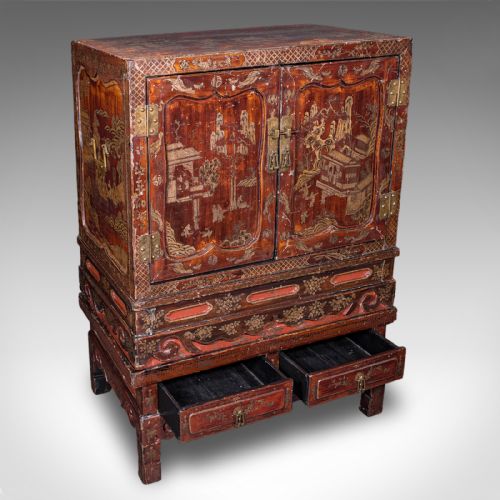
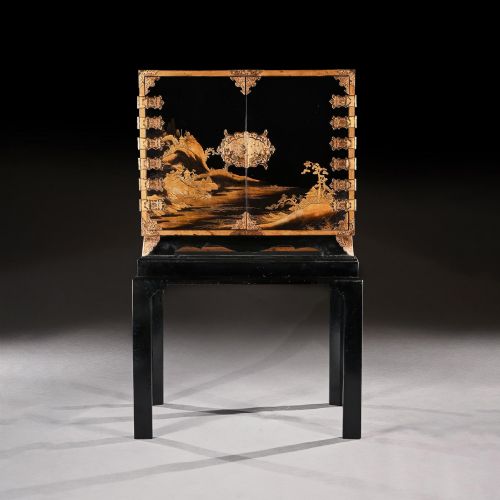
When you search for an asian brass mounted cupboard, you encounter a diverse selection of storage furniture originating from China, Japan, and Korea. These pieces serve distinct functional roles inside a home, functioning as bedside tables, side cabinets, or larger storage chests fitted upon stands.
The objects present on this page bridge multiple eras, stretching from the seventeenth century through the Victorian period and into the early twentieth century. Styles range across Chinese Qing Dynasty pieces, Japanese Edo and Taisho periods, and Korean Joseon Dynasty examples.
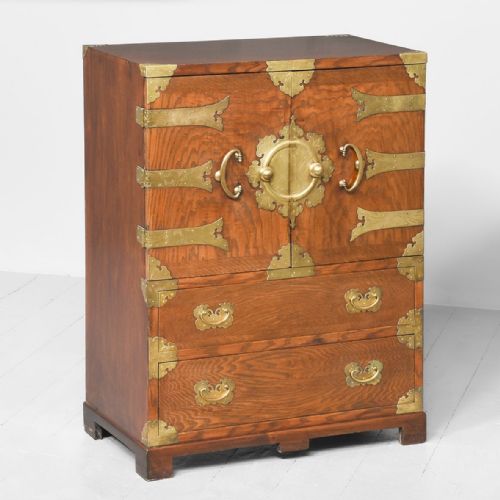
Buyers are most likely to meet elm and hardwood cabinets finished in black, red, or general lacquered treatments. Many incorporate decorative metal hardware that secures the wooden panels while providing a distinct visual contrast.
Materials and construction
Makers constructed these cabinets using regional timbers such as elm, burr elm, and various dense hardwoods. Carpenters joined these wooden elements to build stable frames capable of supporting heavy doors and interior compartments.
Surfaces frequently received applications of lacquer, paint, or gilt brass finishes to create decorative panels and protective coatings. Artisans attached brass mounts, hinges, and corner plates to reinforce structural joints while adding ornamental detail.
Several chests retain their original paint and metalwork, having survived generations of daily domestic storage duty.
Assessing quality in construction
Quality reveals itself in the precision of the joinery and the selection of timber used for the primary structure. Dense hardwoods and figured woods like burr elm demonstrate superior material choice compared to standard softwoods.
The execution of the brass mounts and the preservation of original lacquered or painted finishes dictate the overall refinement of a piece. Intact hardware and undisturbed surface treatments maintain the historical integrity of the cabinet.
The Asian Brass Mounted Cupboard Glossary
- Chinoiserie
- European decorative style reflecting Chinese artistic influences. This aesthetic appears on numerous cabinets and chests produced during the nineteenth and early twentieth centuries.
- Tansu
- Traditional Japanese mobile storage chest. These pieces often feature prominent metal hardware and practical drawer arrangements for domestic organisation.
- Lacquer
- Protective and decorative coating applied to wooden surfaces. It derives from natural resin and yields a smooth, durable finish found on many Asian storage cabinets.
- Elm
- Native hardwood utilised extensively in regional cabinet making. Its distinct grain pattern provides structural strength and visual character to side cabinets and chests.
- Joseon Style
- Korean aesthetic tradition associated with the Joseon Dynasty. Cabinets from this lineage emphasise straightforward wooden construction paired with functional brass hardware.
Asian Brass Mounted Cupboard: Frequently Asked Questions
How are these cabinets used today?
These pieces function effectively as bedside tables, sideboards, or accent storage units within contemporary domestic interiors. Their enclosed compartments provide concealed storage for household items while serving as decorative focal points.
The varied proportions allow them to sit upon floors or table surfaces depending on the specific form of the cabinet.
What periods do these cabinets represent?
The selection includes items spanning from the late seventeenth century through the Victorian era and into the early twentieth century. Specific designations reference the Edo and Taisho periods in Japan alongside the Qing Dynasty in China and the Joseon Dynasty in Korea.
Each era contributes distinct regional characteristics in wood selection and hardware design.
How do I identify lacquered surfaces?
Lacquered surfaces present a hard, glossy finish applied in multiple layers over a wooden substrate. This treatment provides both a decorative coloured surface, often in red or black, and protection for the underlying timber.
Over time, these finishes develop a distinct patina that distinguishes period examples from modern reproductions.
What is the purpose of the brass mounts?
Brass mounts serve both structural and decorative functions on these storage chests. They reinforce corners, secure joints, and provide backing plates for opening mechanisms while adding metallic contrast to the wooden or lacquered exterior.
Craftsmen shaped these metal elements to complement the overall aesthetic of the cabinet.