
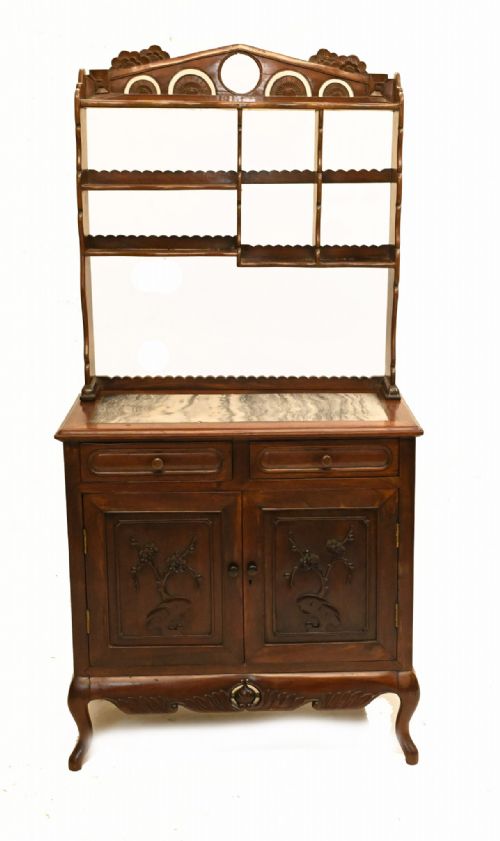
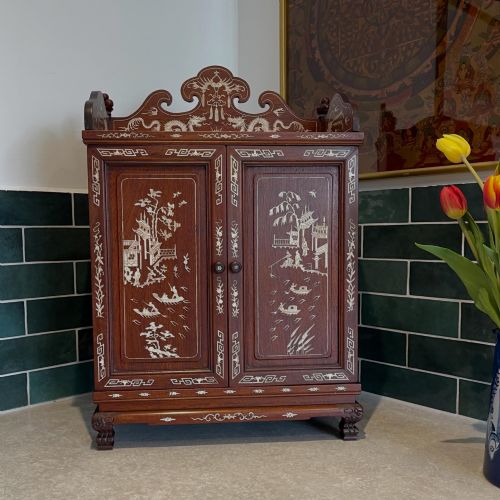


Oriental Hardwood Cabinet
An oriental hardwood cabinet brings rich timber and intricate carving into a room, offering practical storage alongside distinctive craftsmanship.
Oriental Hardwood Cabinet
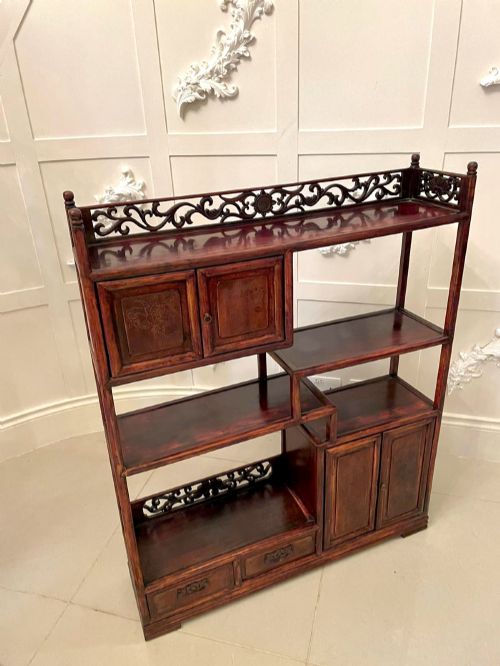
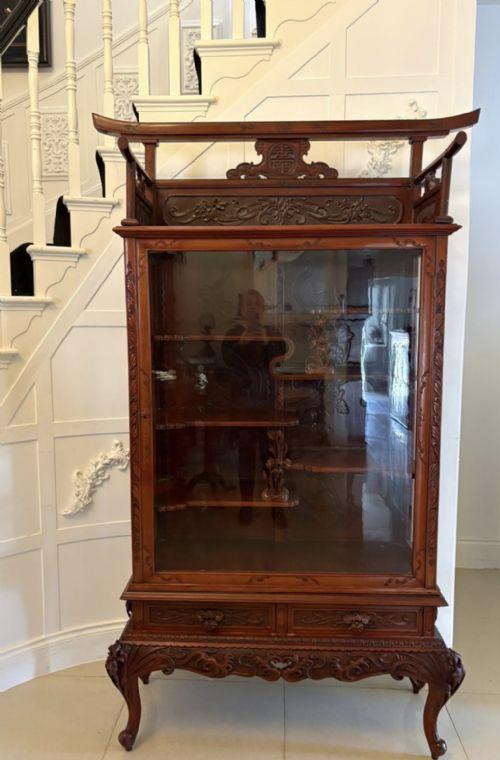
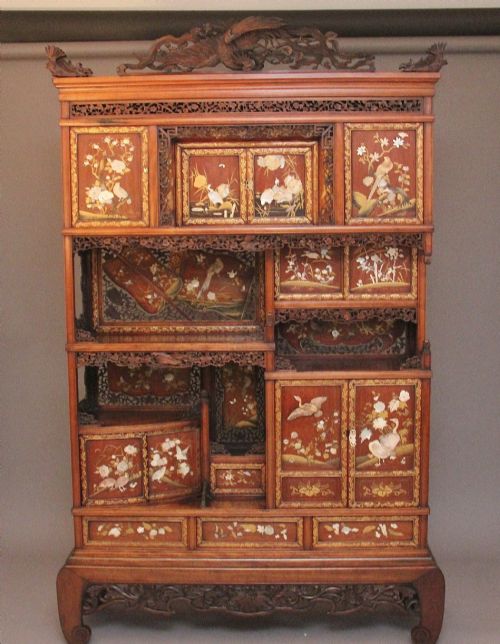
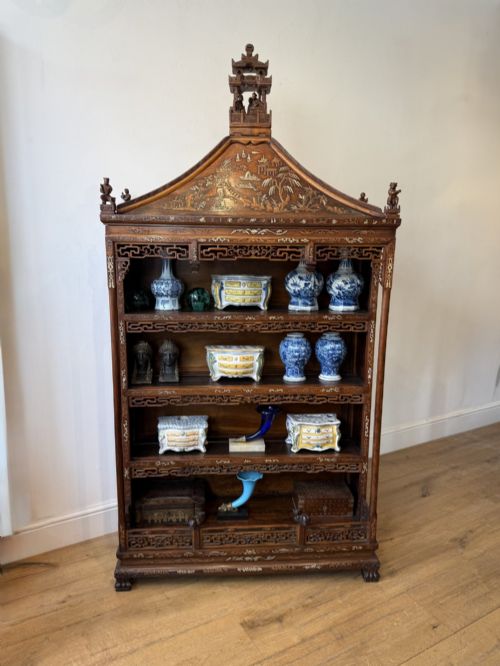
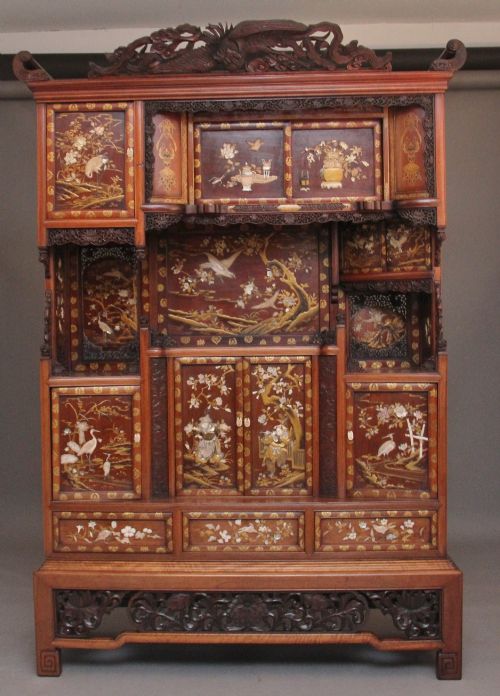
When you search for an oriental hardwood cabinet, you encounter pieces originating primarily from Chinese and Japanese workshops during the nineteenth and early twentieth centuries. These forms include display cabinets, tabletop shodonas, compound cupboards, and smaller storage pieces constructed from dense Asian timbers.
The pieces you meet most frequently on this page date from the Victorian era up to the early twentieth century, spanning Qing Dynasty traditions and Japanese Meiji period designs. They range from large glazed display units and sideboards down to compact table cabinets and occasional stands.
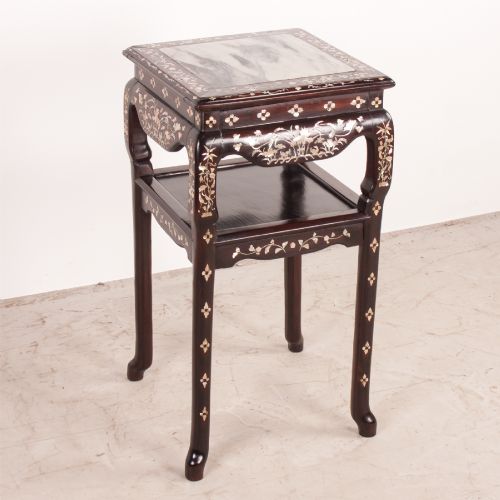
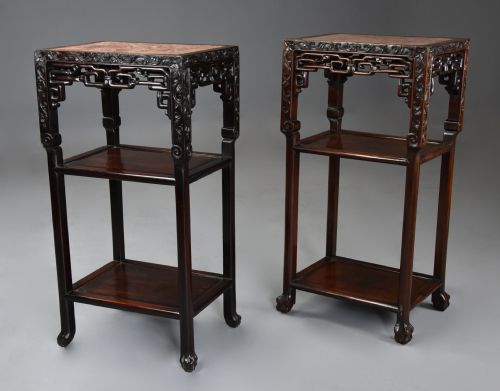
Makers utilised native and regional timbers such as hongmu, zitan, padauk, and elm to build structures intended for both display and utilitarian storage. Alongside these larger cupboards, related forms like plant stands and low tables appear regularly within the selection.
How they were made
Craftsmen built these cabinets using dense hardwoods combined with traditional joinery techniques that allowed timber to expand and contract naturally without metal fasteners. Surfaces frequently received detailed hand carving depicting traditional motifs, dragons, or floral patterns.
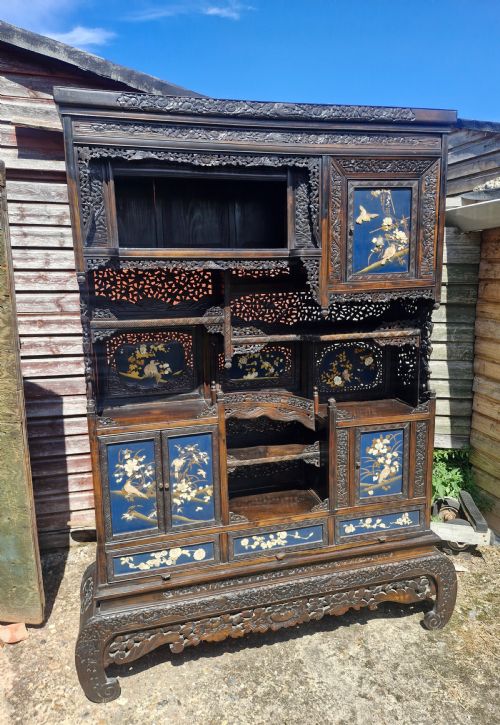
Decoration often involved contrasting materials set directly into the wood grain, including mother of pearl inlay, bone, lacquer finishes, and bronze or brass mountings. Marble inserts also appear frequently on tabletops and bedside surfaces to provide durable, polished contrast against the dark timber.
Listings feature nineteenth-century Chinese hardwoods alongside Japanese Meiji period lacquer work, incorporating brass, mother of pearl, and marble elements.
What varies in quality
The standard of a piece depends heavily on the density and choice of timber, with heavier hardwoods like zitan and hongmu representing superior construction compared to softer regional elms. The depth and precision of hand carving further distinguish standard production items from masterwork examples.
The intricacy and preservation of decorative inlays, such as multi-tiered mother of pearl work or specialised lacquer finishes, dictate the overall refinement of the cabinet. Furthermore, the integrity of original joinery and hardware significantly influences the standing of any given piece.
Gabriel Viardot
The Oriental Hardwood Cabinet Glossary
- Shodona
- A traditional Japanese multi-tiered display cabinet featuring staggered shelving and sliding doors. These pieces date predominantly from the Meiji period.
- Hongmu
- A dense, dark Asian hardwood translated literally as red wood. It serves as a primary material for high-status nineteenth-century Chinese furniture.
- Shibayama
- A Japanese decorative technique involving inlaid reliefs of shell, ivory, and bone. This method creates highly pictorial panels on small cabinets and boxes.
- Chinoiserie
- European artistic interpretation of Chinese and East Asian decorative motifs. It appears on cabinets and furniture produced in Western styles during the nineteenth century.
Oriental Hardwood Cabinet: Frequently Asked Questions
What is a shodona?
A shodona is a Japanese display cabinet featuring asymmetrical shelving designed to exhibit decorative objects. Originating during the Meiji period, these pieces use stepped compartments and small cupboards.
They function well in modern interiors for displaying small collections or ceramics while providing enclosed lower storage for smaller items.
How do I identify Chinese hardwood?
Chinese hardwoods such as hongmu and zitan are exceptionally heavy, dense, and dark in appearance. They take a high polish without requiring heavy stains.
Over decades of handling, these timbers develop a deep, warm patina that distinguishes them from softer or European commercial substitutes.
Where were these cabinets placed?
These cabinets served multiple domestic roles ranging from formal reception room display units to bedroom storage and bedside tables. Smaller table cabinets held writing materials or precious collectors' items.
In contemporary spaces, they adapt easily as sideboards, lamp tables, or dedicated display units for porcelain and small sculptures.
What distinguishes Meiji period pieces?
Meiji period Japanese pieces often incorporate meticulous metal mounts, intricate lacquer work, and detailed ivory or bone inlays. Shodonas from this era prioritize complex spatial arrangement.
They reflect an era of opening international trade where Japanese workshops catered specifically to global demand for decorative arts.