




Putto Bronze Mantel Clock
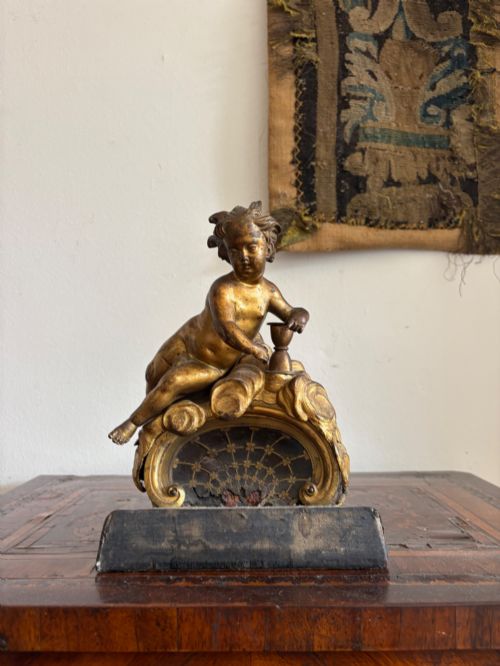
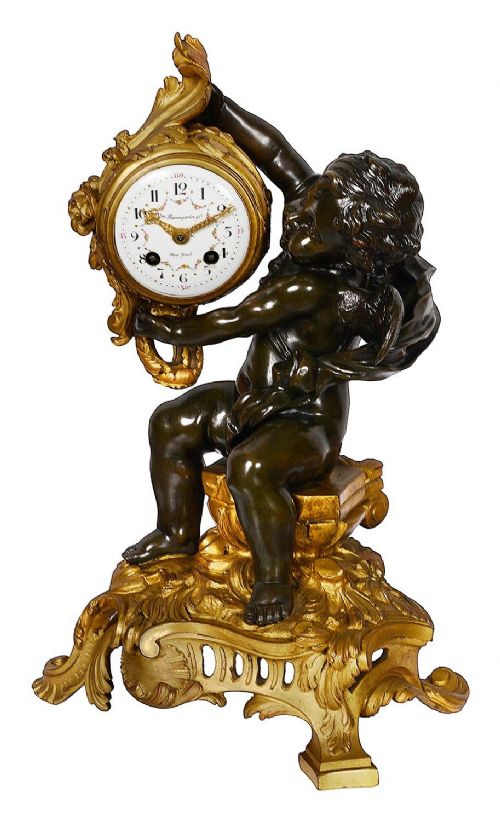
A putto bronze mantel clock combines classical figural sculpture with precision timekeeping, offering a striking centrepiece for a traditional interior.
Putto Bronze Mantel Clock
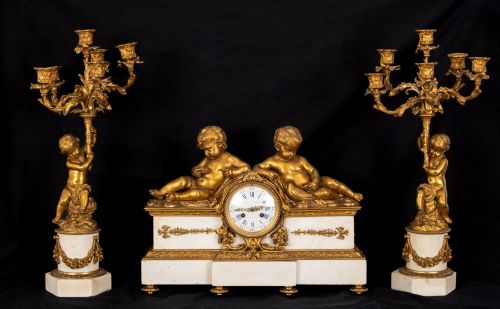
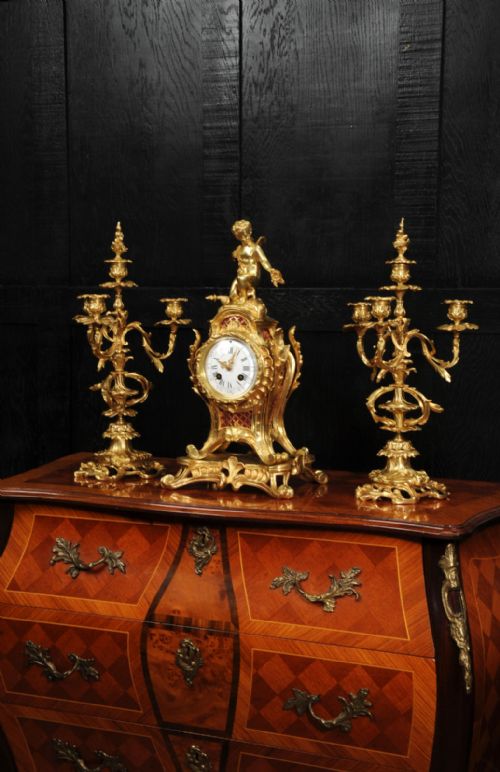
The version most commonly met on this page pairs gilt bronze or ormolu with white or red marble bases, often forming part of a larger garniture set accompanied by matching candelabras. Cases range from small table timepieces and miniature figural clocks to large garnitures featuring detailed decorative mounts and hand-painted dials.
Materials and construction
Makers utilised cast bronze, often fire-gilded to create ormolu finishes, combined with solid white or red marble plinths and glass dial covers. Metal components were cast, chased by hand to sharpen details on the cherub figures and foliage, and then assembled alongside mechanical clock movements.
Dials frequently incorporate enamel or hand-painted porcelain plaques, while architectural and figural elements draw on French stylistic revivals. Complete clock sets often include matching side pieces produced through the same casting and gilding methods.
Listings feature pieces spanning the nineteenth century, including specific dates from 1800 through 1900, alongside Victorian and Regency eras.
Factors determining quality
The precision and crispness of the bronze chasing separate superior examples from standard production, particularly in the rendering of facial expressions, hair and wing feathers on the putto figures. Deeper, more refined hand-chiselling after casting provides a sharper definition to the ormolu surface.
The integration of materials also defines the tier of the piece, where heavier marble bases, substantial bronze casting weight and signed mechanical movements indicate higher workshop standards. Original matching garniture components and intact fire-gilding preserve the integrity of the ensemble.
Le Roy Paris·Leon Message Jollet et Cie·Phillipe H Mourey·Bellenot Paris·John Bennett Cheapside London·Henry Berkeley Square London·F Marti
The Putto Bronze Mantel Clock Glossary
- Putto
- A plump, naked male child figure derived from classical art, frequently depicted with wings in these clock designs.
- Ormolu
- A metallic technique involving the application of a finely ground high-carat gold-mercury amalgam to a bronze object.
- Garniture
- A set of decorative matching objects for a mantelpiece, usually comprising a central clock and side candelabras or vases.
- Chasing
- The artful finishing of a metal casting using small punches and hammers to refine surface textures and details.
- Fusee
- A conical pulley used in clock movements to maintain an equal drive force as the mainspring unwinds.
Putto Bronze Mantel Clock: Frequently Asked Questions
How do I wind a putto bronze mantel clock?
Most of these mechanical movements require a specialised key inserted into small winding holes on the dial face to tension the mainspring.
Care must be taken not to overwind the mechanism, stopping as soon as resistance is felt to protect the internal gears.
Where should I place my clock?
These clocks suit stable, level surfaces away from direct sunlight, excessive moisture and sudden temperature changes that affect metal and marble.
Because many are heavy due to their bronze and marble construction, a sturdy mantelpiece or console table is essential.
How do I distinguish between periods?
Nineteenth-century pieces often reflect specific revivals, with Rococo styles showing asymmetry and scrolls, while Louis XVI pieces feature straight lines and classical symmetry.
Maker signatures, movement stamps and the quality of the ormolu finishing also provide clues to the exact decade of manufacture.
What is a clock garniture?
A garniture consists of a central mantel clock displayed alongside matching side ornaments such as candelabras or urns, designed as a unified set.
These coordinated sets were created to balance a large fireplace mantel visually.