


Putti Cherub Dish
Putti cherub dish figures bring sculptural winged infants and cherubic motifs into table vessels, offering ornate decoration for display.
Putti Cherub Dish
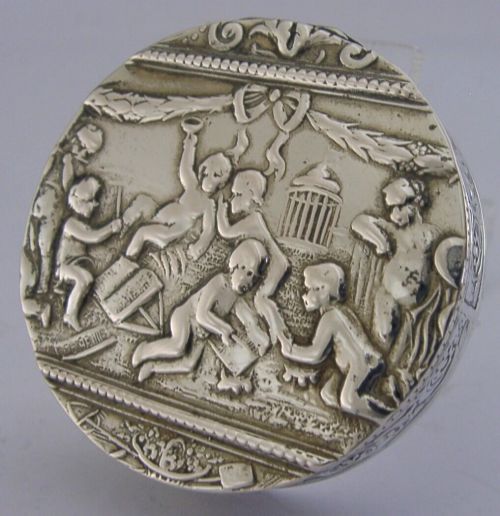
A putti cherub dish search uncovers sculptural vessels and table centrepieces adorned with winged infants derived from classical and revivalist art. These objects appear in forms ranging from sweetmeat dishes and salt cellars to large porcelain centrepieces and tazzas.
The pieces on this page span the nineteenth and early twentieth centuries, reflecting Victorian, Edwardian, and Regency tastes alongside Rococo Revival and Italian Baroque styles. Makers utilised diverse materials including porcelain, gilt bronze, solid silver, and cut crystal to render these figural scenes.
Materials and construction methods
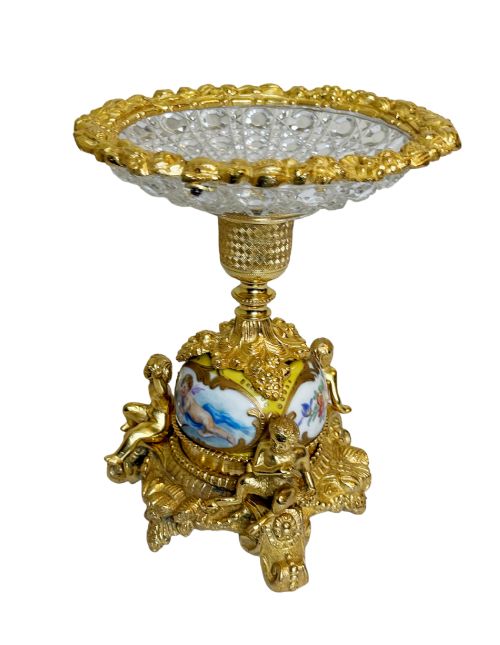
Metalwork items combine cast bronze, ormolu, and solid silver with decorative additions like marble, malachite, blue John, and mother-of-pearl dishes. Artisans chased and gilded bronze to create detailed figures that support glass or stone bowls.
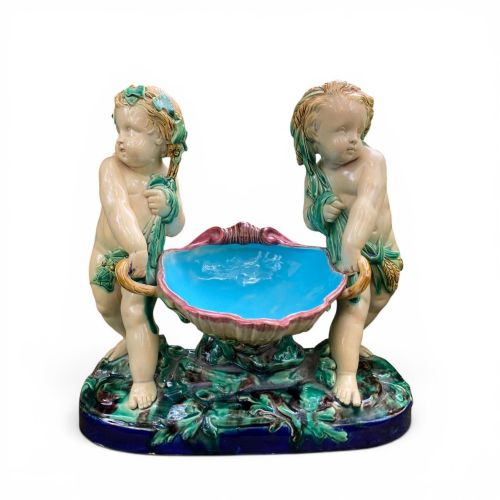
Ceramic pieces involve moulded porcelain, glazed ceramic, and majolica, often featuring applied elements such as roses and hand-painted details. Factories shaped these bodies into baskets, shells, and figural groups supported by putti.
Listings feature nineteenth-century items spanning Victorian, Edwardian, and Regency periods, constructed from porcelain, gilt bronze, solid silver, and cut crystal.
Assessing quality in figural vessels
The standard of modelling in the cherub figures dictates the overall distinction of the piece, separating rigid casts from spirited, finely chased or meticulously sculpted examples. Crisp detailing in the wings, hair, and facial expressions shows superior craftsmanship.
The integration between the figural support and the dish reveals the maker's skill, whether it involves precision-fitted ormolu mounts on hardstones or delicately hand-modelled porcelain flowers clustered around a central bowl.
Schierholz Plaue·Volkstedt·KPM Berlin·Minton
The Putti Cherub Dish Glossary
- Putto
- A plump, often winged male infant figure frequently found in classical and revival art. These figures appear singly or in groups across porcelain and metal vessels.
- Ormolu
- Gilt bronze mounted on decorative objects, created by applying finely ground gold to a bronze base. This technique provided a bright golden finish popular in nineteenth-century metalwork.
- Tazza
- A shallow bowl or cup mounted on a stem and foot, used for display or serving sweetmeats. Examples in this category often feature cherub supports.
- Sweetmeat dish
- A small vessel designed for serving confectionery or dried fruits. They frequently incorporate figural porcelain or metal mounts.
- Majolica
- A type of earthenware decorated with opaque coloured glazes, developed during the nineteenth century by factories such as Minton.
Putti Cherub Dish: Frequently Asked Questions
What is a putti cherub dish?
A putti cherub dish is a decorative vessel, bowl, or tazza featuring sculptural depictions of winged infants or cherubs. These items served as centrepieces or tableware on nineteenth-century dining tables.
They combine utilitarian vessels with elaborate figurative sculpture, using materials from porcelain and majolica to gilt bronze and solid silver.
How were these dishes used originally?
Many of these objects functioned as table centrepieces, sweetmeat dishes, or salt cellars for formal dining. They held fruit, confectionery, or condiments during elaborate meals.
Over time, their role shifted primarily to decorative display on sideboards, mantelpieces, and cabinets.
How do I date a porcelain cherub centrepiece?
Dating relies on factory marks, the style of the modelling, and the surrounding decorative motifs such as applied roses. Nineteenth-century pieces often reflect specific revival styles like Rococo or Baroque.
Examining the glaze, paste quality, and mounting techniques helps narrow down the period of manufacture.
How should I clean gilt bronze and porcelain?
Gilt bronze and ormolu require gentle dusting with a soft brush to protect the delicate gold leaf surfaces. Avoid using harsh chemical polishes that can strip the gilding.
Porcelain pieces can be cleaned with a damp cloth if unglazed, while glazed surfaces tolerate mild soapy water followed by immediate drying.