


Antique Majolica Centrepiece
An antique majolica centrepiece brings rich coloured glazes and moulded forms to the table, offering a striking display piece for the home.
Antique Majolica Centrepiece
When you search for an antique majolica centrepiece, you are looking at richly glazed ceramic display vessels designed to anchor a table or sideboard. These pieces emerge chiefly in Victorian styles, Italian Renaissance Revival, French Neoclassical, and Art Nouveau.
The forms you are most likely to meet on this page include large centrepiece bowls, comports and compotes, footed jardinieres, and figural tureens or vases. Makers such as Minton, Ulisse Cantagalli, Gien, and Eichwald shape these varied ceramic objects across the nineteenth and early twentieth centuries.
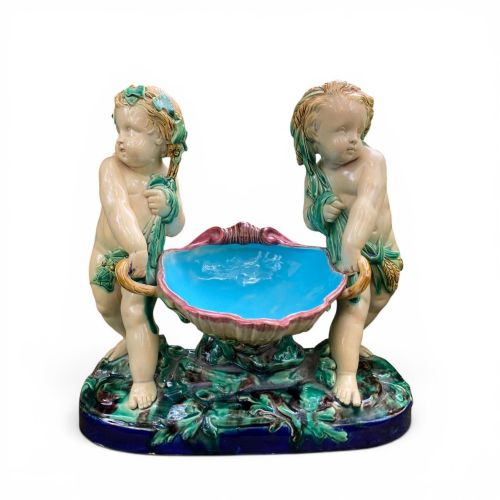
Comprising works from the nineteenth century up to nineteen thirty, these items blend utility and classical ornament. They range from figural baskets supported by cherubs to urns mounted in ormolu.
How they were made
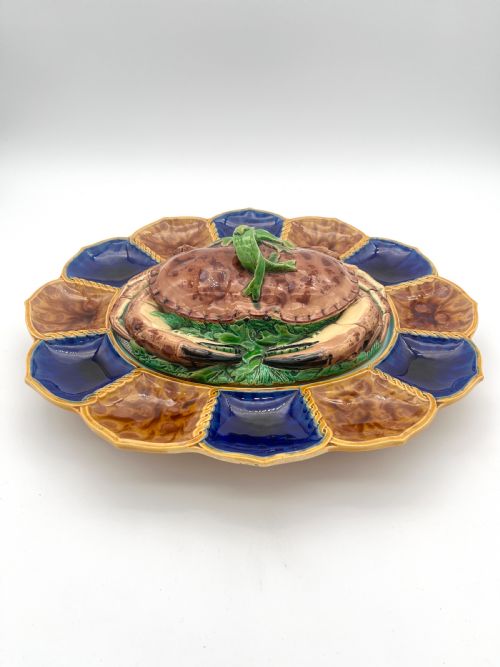
Makers shaped these wares from earthenware, porcelain, and tin-glazed earthenware before applying vibrant lead glazes and hand-painted finishes. Potters frequently moulded complex figures like cherubs, crabs, and cupids directly into the body of the bowl or tureen.
Some French and Italian examples combine ceramic bodies with cast metal mounts such as ormolu, uniting fired clay with gilt bronze detailing. Artisans painted designs by hand onto the tin-glazed surfaces to achieve deep tonal contrasts.
Crabs appear quite unexpectedly serving as tureens, proving that Victorian dining tables held a distinct fondness for crustacean tableware.
What varies in quality
The distinction between standard production and superior work rests on the crispness of the moulded details and the control of the coloured glazes. Finer pieces display sharply defined figures such as Bacchanalian cupids and cherubs rather than soft or blurred relief work.
Hand-painted precision and the successful combination of secondary materials, such as ormolu mounts fitted to porcelain bodies, separate more ambitious workshops from simpler regional potteries.
Minton·Ulisse Cantagalli·Gien·Eichwald
The Antique Majolica Centrepiece Glossary
- Majolica
- A type of pottery decorated with opaque coloured glazes, often featuring vibrant hues on moulded earthenware. This technique gained wide popularity during the Victorian era.
- Compote
- A raised bowl on a stem, used originally for serving fruit or sweets on the dining table. They frequently serve as decorative centrepieces.
- Tureen
- A deep covered bowl used for serving soups or stews, though many majolica versions function purely as decorative display vessels.
- Ormolu
- Gilded bronze mounts applied to furniture and ceramics. It appears on nineteenth-century French pieces to accent the ceramic body.
- Tazza
- A shallow saucer-like dish mounted on a stem and foot. This classical form often appears in Victorian majolica presentations.
Antique Majolica Centrepiece: Frequently Asked Questions
What is an antique majolica centrepiece used for?
These vessels were originally created to hold fruit, flowers, or sweetmeats as the focal point of a formal dining table. Today, they serve primarily as decorative display objects on sideboards or mantelpieces.
Their striking colours and sculptural forms allow them to stand alone as works of ceramic art within a room.
How do I identify a Victorian majolica piece?
Victorian examples often feature brightly coloured lead glazes over heavily moulded earthenware bodies, frequently incorporating naturalistic subjects or classical figures like cherubs and cupids. Many bear factory marks or date ciphers from prominent potteries of the nineteenth century.
Examining the underside for impressed factory ciphers helps confirm the exact period and maker.
What materials are used in these centrepieces?
The primary body is typically earthenware, ceramic, or porcelain, finished with lead glazes or tin-glazing. Some nineteenth-century examples incorporate additional materials such as ormolu mounts.
Hand-painted surface decoration provides the characteristic palette seen across Italian, French, and English workshops.
How do I care for an antique majolica centrepiece?
Keep these glazed ceramics out of direct sunlight to protect the coloured glazes from fading over time. Dust them gently with a dry, soft cloth and avoid using chemical cleaners on the surface.
Because the glazes can be delicate, handle the pieces by their main body rather than protruding moulded elements.