



Purple Gemstone Drops
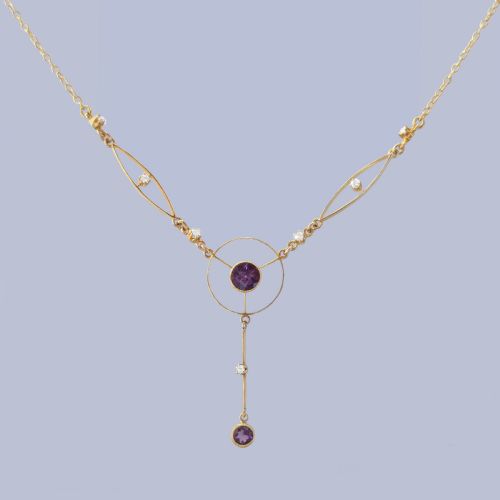
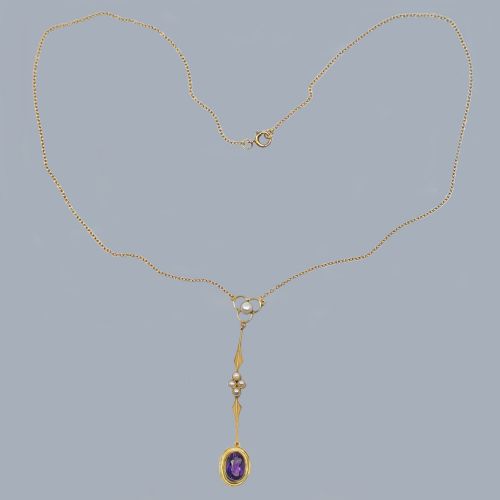
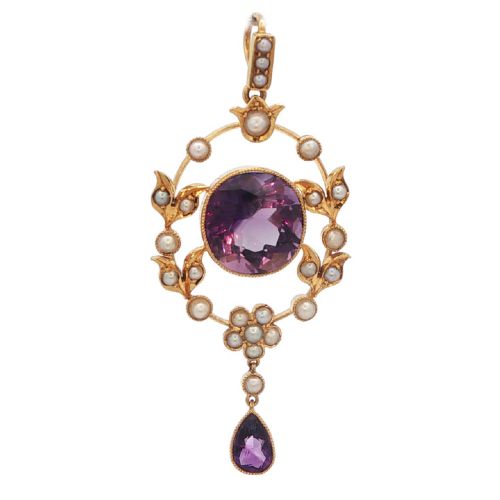
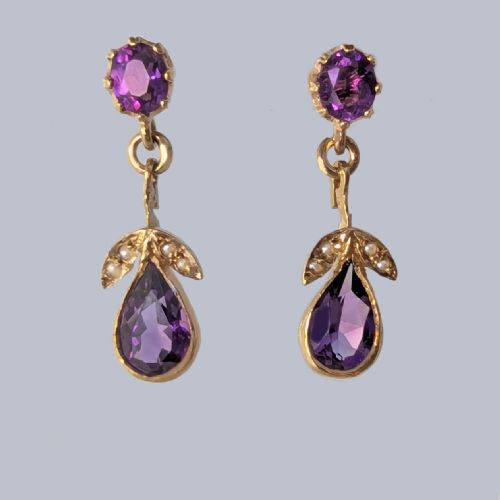
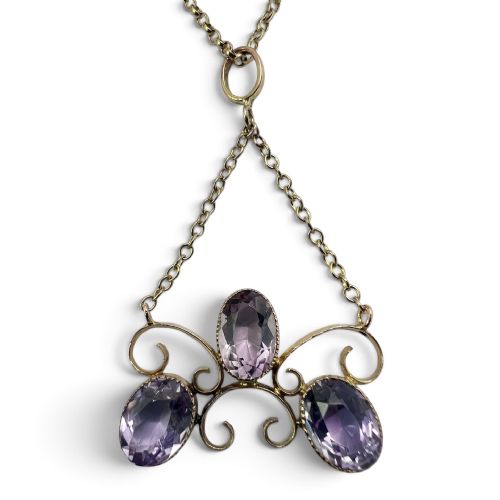
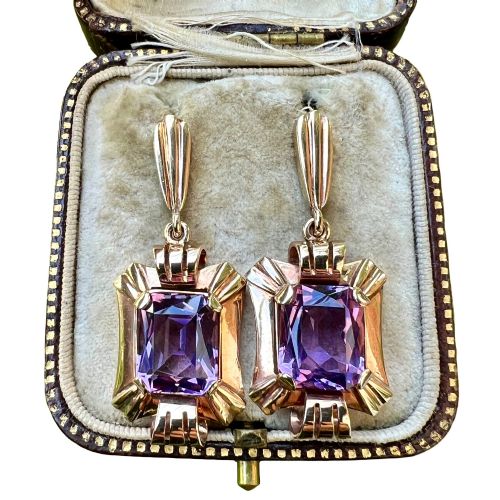
These purple gemstone drops encompass amethyst necklaces, pendants, and earrings set in gold or silver from Victorian, Edwardian, and later periods.
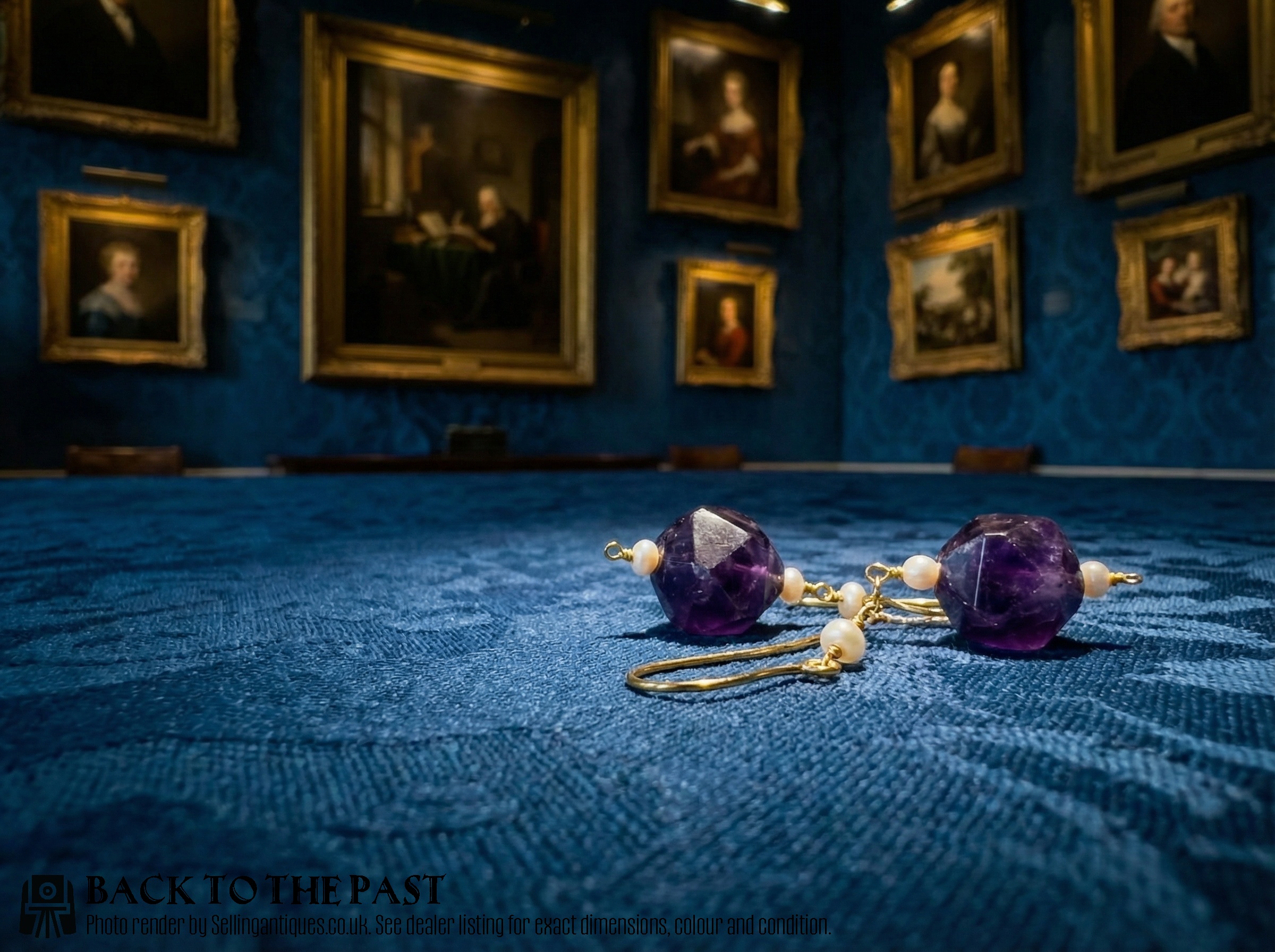
Purple Gemstone Drops
When you search for purple gemstone drops, you encounter wearable ornaments suspended from chains, hooks, or fittings, dominated by amethysts paired with gold or silver. The selections span Victorian, Edwardian, Art Nouveau, and later twentieth-century eras, reflecting changing tastes in adornment over time.
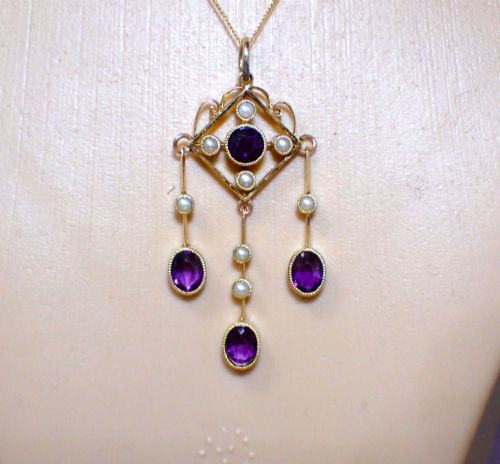
Pendants and drop earrings form the core of these items, often incorporating seed pearls alongside the central amethyst stones. Edwardian lavalier necklaces and Victorian cluster earrings appear frequently among the listings, demonstrating traditional mounting techniques.
How they were made
Goldsmiths utilised nine carat, fifteen carat, and eighteen carat yellow or white gold, alongside silver, to mount faceted and cabochon amethysts. Seed pearls are frequently set alongside the purple stones using fine wire work and claw settings.
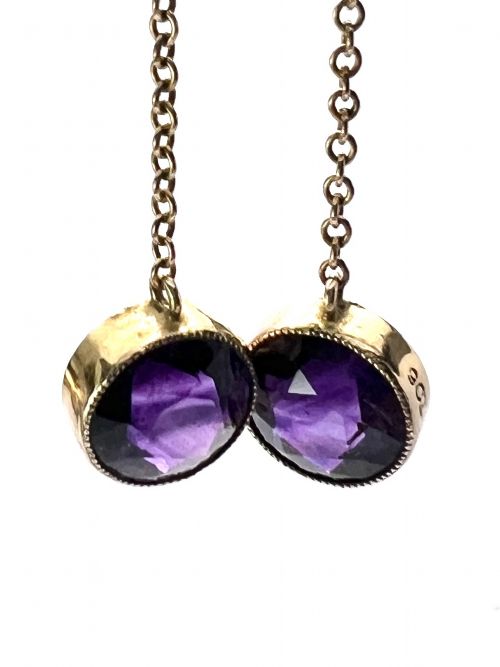
Craftsmen shaped metal into delicate filigree, foliate motifs, and geometric Art Deco frames. Hallmarks stamped into the metal provide evidence of assay offices and purity standards.
Listings feature amethysts paired with nine carat gold, fifteen carat gold, silver, and seed pearls across Edwardian and Victorian styles.
What varies in quality
The depth of colour and clarity of the amethyst stones determine visual impact, alongside the intricacy of the surrounding metalwork. Pieces featuring well-matched stones and integrated seed pearl clusters demonstrate higher levels of design execution.
The survival of original components, such as secure clasp mechanisms, screw-backs on earrings, and matching chains, influences the integrity of the piece. Subtle variations in hand-finishing distinguish mass production from workshop output.
S. Blanckensee & Son·Hamilton & Co
The Purple Gemstone Drops Glossary
- Amethyst
- A purple variety of quartz prized for its violet hue, frequently faceted into oval or teardrop shapes for use in pendants and earrings. It serves as the primary gemstone across these listings.
- Lavalier
- A necklace featuring a pendant suspended from a central drop or chain, popular during the Edwardian period. These designs often incorporate delicate chains and articulated settings.
- Seed Pearl
- A very small, natural or cultured pearl used in clusters or borders around larger stones. They add texture and a luminous contrast to purple gems.
- Negligé Necklace
- A Victorian or Edwardian necklace style featuring two asymmetrical drops suspended from a central festoon. This form allows the gemstone drops to rest at slightly different lengths.
Purple Gemstone Drops: Frequently Asked Questions
What periods do these purple gemstone drops date from?
The pieces span from the nineteenth century through the Edwardian era and into the mid-twentieth century. Styles shift from elaborate Victorian clusters to delicate Edwardian lavaliers and geometric Art Deco designs.
Later vintage examples from the nineteen-fifties and sixties also appear, showing how jewellers reinterpreted traditional drop configurations in subsequent decades.
How do I care for antique amethyst jewellery?
Amethyst is a durable quartz, but prolonged exposure to direct sunlight can fade the purple coloration over time. Store pieces individually in soft pouches to prevent scratching from harder gems.
Clean the metal and stones gently with warm soapy water and a soft brush, avoiding harsh chemical dips that might damage seed pearls or delicate settings.
What gold purities are used in these drops?
Items are fashioned from nine carat, fifteen carat, and eighteen carat gold, alongside silver and white gold variations. British hallmarks often stamp the precise metal purity into the reverse of the setting or onto the clasp.
Earlier nineteenth and early twentieth-century items frequently utilise fifteen carat gold, while later twentieth-century pieces commonly employ nine carat gold.
Are seed pearls used in these designs real?
Natural or cultured seed pearls are commonly integrated into Victorian and Edwardian pieces as borders or accent details around the central amethyst drops. These tiny pearls are secured with fine wire or tiny prongs within the metalwork.
Their presence alongside amethysts is a defining characteristic of Edwardian lavaliers and Victorian fringe necklaces.