



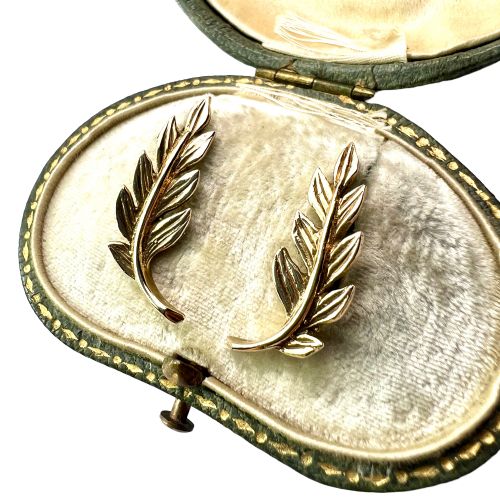


Yellow Gold Studs
Yellow gold studs bring together period gemstones and warm metal in wearable forms designed to sit close to the ear or fasten a cuff.
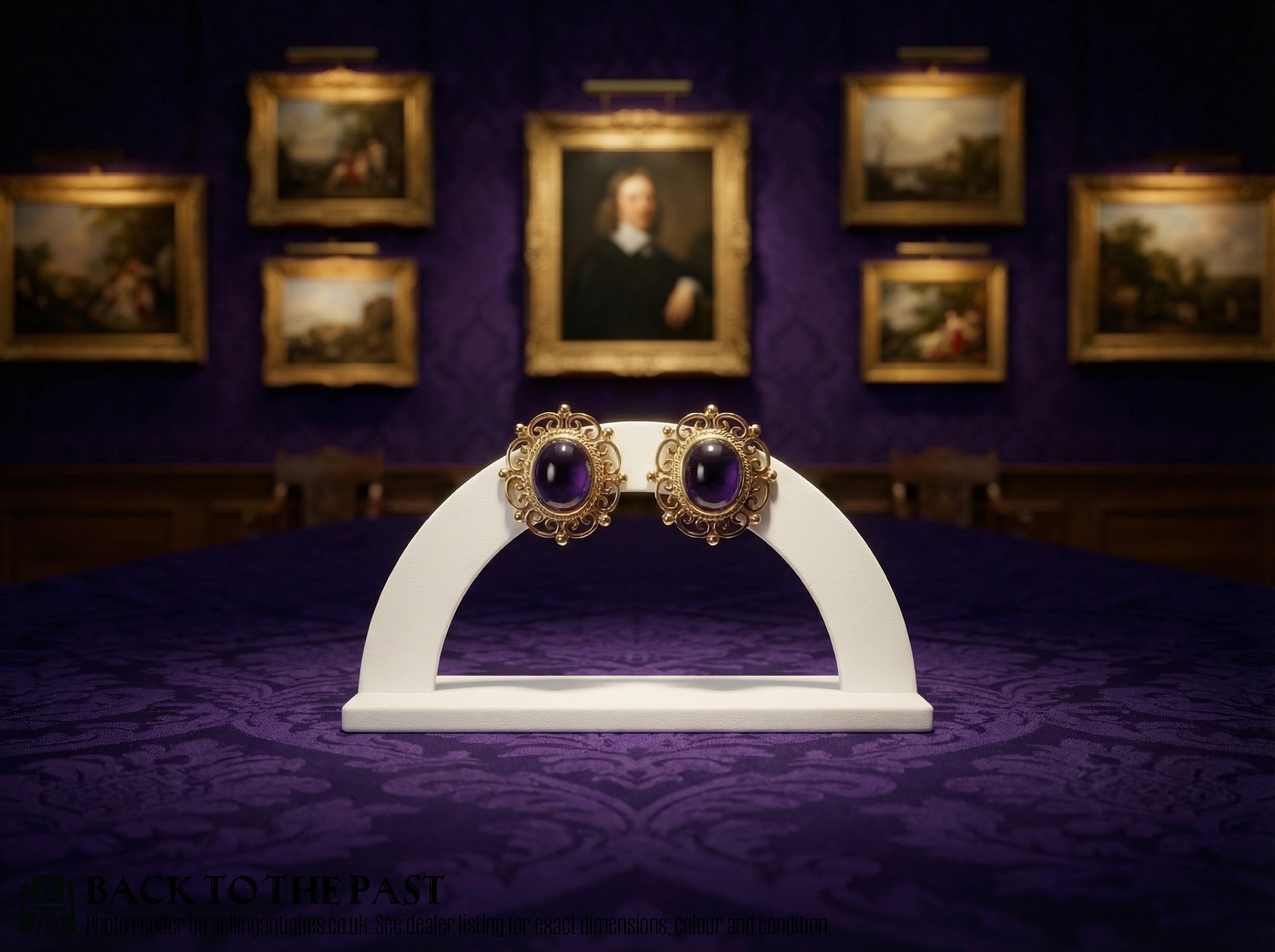
Yellow Gold Studs
When you search for yellow gold studs, you find items designed for fastening through pierced ears or securing shirt cuffs and collars, spanning Victorian, Edwardian, Art Deco, and mid-century periods. The selections recorded here consist predominantly of earrings and cufflinks constructed from gold alloys.
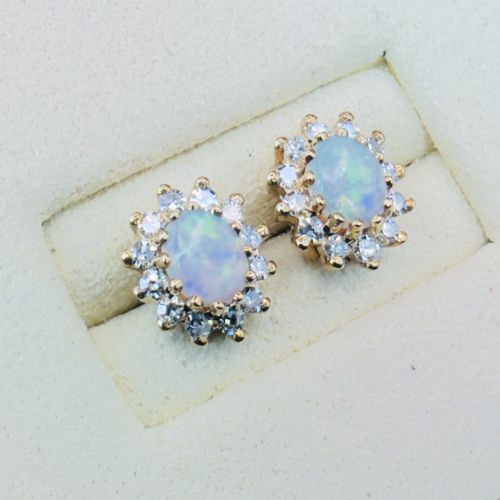
Earrings take the form of single stones, clustered halos, drops, and floral arrangements, while cuff and dress items present patterned buttons, engraved discs, and matched boxes. These pieces draw on styles ranging from traditional cluster arrangements to modernist geometries and organic motifs like leaves and serpents.
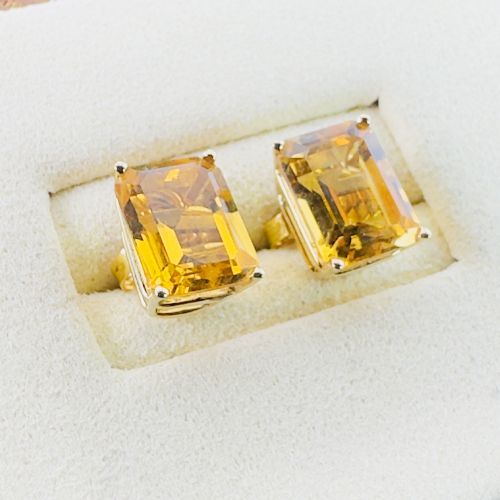
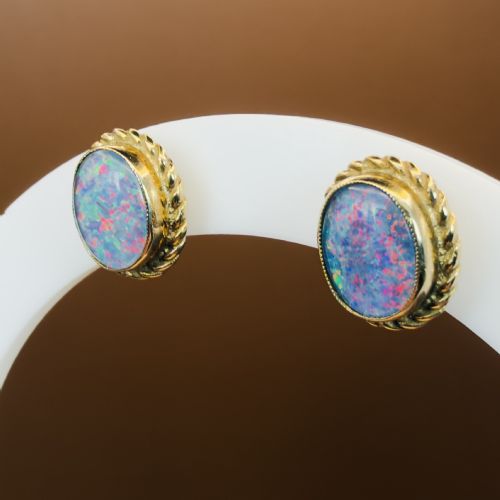
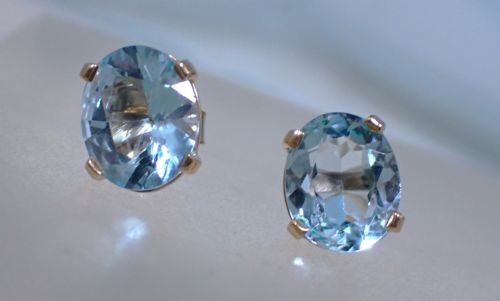
Origins stretch from nineteenth-century workshops to mid-century studios, incorporating yellow gold in nine-carat, fourteen-carat, and eighteen-carat finenesses. Stones set within these frames include opals, garnets, diamonds, aquamarines, pearls, and emeralds.
How they were made
Maker operations rely on yellow gold alloys shaped into bezels, prongs, and screw mechanisms to secure cabochon and faceted gemstones. Stones such as diamonds, opals, garnets, and emeralds are paired with metals of varying carat weights.
Techniques include filigree work, cluster settings with diamond halos, and engraved surface patterns on buttons and leaf motifs. Fastenings range from standard screw-on posts to omega backs and hinged fittings.
Yellow Gold Studs Retail Price Guide 2026
Typical asking prices for yellow gold studs among the pieces listed under this phrase on Sellingantiques today, from the lower quarter to the upper quarter. They describe what is for sale here now, not the wider market.
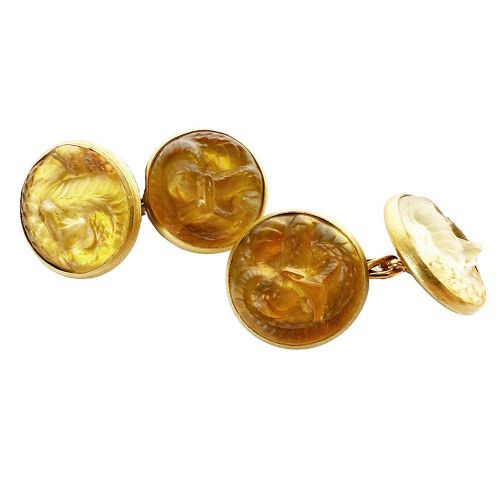
Glass serpent cufflinks crawl across the decades to share a display with humble shirt buttons.
What varies in quality
Distinction across the range lies in the selection of materials and the complexity of the design. Examples featuring high-carat gold alongside clean-cut gemstones or natural pearls demonstrate greater refinement than simpler alloy castings.
Workmanship determines the longevity of smaller components, evident in the precision of stone settings, the crispness of engraved surface details, and the structural integrity of screw-backs and cluster arrangements.
R Lalique·Deakin & Francis·Abraham Meyer Blanckensee
The Yellow Gold Studs Glossary
- Cabochon
- A gemstone shaped and polished with a smooth, rounded surface rather than faceted. This cut is frequently seen on opals, jade, and garnets across Victorian and mid-century items.
- Cluster
- An arrangement of smaller stones gathered tightly around a central focal gem. This layout appears often in diamond, pearl, and coloured gemstone earrings.
- Carat
- A unit measuring the purity of gold, denoted by numbers like 9ct, 14ct, and 18ct. Higher numbers indicate a greater proportion of pure gold in the alloy.
- Doublet
- A composite gemstone formed by gluing two separate layers together, commonly seen with opals to enhance colour and stability. The top layer consists of the precious material while the base provides support.
- Omega back
- A hinged fastening clip shaped like the Greek letter omega, used on non-pierced or heavier earrings to secure the lobe comfortably.
Yellow Gold Studs: Frequently Asked Questions
What periods do yellow gold studs come from?
These items span from the nineteenth century through the Victorian, Edwardian, and Art Deco eras into the mid-twentieth century. Mid-century examples and vintage 1950s and 1960s pieces appear frequently alongside older Victorian and Edwardian works.
Designs reflect the shifting aesthetic preferences of each decade, moving from ornate floral clusters to streamlined modernist geometries and organic leaf motifs.
How do I identify different gold purities?
Gold fineness is typically indicated by hallmarks stamped onto the metal, showing designations such as nine-carat, fourteen-carat, or eighteen-carat. These marks provide evidence of the alloy composition used by the maker.
Higher carat numbers generally present a richer, warmer yellow hue and contain a greater proportion of pure gold relative to base metal alloys.
Were these always worn as earrings?
Not all items catalogued under this heading began life as ear ornaments. The category includes shirt collar dress studs and formal cufflinks designed for fastening garments as well as piercing lobes.
Matching sets often accompanied Victorian and Edwardian formalwear, serving functional roles in securing cuffs and collars before evolving into distinct collector categories.
What stones are typically found in these pieces?
Commonly encountered gemstones include opals, garnets, diamonds, aquamarines, and pearls, often arranged in clusters or drop configurations. Amethysts, topazes, emeralds, and turquoises also appear across various periods.
Makers frequently paired these stones with coloured gold surrounds, utilising contrasting hues like white and yellow metals within the same setting.