




Purple Stone Earrings
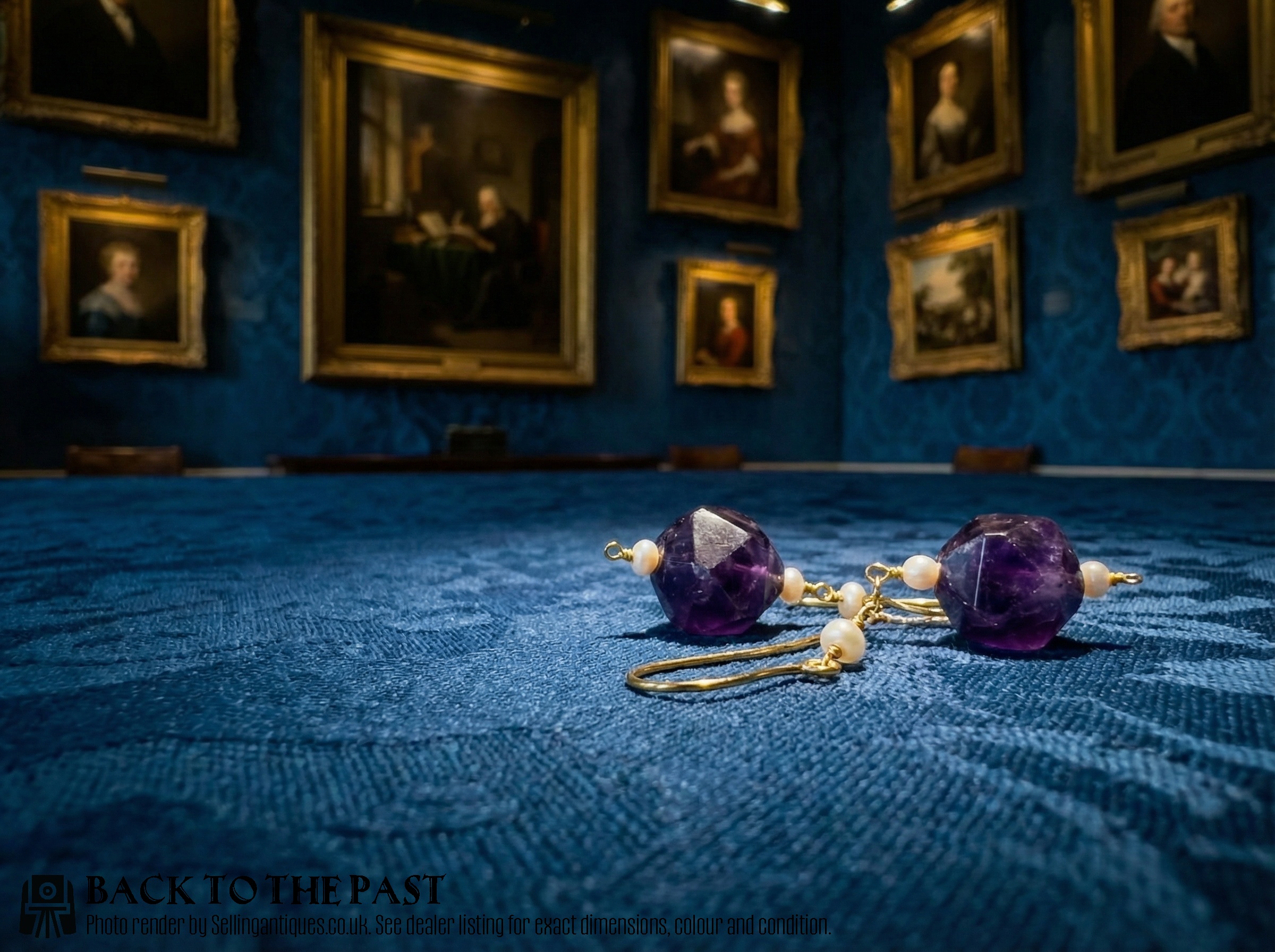
These purple stone earrings bring together centuries of goldsmithing and deep violet gems.
Purple Stone Earrings
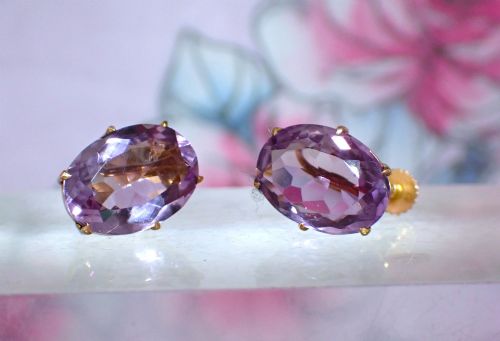
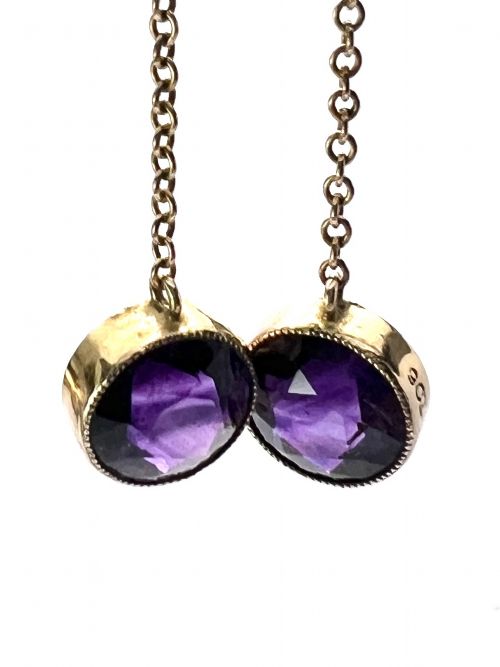
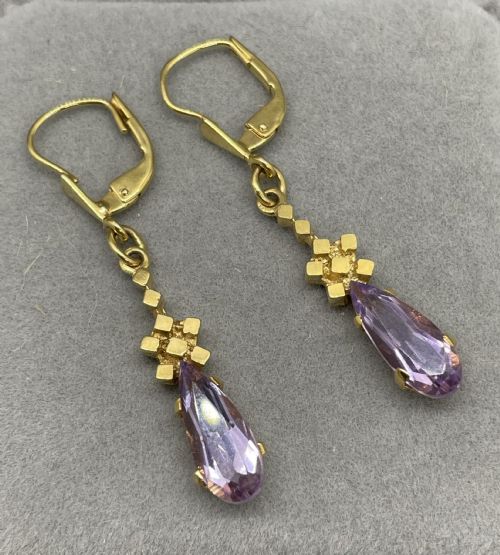
When you search for purple stone earrings, you encounter a distinct array of antique and vintage jewellery spanning from the Georgian and Victorian eras through to the mid-twentieth century. The selection ranges from delicate stud screw-on pieces to elaborate chain drop designs and matching jewellery sets.
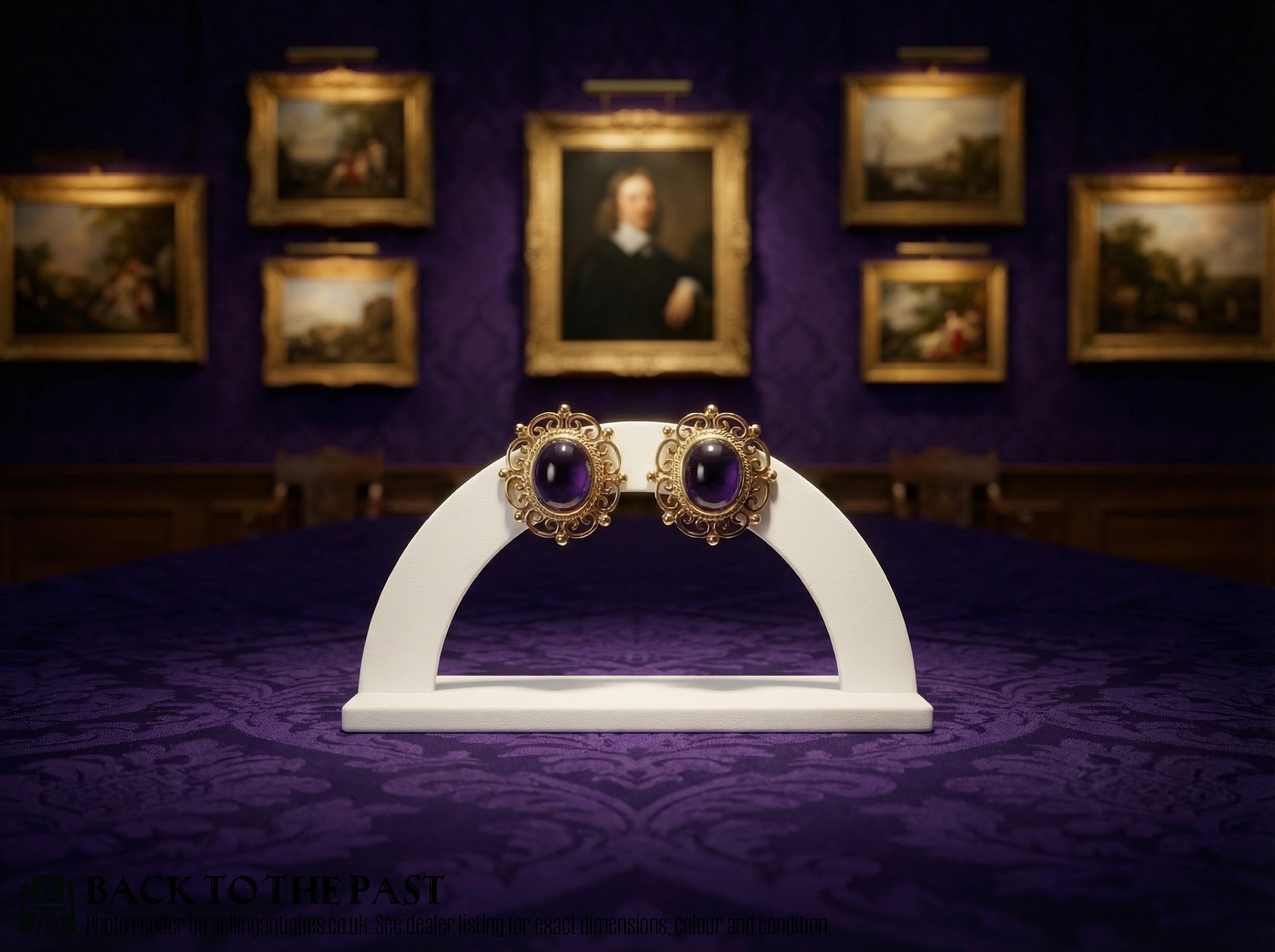
You are most likely to meet Edwardian and mid-century examples on this page, particularly those fashioned from nine-carat gold and set with amethysts. These pieces demonstrate traditional British styles alongside contemporary classic and modernist forms.
How they were made
Goldsmiths utilised nine-carat yellow and white gold alongside silver to mount the stones securely. Metalwork techniques combined casting and wire-forming to create cluster studs and dangling drops.
Gemstones underwent flat-cutting, oval-cutting, cabochon shaping, and faceting to maximise the deep violet lustre of the amethysts, occasionally paired with small pearls or blue john fluorite.
Some screw-on backs were engineered so delicately that putting them on feels more like operating a tiny vintage instrument than wearing jewellery.
What varies in quality
The standard of these earrings rests largely on the depth of colour in the stones and the precision of the goldsmith's mount. Finer examples display well-matched gems with clean faceting set firmly within substantial gold settings.
Simpler cluster or stud designs contrast with intricate chain drops and teardrop arrangements, reflecting the prevailing taste and skill of the period in which they were produced.
The Purple Stone Earrings Glossary
- Amethyst
- A purple variety of quartz highly valued in antique jewellery. It provides the principal violet tone seen across Victorian and Edwardian drops.
- Cabochon
- A gemstone shaped and polished rather than faceted. This smooth, rounded style highlights the natural depth of the stone.
- Screw-on
- A mechanical fastening mechanism used on non-pierced ears. It relies on a threaded screw to hold the earring securely in place.
Purple Stone Earrings: Frequently Asked Questions
How do I date these earrings?
Dating relies on the style of the metalwork, the cut of the stones, and the type of fixings used. Hallmarks, where present, offer definitive proof of the assay year and maker.
Earlier Georgian and Victorian pieces often show hand-cut stones and closed-back settings, whereas Edwardian and later twentieth-century examples employ lighter chains and standard screw or post fittings.
Are all purple stones amethysts?
While the vast majority of violet gems in these pieces are amethysts, other materials do occur. The inventory includes examples set with blue john fluorite and corundum.
Each mineral possesses distinct optical properties and geological origins, though amethysts remain the definitive purple stone of traditional British jewellery.
How should I care for antique earrings?
These delicate items require gentle handling, particularly those featuring pearls alongside the main stones. Avoid harsh chemical cleaners and ultrasonic baths.
Store them separately in a lined box to prevent the gold mounts and gemstone facets from scratching against other pieces in your collection.