


Vintage Purple Earrings
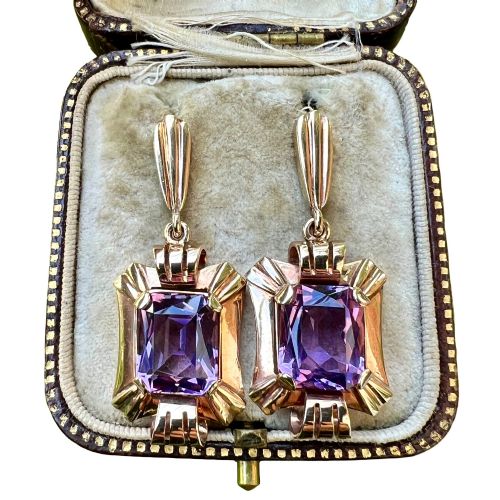
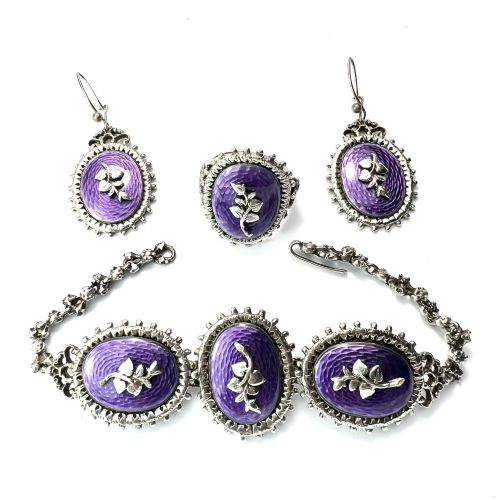
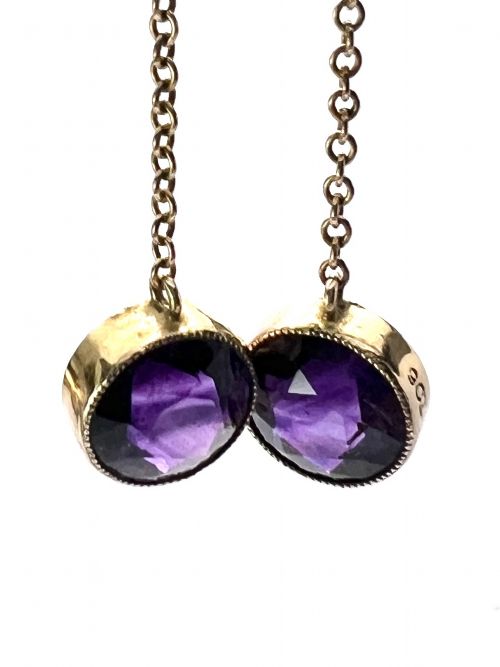
Vintage purple earrings bring together deep amethyst stones and precious metals across periods from the Georgian era to the mid-century.
Vintage Purple Earrings
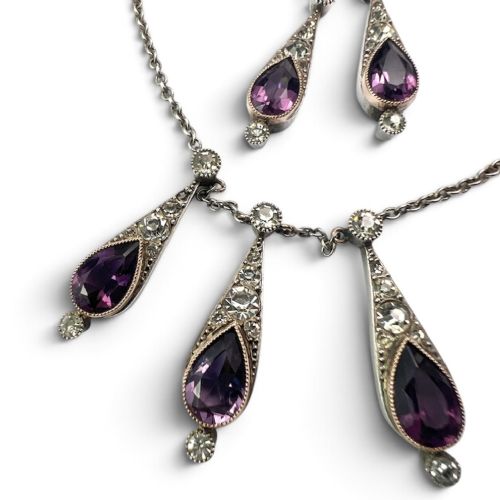
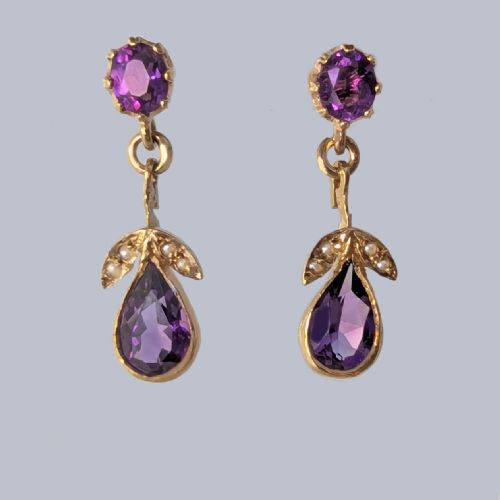
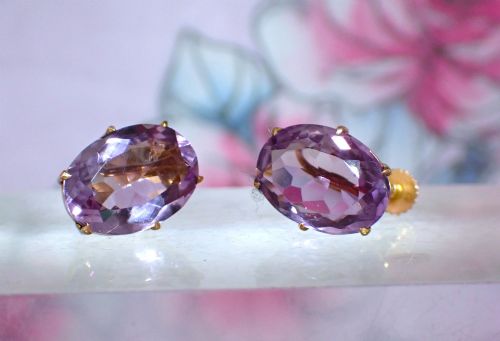
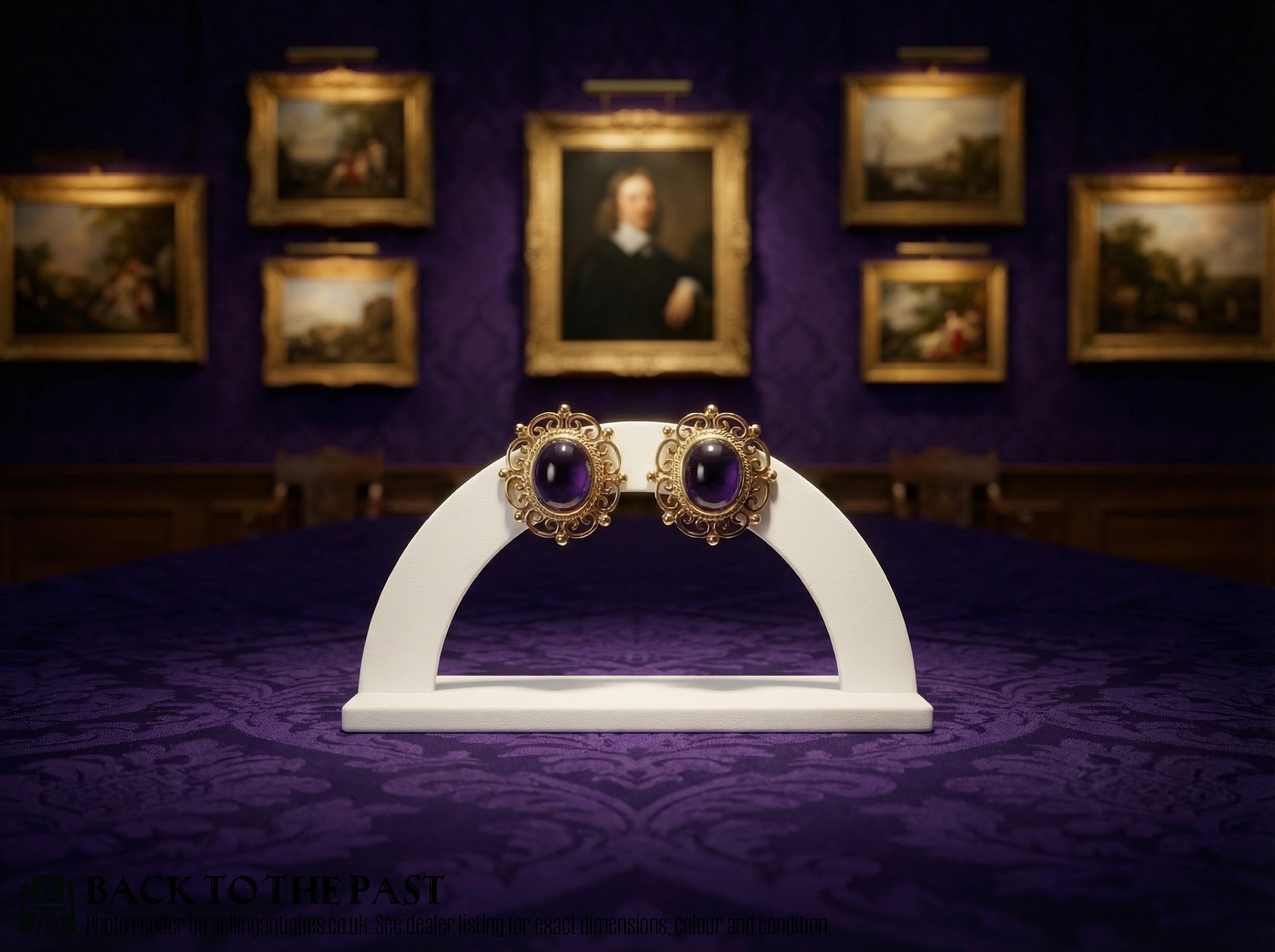
Vintage purple earrings encompass a broad timeline from Georgian flat cut stones through Edwardian drops and Art Deco paste designs up to 1960s gold studs. When you search for vintage purple earrings, you encounter diverse forms ranging from simple screw-back studs to elaborate multi-stone drop pendants.
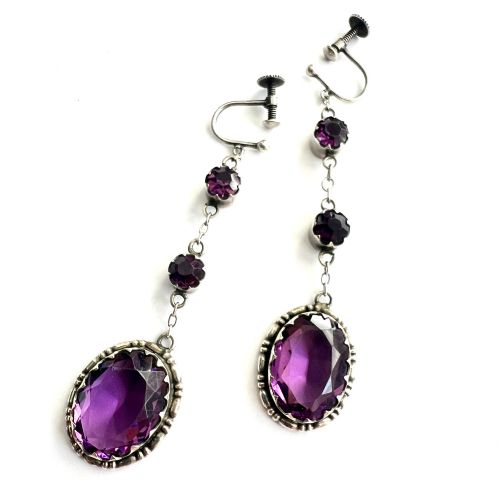
The selections span delicate cluster settings and substantial cabochon designs mounted in yellow gold, white gold, and silver. Drop earrings and chain dangles dominate the earlier periods, while cluster studs and simple cuts appear frequently in mid-century pieces.
Materials and Techniques
Amethyst serves as the primary stone across these pieces, accompanied by paste glass, seed pearls, and rose de France varieties. Goldsmiths set these purple gems in nine-carat and eighteen-carat gold as well as silver, often utilising screw-back mechanisms for non-pierced ears.
Craftsmen shaped the stones into oval, faceted, and cabochon cuts, securing them within cluster mounts, claw settings, and elaborate silver frameworks. Pearl accents and enamel details frequently supplement the central purple stones.
The listings feature pieces spanning from the Georgian era through Victorian, Edwardian, and Art Deco periods up to the 1960s.
Evaluating Quality
Quality rests upon the depth of the amethyst colour, the precision of the stone cutting, and the integrity of the metal settings. Hand-faceted stones and well-matched pearl accents distinguish finer examples from standard production pieces.
The weight and gauge of the gold or silver mountings dictate durability and substance. Intricate Edwardian wirework and crisp Art Deco geometry signal superior craftsmanship compared to simpler mass-produced variants.
Harold Arthur Lazarus
The Vintage Purple Earrings Glossary
- Amethyst
- A purple variety of quartz prized for its violet hue. It forms the primary gemstone in the vast majority of these purple designs.
- Paste Glass
- Hand-cut and polished glass utilised to imitate precious gemstones. It appears frequently in period costume jewellery.
- Screw-back
- A mechanical fastening device utilising a threaded screw to secure the earring without requiring pierced lobes.
- Cabochon
- A gemstone shaped and polished with a smooth convex surface rather than faceted edges.
- Seed Pearl
- A very small natural or cultured pearl used as an accent stone around central gems.
Vintage Purple Earrings: Frequently Asked Questions
How do I date vintage purple earrings?
Dating relies on examining the metal hallmarks, setting styles, and closure mechanisms. Edwardian and Victorian pieces often feature delicate filigree and screw-back fittings, while mid-century examples lean towards bolder gold cluster studs.
Changes in gemstone cuts also provide clues, as Georgian pieces use flat-cut stones whereas later decades favour brilliant and oval facets.
Are all purple stones amethyst?
While amethyst dominates these listings, paste glass and corundum also provide purple colouration in certain mid-century and Art Deco designs. Close inspection reveals whether a stone is a natural quartz or a manufactured substitute.
Certified stones and precious metal tests help confirm the exact composition of older pieces.
How do screw-back earrings work?
Screw-back fasteners use a threaded post and a small paddle to grip the earlobe gently without needing a piercing. Wearers turn the screw to adjust the pressure for a secure fit.
This mechanism was common in vintage jewellery before clip-on and post earrings became standard.
Can I wear these earrings daily?
Amethyst is a durable quartz suitable for regular wear, though older settings require careful handling. Edwardian and Victorian gold mounts benefit from occasional checks by a jeweller to ensure stones remain secure.
Storing them in individual soft pouches prevents scratching between wears.