





Purple Gemstone Drop Earrings
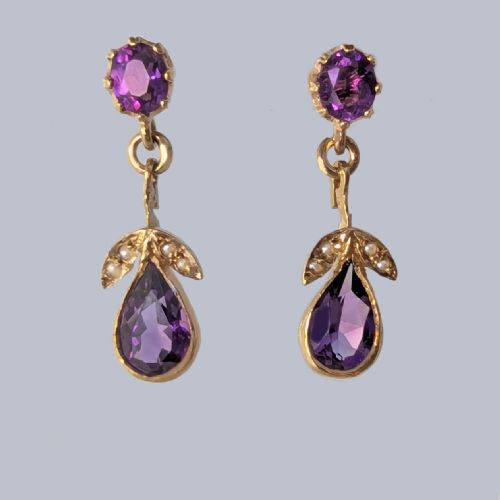
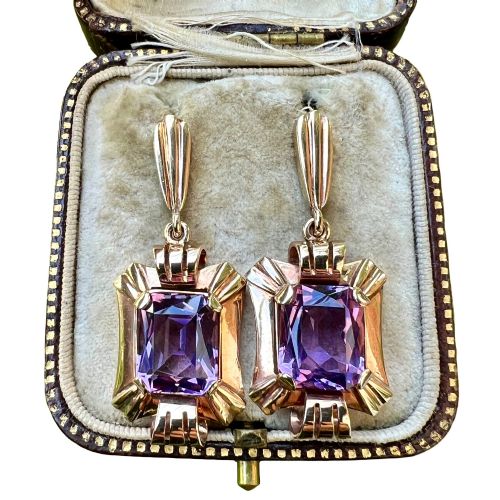
These purple gemstone drop earrings span the Victorian, Edwardian and mid-century eras, offering rich amethyst stones set in various golds.
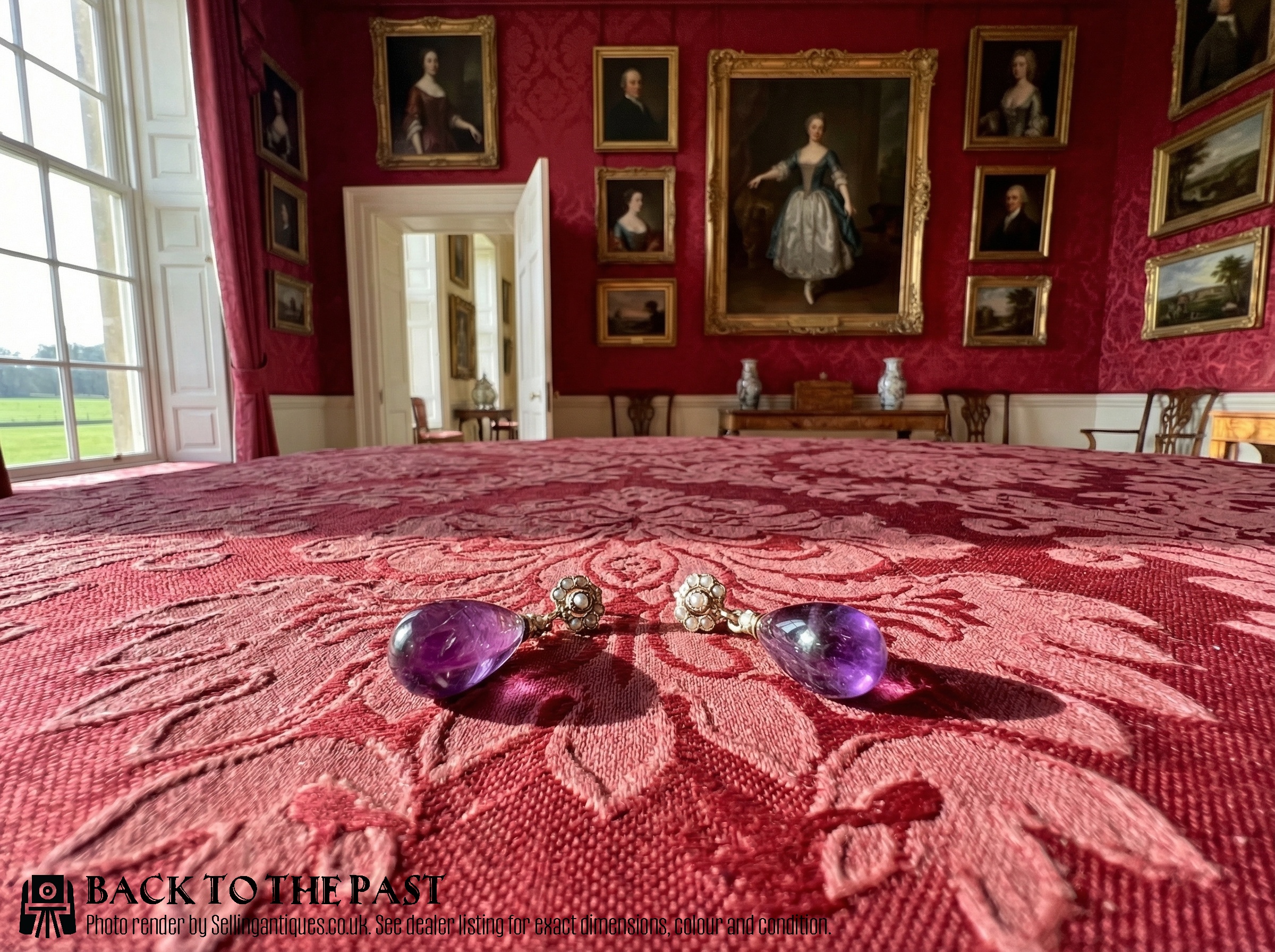
What purple gemstone drop earrings are
When you search for purple gemstone drop earrings, you encounter swinging clusters and dangling stones designed to catch the light from the earlobe. The pieces on this page draw principally from Victorian, Edwardian, Art Deco and mid-century aesthetics.
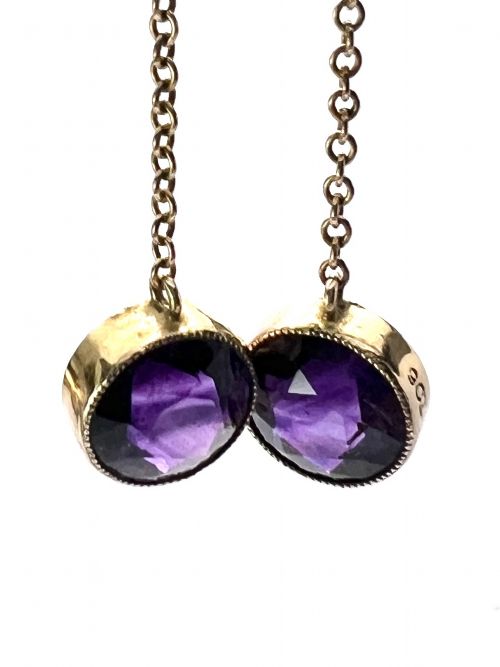
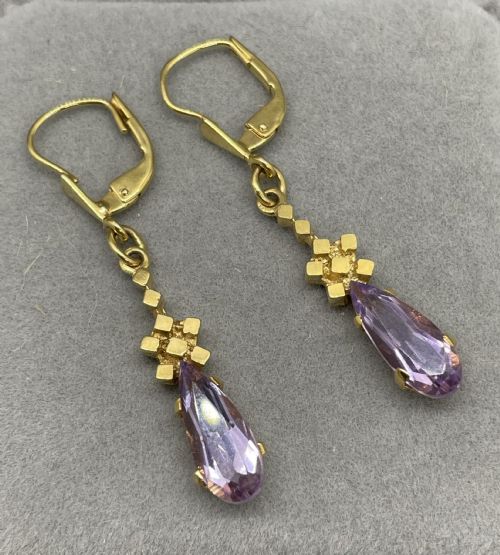
Most examples rely on amethyst as the primary purple gemstone, frequently paired with seed pearls or set in yellow and white gold. Forms range from teardrop pendants to multi-stone drop configurations and stud drop variants.
Originating across different decades, these earrings demonstrate how jewellers adapted purple stones through the nineteenth and twentieth centuries. The selection combines authentic antique items with Victorian revival pieces from later decades.
How they were made
Goldsmiths utilised varying purities of gold, including 9ct yellow gold, 15ct gold, and 18ct white gold, to mount the purple stones. Metalwork techniques involved secure settings that held amethysts alongside delicate seed pearls.
Construction methods evolved from period screw-back fastenings found on nineteenth-century pairs to later standard post and clip formats. Amethysts were cut into teardrop, oval and faceted shapes to maximise their colour.
Retail Price Guide 2026
Typical UK retail prices for purple gemstone drop earrings, calculated from the Sellingantiques database of over a million retail prices indexed since 2003. This retail price guide relies exclusively on Sellingantiques data; no external sources or auction records are used, so the figures do not describe the wider market.
Materials documented here include amethysts, seed pearls, standard pearls, and four different gold purity levels.
What varies in quality
Quality rests in the depth of colour within the amethyst and the finesse of the surrounding goldwork. Finer examples display well-matched stones and intricate arrangements of seed pearls rather than simple cast mounts.
The integrity of the metal settings and the clarity of any hallmarks distinguish standard production pieces from higher-tier creations. Weight and substance in the gold also mark the distinction between simpler mid-century designs and earlier antique work.
The Purple Gemstone Drop Earrings Glossary
- Amethyst
- A purple variety of quartz prized for its violet hue in antique and vintage jewellery. It serves as the main gemstone across these drop earrings.
- Seed pearl
- A very small natural or cultured pearl used in clusters or borders around larger stones. They appear frequently alongside amethysts in Victorian designs.
- Screw-back
- A mechanical fastening common on older non-pierced earrings that tightens via a threaded screw. This mechanism secures the drop without requiring a pierced earlobe.
- Hallmark
- An official stamp indicating the metal purity and origin of the item. These marks help verify the gold standard and sometimes the assay office.
Frequently Asked Questions
How do I care for antique amethyst earrings?
Amethysts can fade under prolonged direct sunlight, so store them in a dark box when not being worn. Clean the gold and stones gently with warm soapy water and a soft brush.
Avoid harsh chemical dips, especially if pearls are present in the design, as moisture and chemicals can damage organic gems over time.
How can I tell a Victorian pair from a 1960s piece?
Victorian earrings often incorporate closed-back settings, natural seed pearls, and specific mechanical findings like screw-backs or wire hooks. They tend to feature hand-finished details.
Sixties examples usually display simpler modernist lines, brighter 9ct gold alloys, and standard post fittings reflecting changing manufacturing techniques.
What gold purities should I expect?
The listings feature multiple gold standards, most commonly 9ct yellow or white gold, alongside historical 15ct and 18ct gold options. Higher carat numbers indicate a greater proportion of pure gold in the alloy.
Colour can vary from the rich greenish-yellow tone of older 15ct gold to the brighter modern shade of 9ct gold.