
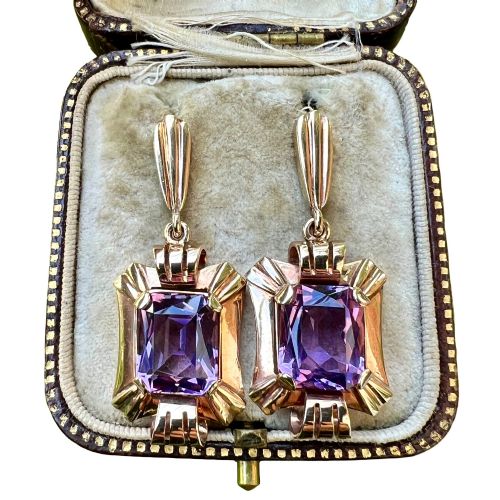
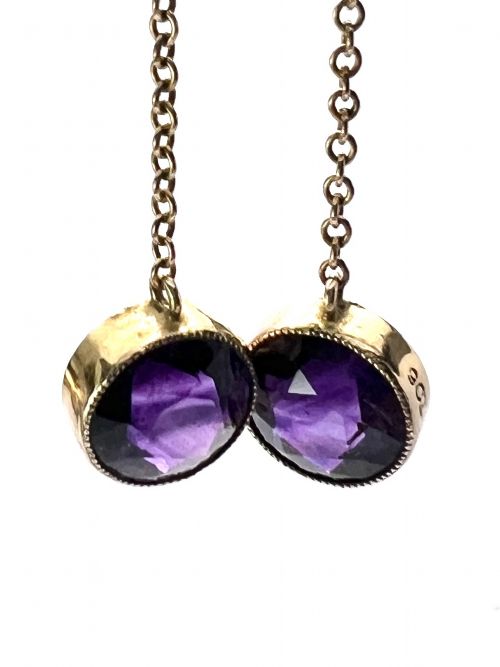


Gold Amethyst Earrings
Gold amethyst earrings bring together rich purple quartz and precious metal in drop, stud, and cluster forms across multiple historic periods.
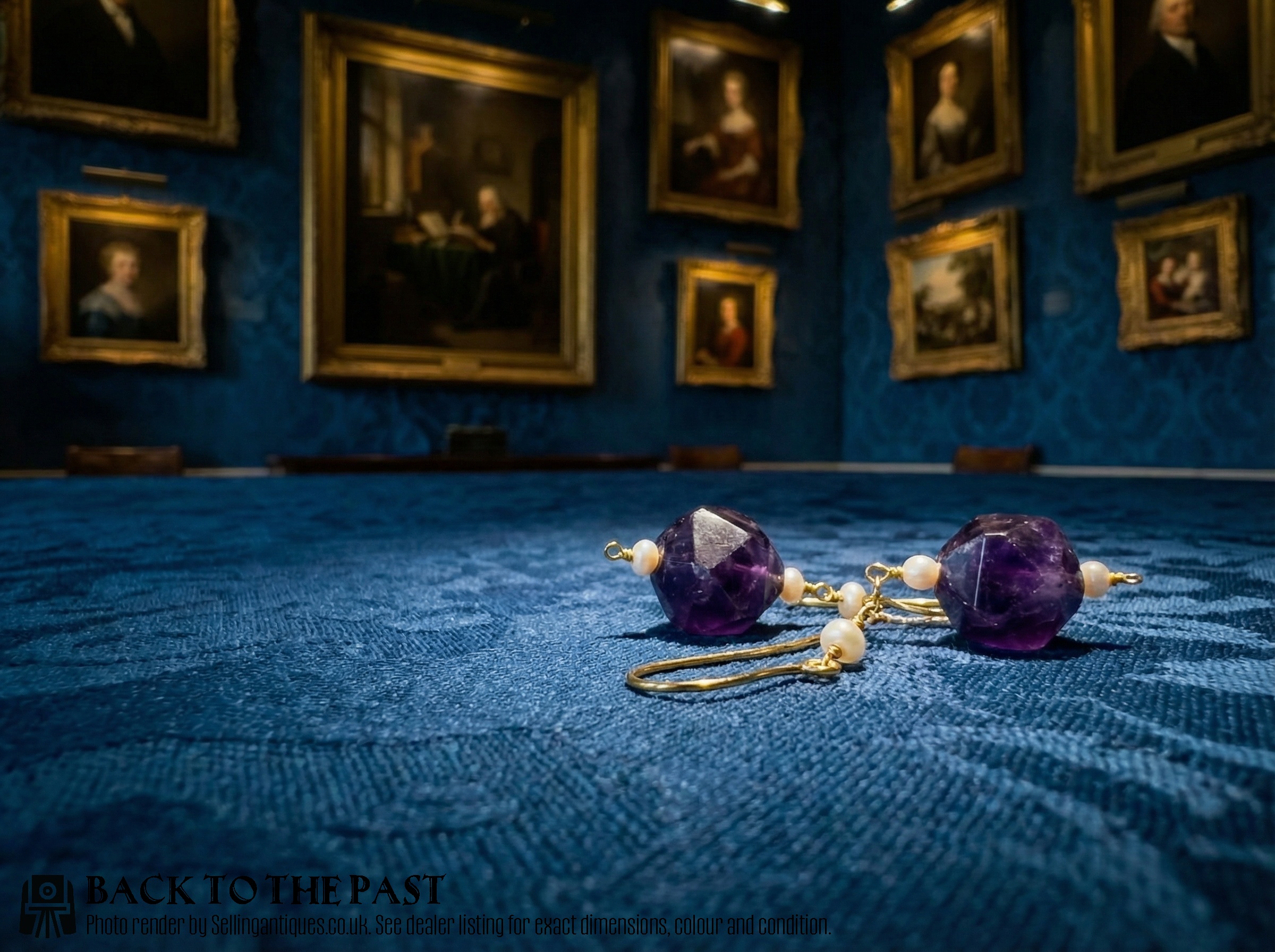
Gold Amethyst Earrings
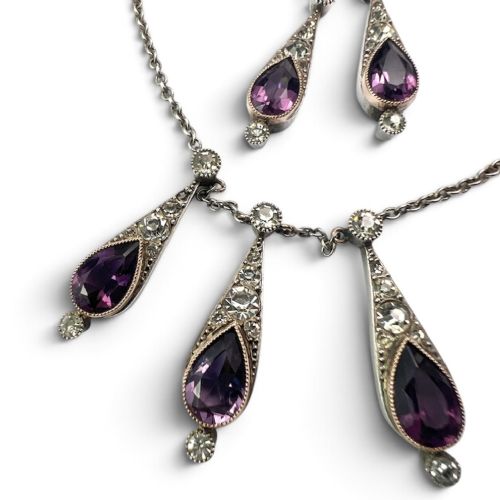
Gold amethyst earrings span simple daily studs and elaborate drop designs set with pearls and diamonds. These pieces reach from Georgian and Victorian eras through Edwardian work and mid-century modernism.
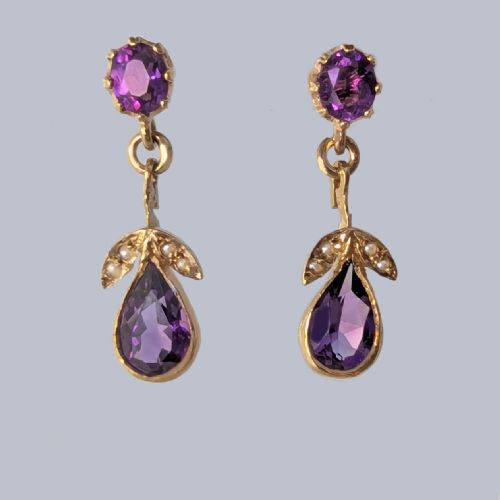
The version most commonly met on this page is the 9ct gold drop or stud earring dating from the mid-twentieth century or the Edwardian period. These frequently feature faceted or cabochon amethyst stones mounted in yellow or white gold.
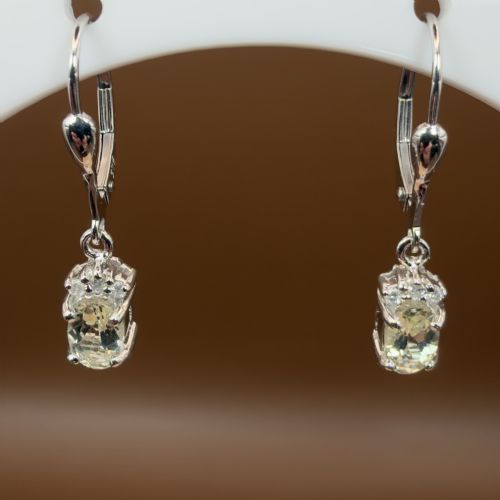
Collectors encounter matching jewellery sets and demi-parures alongside single pairs. Drop earrings employ chains, hinged backs, and screw fittings to secure the amethyst drops.
Materials and construction
Goldsmiths utilised 9ct, 10ct, 14ct, 15ct, and 18ct gold alongside silver to mount the stones. Yellow, white, and rose gold provide the structural framework for both delicate chain drops and solid cluster settings.
Amethyst stones undergo various cuts including oval, emerald, pear, princess, cabochon, and flat cuts. Workshops frequently combined these purple quartz crystals with pearls, seed pearls, and small diamonds to enhance the designs.
Gold Amethyst Earrings Retail Price Guide 2026
Typical asking prices for gold amethyst earrings among the pieces listed under this phrase on Sellingantiques today, from the lower quarter to the upper quarter. They describe what is for sale here now, not the wider market.
Listings feature 9ct yellow gold, 9ct white gold, 15ct gold, and silver alongside amethyst, pearl, and diamond components.
Quality differences
The depth of colour and clarity in the amethyst establish the primary visual merit of the piece. Stones with strong saturation and clean facets sit above paler or heavily included quartz.
Setting execution and metal weight separate standard workshop output from finer examples. Heavier gold gauges, secure claw or bezel settings, and intact original screw-backs or hinge mechanisms indicate superior construction.
The Gold Amethyst Earrings Glossary
- Cabochon
- A gemstone shaped and polished with a smooth convex surface rather than faceted. This technique highlights the natural colour and internal qualities of the amethyst.
- Demi-parure
- A matched set of jewellery typically comprising earrings and a brooch or necklace. These coordinated suites were popular during the Victorian era.
- Cannetille
- A fine Victorian wirework technique resembling gold embroidery. Goldsmiths soldered intricate coiled gold threads onto the base metal.
- Screw-back
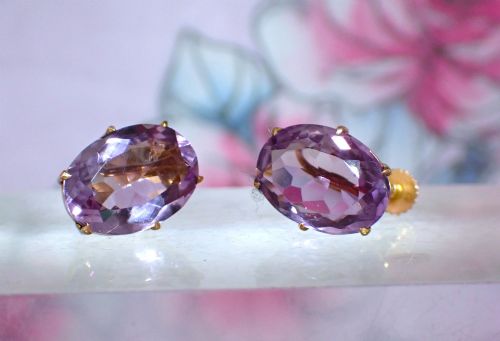
- An earring finding utilising a threaded post and a small screw nut to secure the piece to an unpierced earlobe. This mechanism appeared widely in Edwardian and vintage designs.
- Cluster
- An arrangement of gemstones featuring a central stone surrounded by smaller accent stones such as diamonds or pearls. This setting style maximises overall brilliance and presence.
Gold Amethyst Earrings: Frequently Asked Questions
How do I date my gold amethyst earrings?
Dating relies upon metal hallmarks, gemstone cuts, and overall fastening styles. Victorian and Edwardian pieces frequently employ screw-backs, seed pearl accents, and heavier gold content.
Mid-century examples from the nineteen-fifties and sixties often feature simplified 9ct gold settings with standard stud or hinge-back mountings.
What is the difference between stud and drop earrings?
Stud earrings sit directly on the earlobe with minimal movement, focusing attention entirely on the central amethyst stone. They provide a compact profile suitable for daily wear.
Drop earrings suspend the amethyst below the lobe using chains, bars, or hinged links. This movement catches the light and allows for more elaborate multi-stone compositions.
Are amethysts combined with other gems?
Historic jewellers frequently paired amethyst with white stones to contrast the deep purple quartz. Seed pearls and diamonds appear regularly in Edwardian and Victorian clusters and floral drops.
Other configurations incorporate peridot, jade, or coral within multi-gem suites. These secondary materials help establish the period aesthetic of the jewellery.
How should I clean antique gold amethyst earrings?
Cleaning requires warm water and mild soap applied gently with a soft brush to remove surface dust. Harsh chemical dips risk damaging softer surrounding materials like pearls.
Historic mountings and delicate chain links require careful handling to avoid bending the gold claws holding the amethyst stones.