
Antique Amethyst Drops
Antique amethyst drops bring together rich violet stones and period metalwork, offering wearable pieces that span from Victorian designs to Art Deco lines.
Antique Amethyst Drops
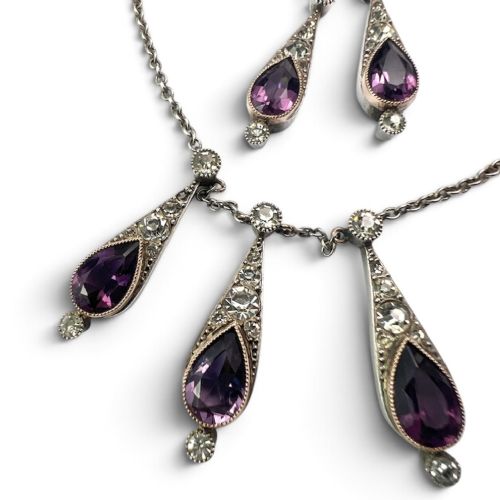
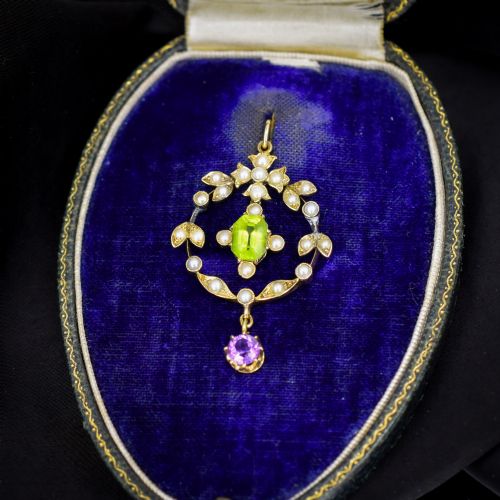
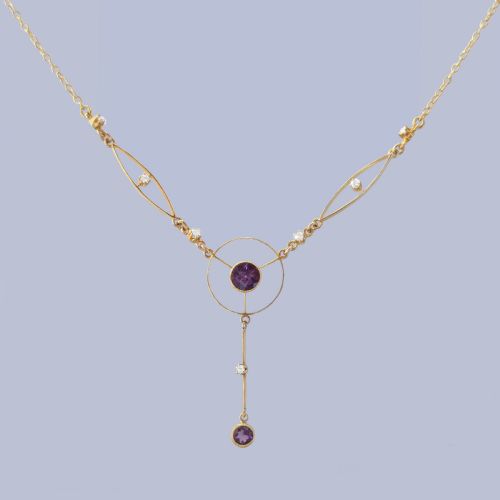
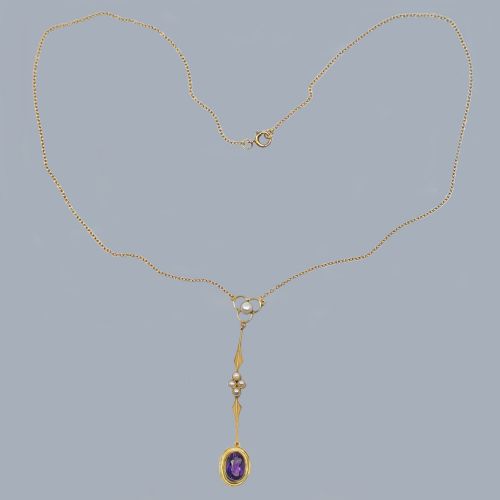
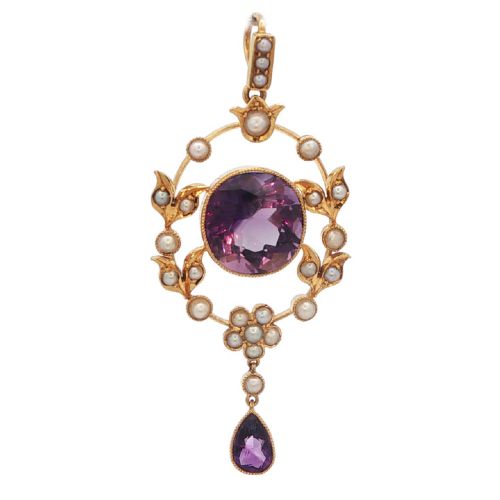
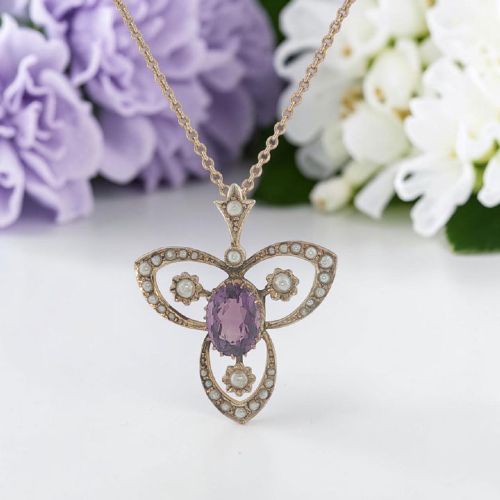
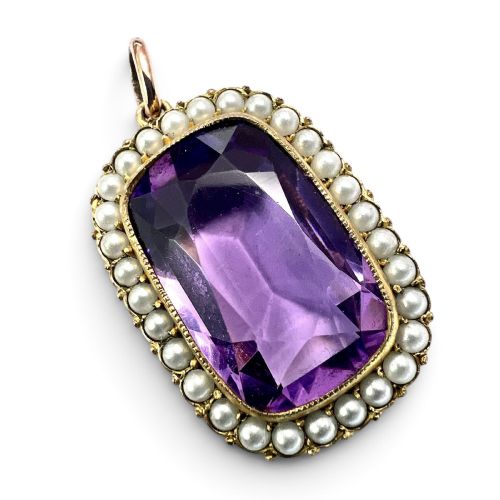
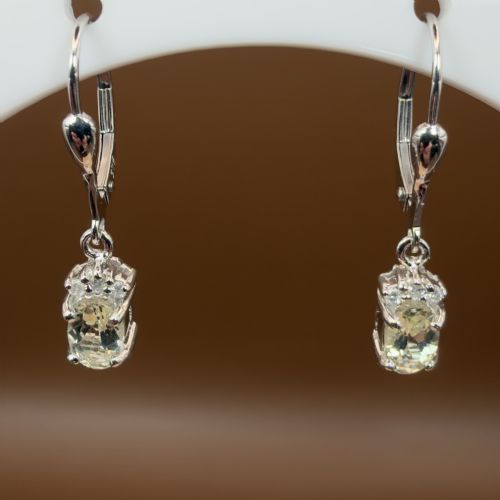
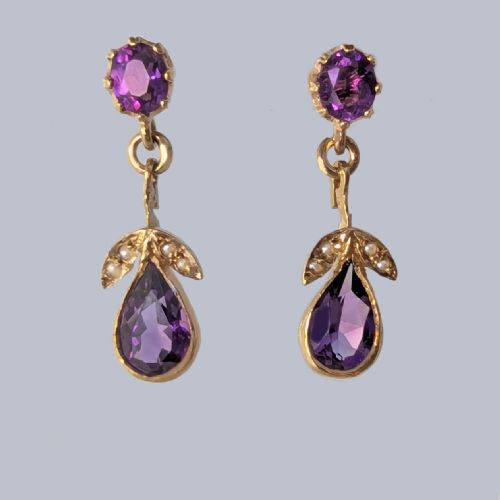
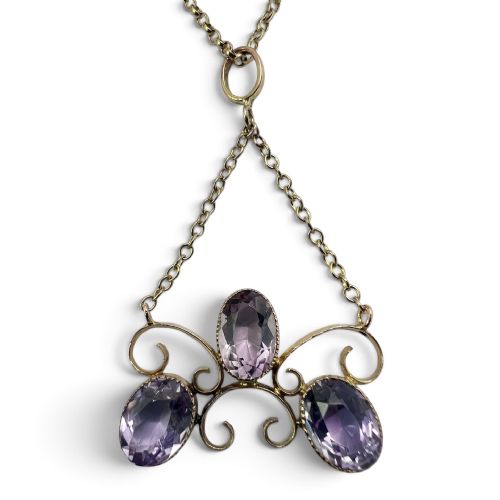
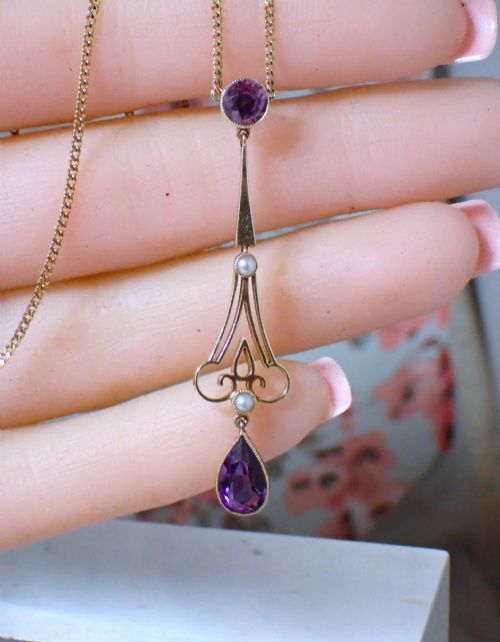
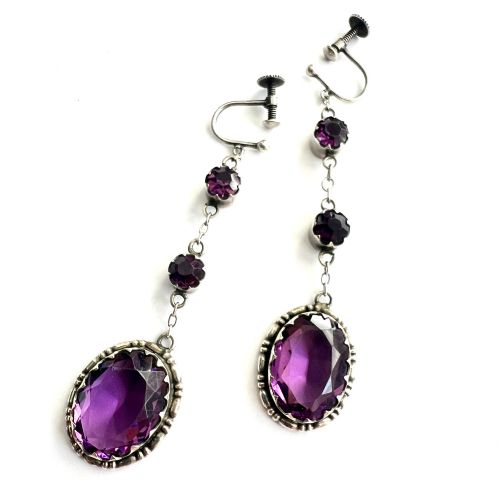
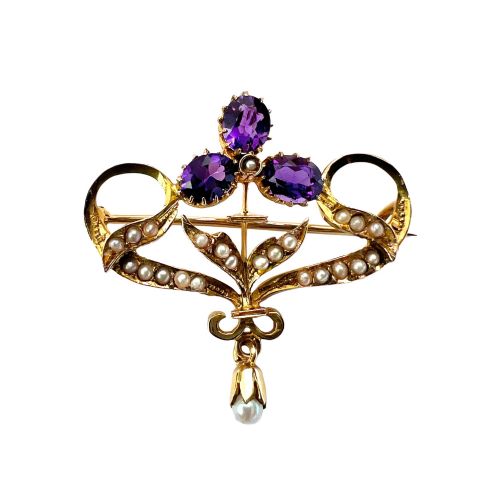
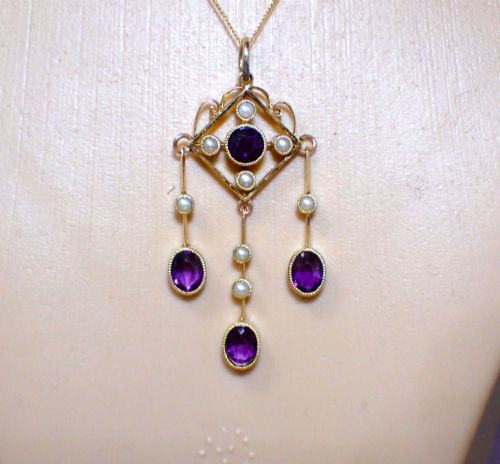
When you search for antique amethyst drops, you encounter pendant necklaces, lavaliers, and earrings featuring deep purple quartz suspended from gold and silver settings. The most common variants on this page date from the Edwardian and Victorian eras, often combined with seed pearls or diamonds.
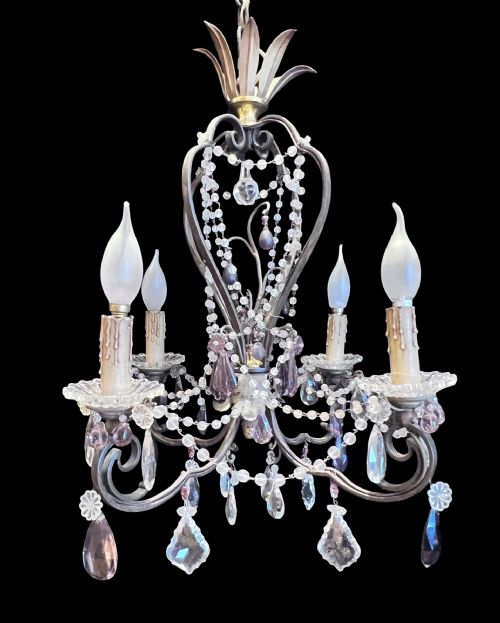
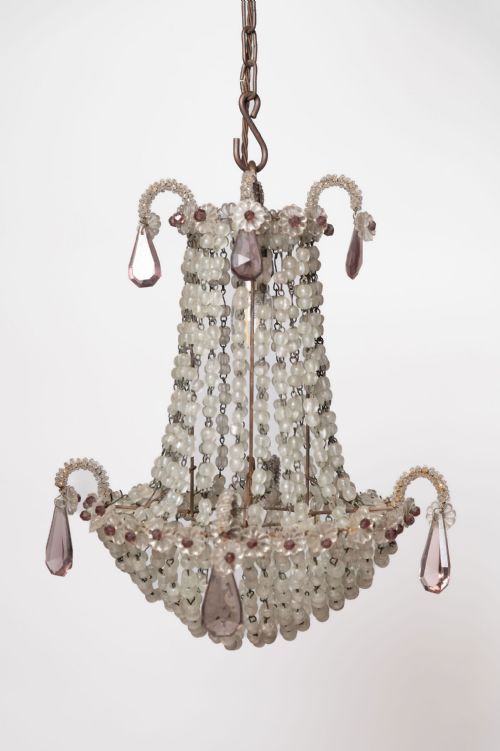
Beyond jewellery, the category occasionally encompasses hanging light fixtures decorated with coloured crystals. These items reflect the periods spanning the late nineteenth century through the 1930s, utilising forms from Art Nouveau to Art Deco.
Materials and construction
Gold forms the primary metal structure, appearing in nine carat, fifteen carat, and eighteen carat purity alongside silver and white gold settings. Amethyst stones are paired with seed pearls, diamonds, and paste glass elements.
Goldsmiths utilised claw settings and bezel mounts to secure the purple stones, often incorporating articulated drop joints for movement. Chain work ranges from delicate link necklaces to solid drop earrings fitted with screw-back mechanisms.
Some chandeliers also contain coloured crystals alongside the amethysts.
Distinctions in craftsmanship
Superior examples display balanced stone saturation and precise cutting of the quartz, matched with intricate pierced metalwork in gold or silver. Lower tiers rely on simpler stamped mountings or paste glass substitutes.
The integration of supportive gems like pearls and diamonds elevates the execution, showing careful bead-setting and robust clasps that secure the hanging components.
S. Blanckensee & Son·Hamilton & Co
The Antique Amethyst Drops Glossary
- Lavalier
- A pendant necklace featuring a central stone with one or more dangling drops suspended below. This style gained popularity during the Edwardian period.
- Seed pearl
- A very small, naturally formed pearl, often half-drilled and glued or pegged onto gold wire. These populate floral and foliate motifs around central stones.
- Paste
- Hand-cut and polished lead glass used to simulate gemstones in historical jewellery. It provides colour and brilliance in pieces from various decades.
- Demi parure
- A matched set of jewellery consisting of two or three pieces, such as earrings and a brooch. They share materials and design motifs.
- Negligé necklace
- A pendant style featuring two unequal drops suspended from a central link or bow. This form is characteristic of early twentieth-century design.
Antique Amethyst Drops: Frequently Asked Questions
What periods do these pieces date from?
The inventory spans the Victorian, Edwardian, and Art Deco eras, with items originating between the nineteenth century and the mid-twentieth century.
Design characteristics and metal purities typically align with these specific decades of production.
How are antique amethyst drops worn?
Jewellery pieces function as pendants, lavaliers, earrings, and brooches designed to be worn against the skin or attached to garments. Drop earrings utilise wires or screw-backs for attachment.
Larger items like chandeliers serve as ceiling fixtures utilising crystal drops rather than wearable adornments.
What metals support the amethysts?
Gold represents the predominant metal choice, found in nine, fifteen, and eighteen carat yellow gold, alongside white gold and silver settings.
Brass and gilded metals appear primarily in lighting fixtures rather than personal adornment.
Are pearls commonly found with amethysts?
Seed pearls frequently accompany amethyst stones, particularly in Edwardian and Art Nouveau pendants and drop earrings. They create contrasting white borders around the purple quartz.
Diamonds also appear in select high-grade pieces from the early twentieth century.