


Amethyst Pearl Jewellery
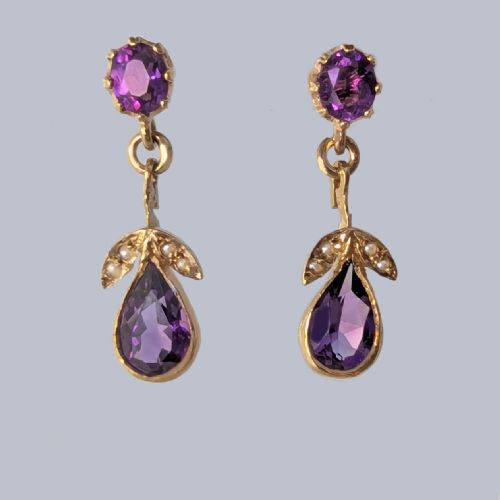
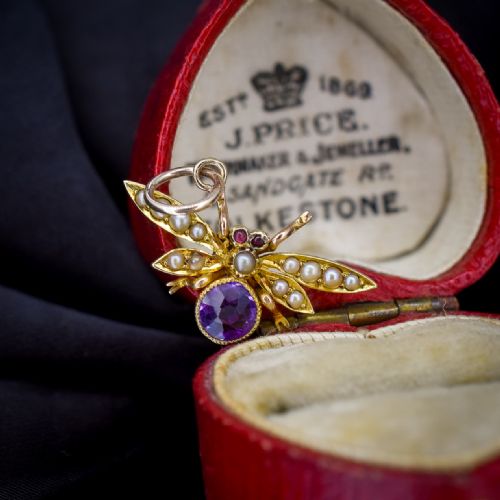
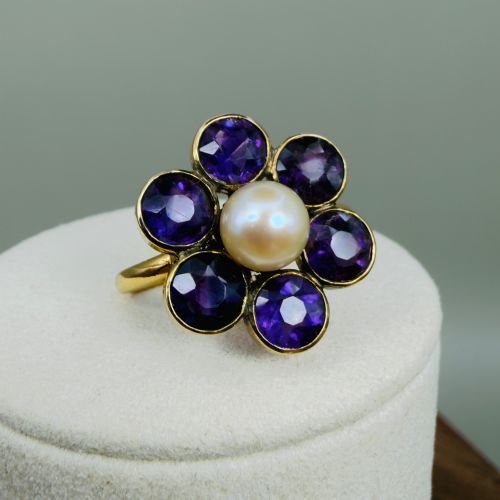
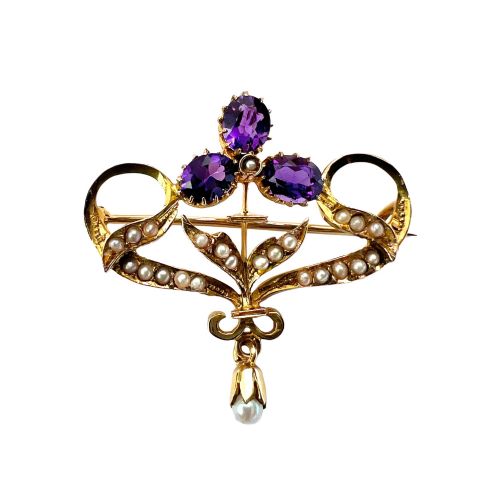
Amethyst pearl jewellery brings together the rich purple of quartz and the quiet lustre of pearls in gold settings from the Victorian, Edwardian, and mid-century periods.
Amethyst Pearl Jewellery
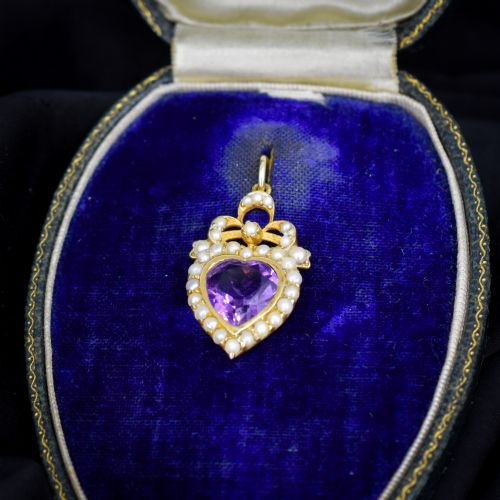
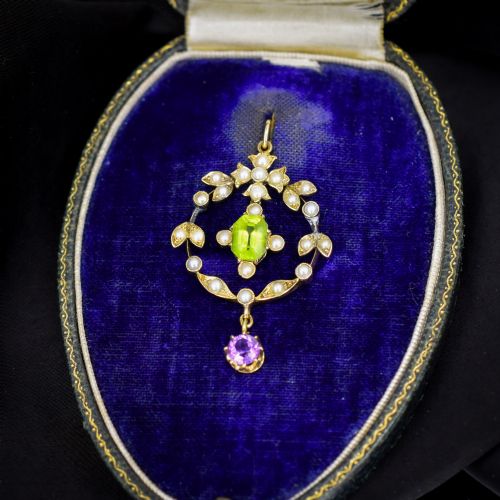
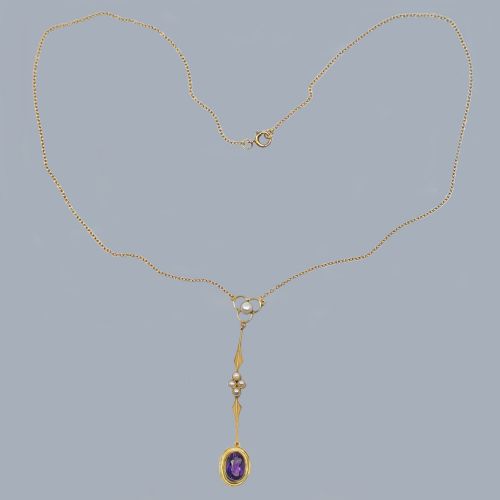
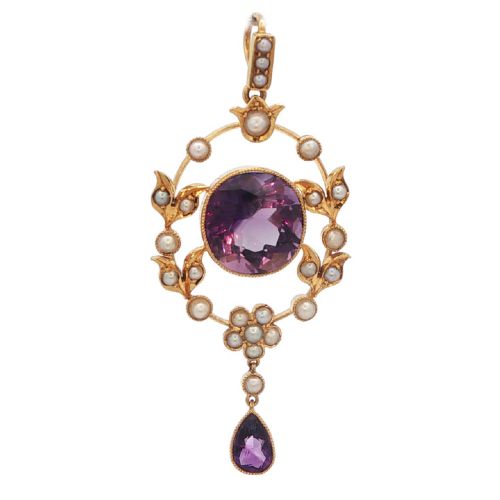
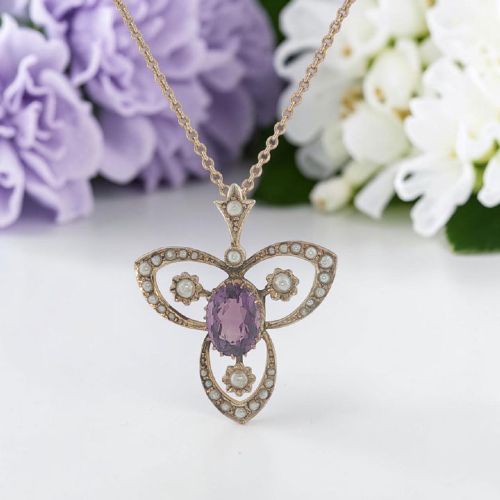
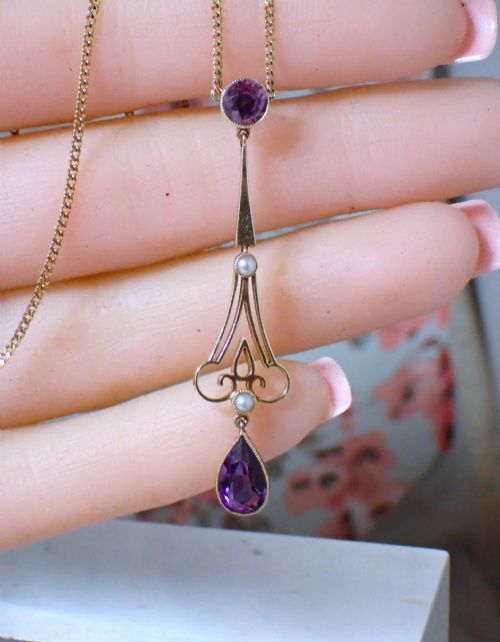
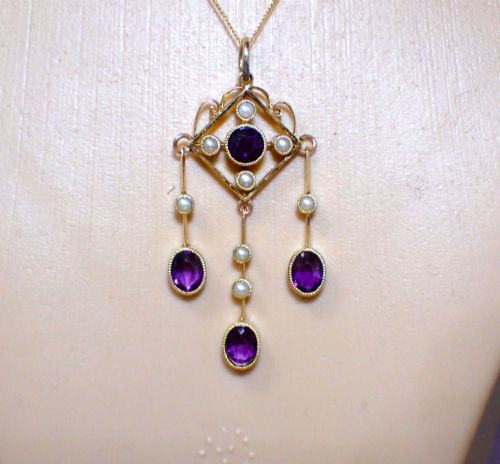
Pendants and lavaliers dominate the listings, often suspended from delicate chains or incorporating seed pearls in clustered floral and foliate motifs. Art Nouveau designs appear alongside classic cluster rings and fringe necklaces, showcasing the enduring appeal of purple gems paired with white pearls.
How they were made
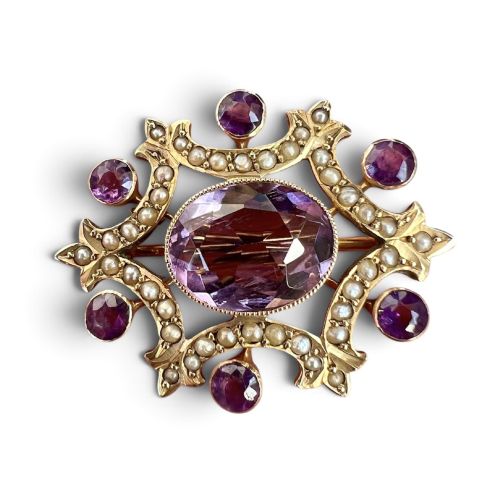
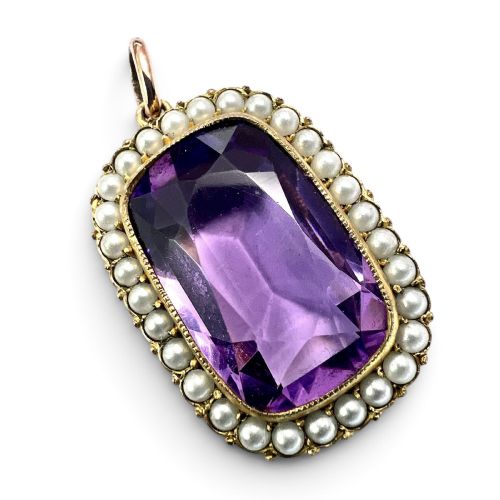
Goldsmiths shaped nine carat, fifteen carat, and eighteen carat yellow and rose gold into intricate wirework, bezels, and hollow stampings to hold the stones. Seed pearls and natural pearls were threaded, pegged, or glued into position alongside faceted amethysts.
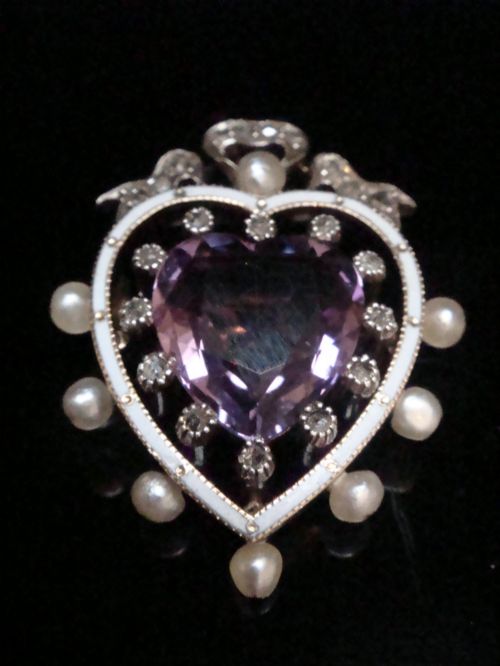
Art Nouveau and Edwardian pieces frequently utilised guilloche enamel, delicate millegrain borders, and articulated drops. Master craftsmen balanced the deep violet hues of faceted or emerald-cut amethysts with the organic iridescence of pearls.
Listings feature items from the Victorian, Edwardian, and mid-century periods, constructed in nine carat, fifteen carat, and eighteen carat gold alongside silver.
What varies in quality
The standard of gold carat weight and the provenance of the pearls dictate the upper tier of these jewels, with fifteen carat and eighteen carat gold settings commanding distinct regard over nine carat alternatives. Natural pearls and matched seed pearls retain their integrity better than replacements or paste substitutes.
Handmade metalwork, original boxes, and documented maker attributions elevate certain rings and pendants above standard mass-produced variants of the same period.
S. Blanckensee & Son·Hamilton & Co
The Amethyst Pearl Jewellery Glossary
- Lavalier
- A pendant featuring a dangling gemstone or drop suspended below the main setting, popular during the Edwardian period. These pieces often incorporate seed pearls and amethysts on fine gold chains.
- Seed Pearl
- A very small, naturally formed or cultured pearl, often un-drilled or half-drilled, used to create delicate borders and clusters in antique jewellery. They provide a subtle white contrast to coloured gemstones.
- Guilloche Enamel
- A decorative technique where an enamel layer is applied over engine-turned metalwork, creating repeating geometric patterns beneath a translucent coloured surface. It is frequently seen on Edwardian pendants.
- Cluster Ring
- A ring featuring a central gemstone surrounded by a circle of smaller stones, such as pearls framing an amethyst. This arrangement maximises visual impact and light reflection.
Amethyst Pearl Jewellery: Frequently Asked Questions
How do I care for antique amethyst and pearl jewellery?
Amethysts can fade under prolonged direct sunlight, so store these pieces in a dark box when not being worn. Pearls are organic and sensitive to chemicals, perfumes, and cosmetics, meaning they should be wiped gently with a soft cloth after use rather than submerged in cleaning solutions.
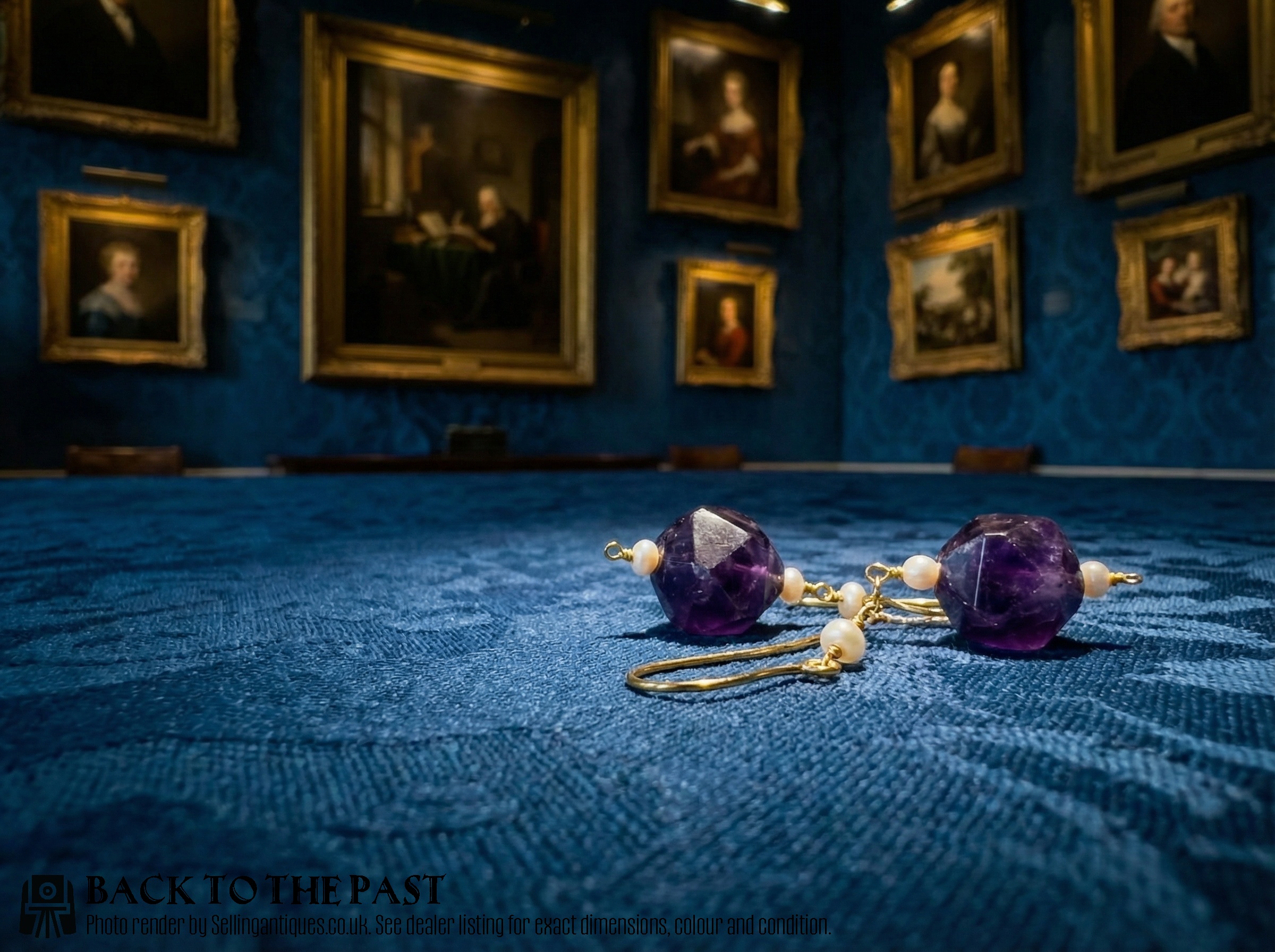
Regularly check the security of claw and bezel settings, especially on older rings and drop earrings. Professional cleaning by a specialist familiar with antique settings protects both the gold and the delicate pearl mountings.
Are these pieces suitable for daily wear?
Many items, such as solid gold rings and robust brooches, withstand regular wear if treated with care. However, delicate Edwardian lavaliers and fine seed pearl necklaces involve fragile stringing or hollow gold components that suit occasional rather than constant use.
Removing antique jewellery before sleeping, swimming, or engaging in physical tasks prevents accidental loss or damage to the stones and mounts. Selecting specific pieces for everyday rotation preserves their structural integrity.
How can I tell an Edwardian piece from a Victorian one?
Victorian jewellery often displays heavier gold settings, deeper cluster arrangements, and robust pin stems on brooches. The styles span from dark mourning pieces to bright garnet and amethyst clusters set in rose or yellow gold.
Edwardian items frequently utilise lighter platinum-on-gold settings, airy openwork designs, and flowing Art Nouveau lines. The inclusion of millegrain decoration and light seed pearl fringes points directly to the early twentieth century.
What is the difference between seed pearls and natural pearls?
Seed pearls are exceptionally small pearls that were widely utilised in Victorian and Edwardian clusters, borders, and festoon necklaces. Their uniform size allowed jewellers to pave surfaces with a dense layer of white lustre.
Natural pearls form without human intervention in wild molluscs, often showing unique variations in shape and orient. They are typically documented in high-value or certified antique pieces from the nineteenth and early twentieth centuries.