


Victorian Amethyst Necklace
A victorian amethyst necklace brings deep purple stones and warm gold together in jewellery designed to catch candlelight.
What they are
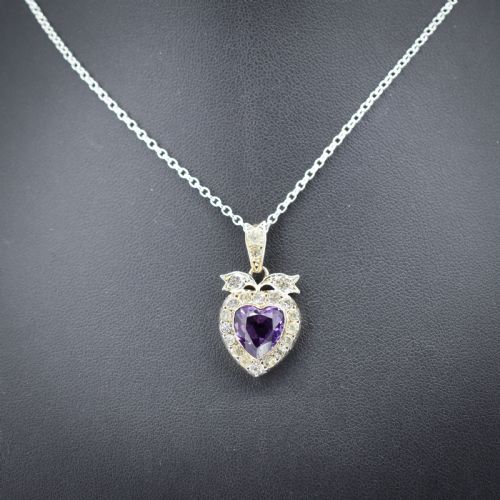
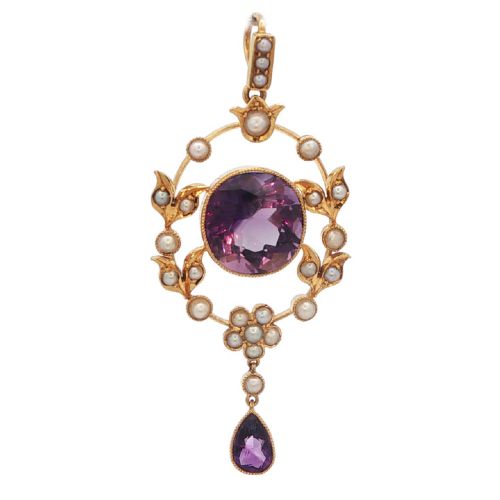
A victorian amethyst necklace comprises pendants, drop fringes, riviere lines and heart-shaped designs set in yellow or rose gold. These pieces merge the deep purple tones of amethyst with the soft lustre of seed pearls.
The versions most commonly met on this page span the Victorian and Edwardian eras, occasionally reaching into the early nineteen-thirties. Formats range from single pendants on gold chains to elaborate garland configurations with original boxes.
Makers utilised high-grade gold alongside silver settings for specific choker assemblies. Each item reflects the ornate lapidary work typical of nineteenth-century design.
How they were made
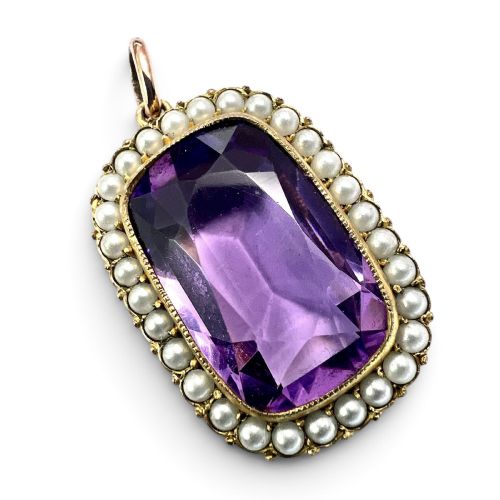
Goldsmiths shaped components in nine-carat and fifteen-carat gold, incorporating yellow and rose hues to frame the central gemstones. Seed pearls were meticulously hand-set in delicate clusters around amethysts to create floral or geometric motifs.
Lapidaries cut large amethysts into square, heart, and drop configurations, securing them within closed or open-backed mounts. Chains and fringe assemblies were joined by hand, balancing heavy pendants against slender neck chains.
Listings feature nine-carat yellow gold, nine-carat rose gold, and fifteen-carat gold alongside silver.
What varies in quality
The distinction between standard examples and exceptional pieces rests upon the saturation and cut of the amethyst. Larger stones paired with uniform seed pearls in fifteen-carat gold represent the upper echelon of surviving work.
Construction intricacy also dictates worth, where articulated fringe drops and garland designs demonstrate superior bench skill compared to simpler solitary pendants.
The Victorian Amethyst Necklace Glossary
- Riviere necklace
- A continuous line of similarly sized gemstones set closely together. This style ensures stones sit neatly against the collarbone.
- Seed pearl
- Very small, natural saltwater pearls drilled and threaded onto silk or wire. They provide a delicate white contrast to deep purple amethysts.
- Fringe necklace
- A design featuring dangling gemstone drops suspended along the lower edge of the chain. These sections move fluidly with the wearer.
- Garland style
- An ornate decorative approach inspired by floral swags and ribbons. It typifies late nineteenth-century high craftsmanship.
Frequently Asked Questions
Can I wear these necklaces daily?
These antique pieces require mindful handling due to their delicate seed pearl settings and older gold chains. Reserve them for occasional wear to preserve their structural integrity.
Avoid wearing them during strenuous physical activities or swimming. Putting the necklace on last prevents cosmetic and perfume residue from accumulating on the stones.
Are original presentation boxes common?
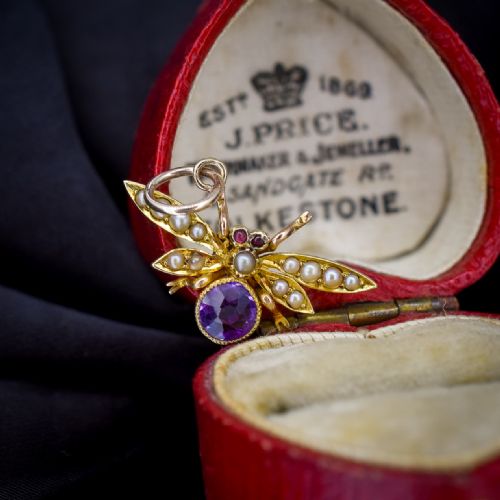
Original boxes are exceptionally scarce survivals that add historical context to a piece. When present, they typically feature fitted velvet and silk linings tailored to the specific necklace shape.
These containers protect the jewellery from damage over the decades. They often bear the stamp of the original retailer inside the lid.
What defines Edwardian pieces here?
Edwardian items on this page share stylistic DNA with late Victorian work but often lean towards lighter garland motifs. The transition between these eras shows continuity in the use of amethysts and seed pearls.
Settings from the Edwardian period frequently employ refined millegrain detailing. Gold purities and stone combinations remain consistent with nineteenth-century standards.