
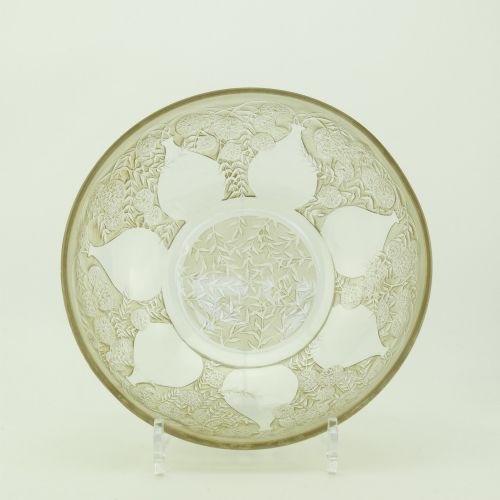
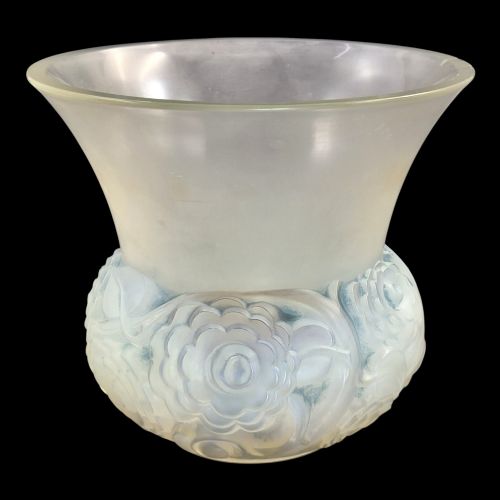


Press Moulded Glass Bowl
A press moulded glass bowl brings texture and light into a room, drawing the eye with the soft glow of opalescence.
Press Moulded Glass Bowl
A press moulded glass bowl sits at the intersection of decorative art and practical tableware, emerging predominantly from the Art Deco period of the early twentieth century. These pieces encompass striking table centres, shallow coupes, and footed vessels designed to catch and diffuse light.
The versions most frequently met on this page date from the 1920s and 1930s, reflecting the modernist shift toward geometric design and stylised floral motifs. Makers utilised mechanical pressing techniques to achieve deep relief patterns, ranging from naturalistic blossoms to swimming fish.
Examples often display milky opalescent qualities or frosted finishes that transform ordinary glass into tactile sculptures. Collectors prize them for their ability to anchor a surface scheme while displaying the distinct aesthetic priorities of the interwar decades.
How they were made
Makers produced a press moulded glass bowl by forcing molten material into a metal or iron mould using a mechanical plunger. This process allowed workshops to impart intricate relief decoration directly onto the outer surface while keeping the interior relatively smooth.
Post-moulding treatments defined the final appearance, utilising acid-etching, frosting, or staining to accentuate the high points of the design. Opalescent effects relied on precise chemical compositions within the glass batch that reacted to heat during the pressing and cooling stages.
Listings feature opalescent glass, frosted glass, and clear crystal across the 1920s and 1930s periods.
What varies in quality
The distinction between tiers rests in the crispness of the moulded relief and the sensitivity of the surface finishing. Superior pieces retain sharp detail in the floral or animal motifs without distortion from worn moulds, whereas lesser examples show blurred edges and muddy transitions in the glass.
The depth and brilliance of the opalescent fire dictate overall desirability, with finer objects displaying vibrant blue tones against transmitted light and warm amber reflections from the front. Master workshops achieved a balance of weight and translucency that elevates simple pressed vessels into sculptural works of art.
Rene Lalique·G Vallon·Jobling·Etling·Sabino
The Press Moulded Glass Bowl Glossary
- Opalescent Glass
- Glass that exhibits a milky, semi-translucent appearance with bluish highlights when viewed by reflected light and amber tones by transmitted light. This optical property results from specific chemical additives cooling within the batch.
- Pressed Glass
- Glass formed by shaping molten material inside a metal mould using a mechanical plunger. This technique revolutionised production speeds and allowed for complex exterior patterns.
- Frosted Glass
- Glass treated with acid or sandblasting to create a matte, non-reflective surface. It diffuses light gently and highlights the underlying relief work.
- Plafonnier
- A bowl-shaped ceiling light fixture suspended close to the ceiling. These fittings were popular during the Art Deco period for casting soft ambient illumination.
- Coupe
- A broad, shallow bowl typically mounted on a low foot or base. It serves as a decorative centrepiece or a vessel for floating floral arrangements.
Press Moulded Glass Bowl: Frequently Asked Questions
Were these bowls used for food?
Many examples served as decorative centrepieces rather than functional tableware, holding fruit or floral displays during the interwar period. The textured interior relief of certain designs makes them less practical for daily dining.
Examine the inner surface for wear marks or scratching to determine whether a particular vessel saw active service on the dining table. Most collectors prefer to keep them purely for display.
How do I identify Art Deco pieces?
Look for stylised symmetrical motifs, geometric borders, and natural forms reduced to bold, simplified shapes. Floral subjects like daisies and cherries appear with regularity.
The presence of characteristic opalescence, heavy pressing, and signatures etched into the glass often points directly to the 1920s and 1930s aesthetic.
What is a tazza?
A tazza is an ornamental shallow bowl mounted on a central stem and footed base. It elevates fruit or floral arrangements above the surface of a table.
In glass manufacturing, these forms allowed light to pass through the stem, enhancing the opalescent and frosted qualities of the material.