


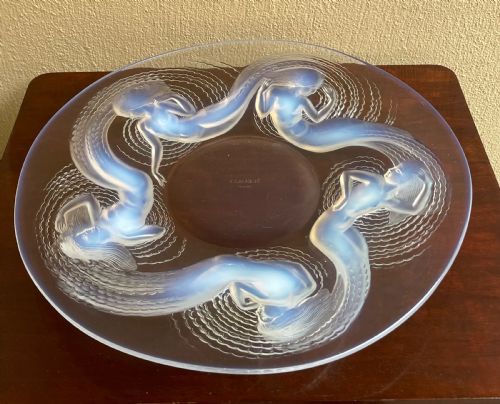


1930s Glass Centrepiece Bowl
A 1930s glass centrepiece bowl brings bold Art Deco presence to a table, combining striking optical effects with functional form.
1930s Glass Centrepiece Bowl
Buyers seeking a 1930s glass centrepiece bowl encounter substantial decorative vessels, shallow open coupes, chargers, and pedestal bowls designed to anchor a dining table or sideboard. These items emerge predominantly from the Art Deco period, capturing the geometric and stylised motifs typical of the era.
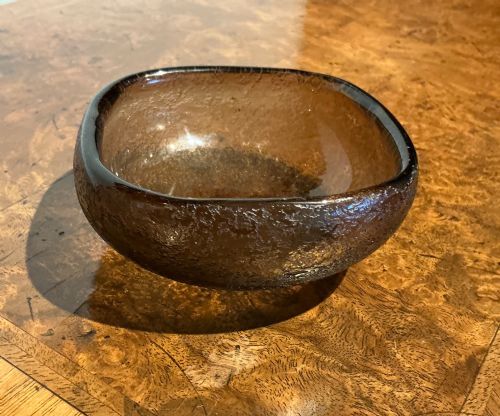
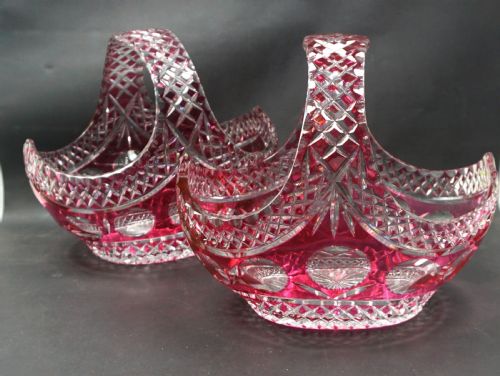
The most common formats on this page include moulded opalescent pieces, vibrant coloured glass baskets, and heavy crystal table centrepieces. Examples range from French press-moulded creations to free-blown Scottish vessels and Belgian overlay glass.
Design vocabulary spans from animal reliefs and floral patterns to clean modernist lines, reflecting diverse European studio and factory output from the 1920s and 1930s.
Production and Materials
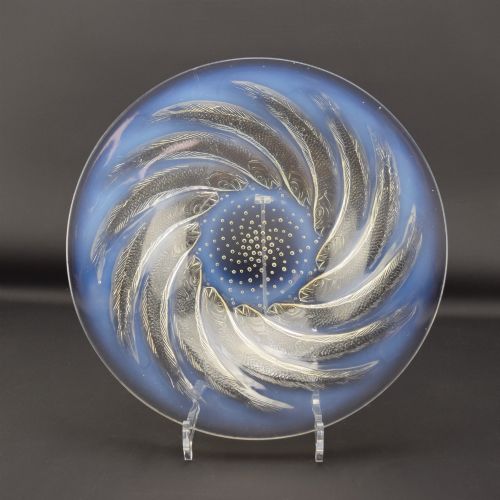
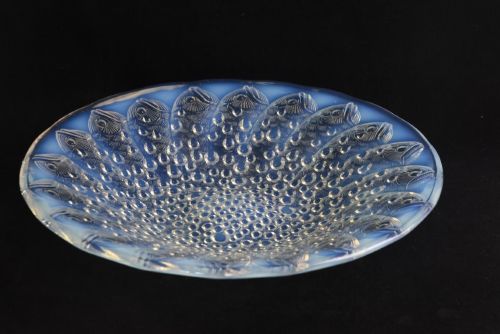
Makers utilised heavy lead crystal, blown glass, and specialised opalescent or enamelled formulations to achieve depth and luminosity. Press-moulding allowed workshops to produce complex relief designs, such as fish, birds, and flowers, often finished with frosted or satin patination.
Overlay techniques involved casing coloured glass over a clear crystal core, subsequently cut away to reveal contrasting layers. Other pieces relied on controlled thermal manipulation during blowing to suspend internal bubbles or multicoloured swirls within the body.
Several bowls feature permanent schools of moulded glass fish swimming eternally around the interior base.
Assessing Quality and Execution
Quality rests in the crispness of the mould work, the depth of the relief, and the sophistication of the surface finish. Superior pieces exhibit sharp detailing in moulded motifs and careful polishing on bases and rims.
The choice of material and colour determines visual impact, with high-grade opalescent pieces showing distinct milky blue or amber fire under light, while superior cut crystal displays precise facets and substantial heft.
Venini·Carlo Scarpa·Rene Lalique·Val St Lambert·Joseph Simon·Graystan·Monart·Julien Glass·Viners·Jobling·Etling
The 1930s Glass Centrepiece Bowl Glossary
- Opalescent Glass
- Glass containing agents that cause it to milky-blue or amber where thin, catching light dramatically at the edges. This effect was heavily utilised by French makers for sculptural relief bowls.
- Coupe Ouverte
- An open bowl shape with wide, shallow sides suited to display. Pieces of this form often feature elaborate moulded decoration across the interior base.
- Overlay Glass
- A technique where a layer of coloured glass is fused over a clear crystal body and partially carved away. This creates high-contrast designs seen in Belgian production.
- Tazza
- A stemmed, footed vessel or pedestal bowl raised above the table surface. They serve to elevate fruit or floral arrangements.
- Comport
- A decorative dish on a high foot used for serving fruit or desserts at the table. In this period, they frequently incorporated brightly coloured or figural glass.
1930s Glass Centrepiece Bowl: Frequently Asked Questions
How do I identify opalescent glass?
Opalescent glass displays a milky, translucent quality that shifts between blue and amber tones when light passes through it. The effect is particularly pronounced along raised moulded edges and high points of relief.
Makers achieved this appearance by adding specific chemical agents to the molten batch before press-moulding the vessel into shape.
What is the difference between a coupe ouverte and an open bowl?
A coupe ouverte is a French term for an open bowl, typically featuring a wide, shallow profile and heavy moulded decoration. These vessels were designed primarily for visual impact on a table or sideboard.
Standard open bowls may follow simpler geometric or blown forms without the specific French press-moulded sculptural reliefs.
How were overlay glass bowls made?
Overlay glass involves gathering a core of clear or contrasting crystal and dipping it into a layer of coloured molten glass. Once cooled and shaped, sections of the outer colour are cut away to expose the material beneath.
This subtractive process creates bold, two-tone visual effects popular in Belgian production of the period.
Where were Monart glass bowls produced?
Monart glass bowls were produced in Scotland by the Moncrieff family, drawing on techniques influenced by Spanish glassmaking traditions. They are recognised for their free-blown forms and suspended coloured swirls.
These pieces rely on skill in the hot shop rather than mechanical press-moulding.