



Moulded Opalescent Glass Dish
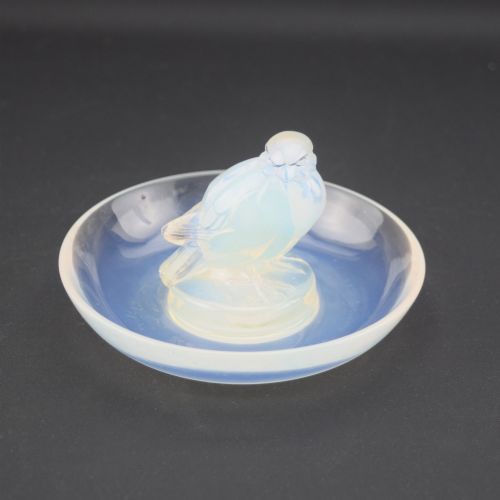
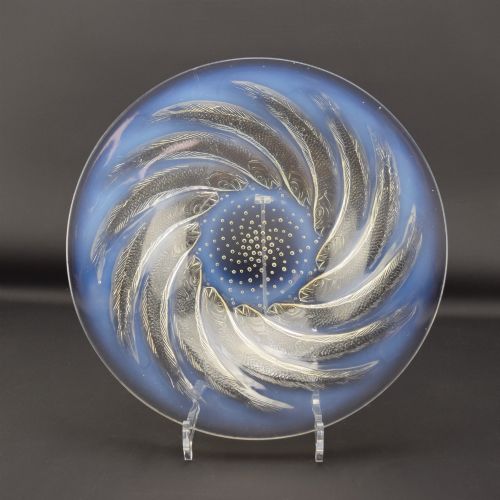
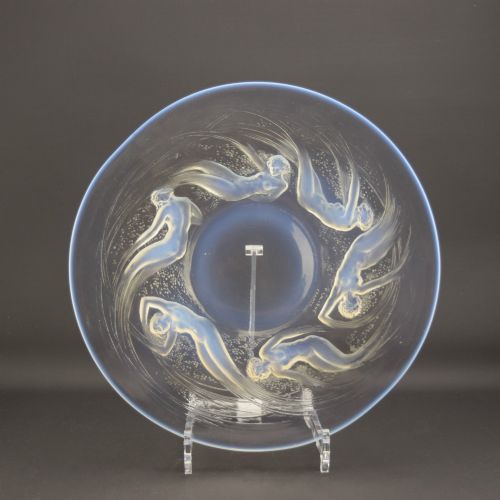
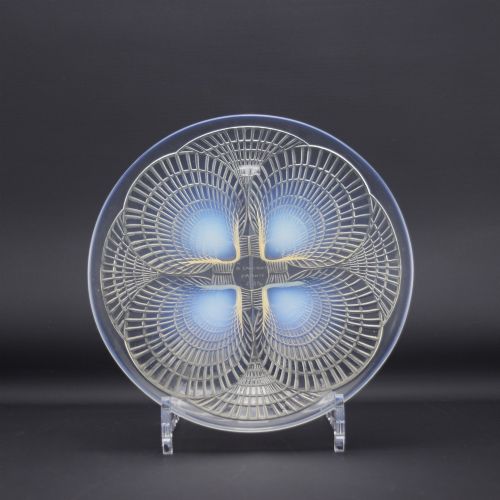
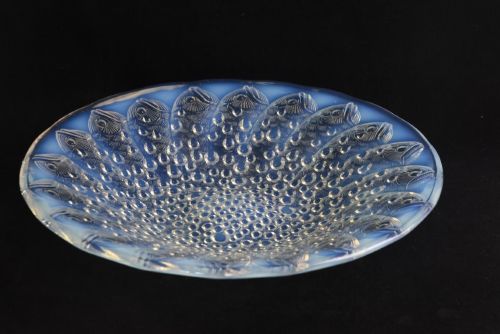
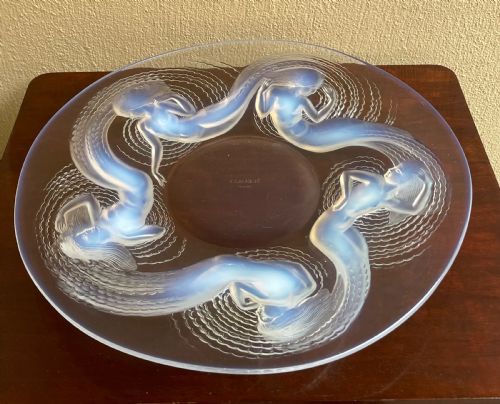
A moulded opalescent glass dish catches the light with milky blues and amber tones, defining the height of Art Deco design.
Moulded Opalescent Glass Dish
A moulded opalescent glass dish brings together the tactile qualities of pressed glass and the luminous shifting tones characteristic of the Art Deco period. Buyers seeking these pieces encounter items primarily originating from the nineteen-twenties and nineteen-thirties, with occasional Edwardian examples.
The forms on this page span shallow bowls, plates, chargers, and footed tazzas decorated with floral, animal, and abstract motifs. Most selections are French in origin, produced during the interwar years when moulded opalescent glass reached its technical peak.
Materials and Technique
Makers utilised glass formulated with specific chemical agents to create the characteristic milky, light-scattering opacity that shifts from pale blue in transmitted light to warm amber in reflected light. Molten material was pressed into metal moulds to produce high-relief surface designs.
Post-moulding treatment often involved frosting or polishing specific areas to heighten contrast against the translucent opalescent ground. Some pieces incorporate metal or wooden mounts, though the primary medium remains pressed and moulded glass.
Listings feature Art Deco pieces in opalescent glass, frosted glass, and pressed glass, spanning Edwardian to 1930s periods.
Judging Quality
Quality rests upon the crispness of the moulded relief and the intensity of the opalescent effect within the glass body. Superior examples display sharp definition in intricate motifs like fish, foliage, or feathers without losing the soft, milky diffusion unique to the medium.
The depth of the colour play and the smoothness of the finished surface distinguish finer production runs. Master makers achieved an even distribution of opalescence that activates the entire form when illuminated from different angles.
Rene Lalique·G Vallon·Etling·Verlys·Sabino·Jobling
The Moulded Opalescent Glass Dish Glossary
- Opalescent Glass
- Glass containing chemical additives that scatter light, creating a milky blue appearance in one light and amber in another. This optical property defines the visual appeal of the pieces.
- Coupe Ouverte
- An open bowl or dish shape commonly utilised for decorative table vessels. These open forms allow light to pass freely through the moulded designs.
- Tazza
- A shallow bowl or plate raised on a stem and foot. They serve as elevated centrepieces within tableware arrangements.
- Charger
- A large decorative plate or shallow dish. These substantial pieces often showcase complex figurative or botanical moulded reliefs.
- Press-Moulded Glass
- Glass formed by mechanical pressure forcing molten material into a metal mould. This technique enabled the creation of high-relief surface decoration.
Moulded Opalescent Glass Dish: Frequently Asked Questions
What periods do these dishes come from?
The pieces span the Edwardian era, the nineteen-twenties, and the nineteen-thirties. The vast majority date to the interwar Art Deco period.
Production during these decades utilised specialised glass formulae that created the characteristic opalescent light effects.
How were these dishes originally used?
Many functioned as decorative bowls, chargers, sweetmeat dishes, or ashtrays for display in domestic interiors. Their primary role was decorative rather than purely utilitarian.
The reflective opalescence made them effective centrepieces on tables and sideboards under interior lighting.
How do I identify Art Deco opalescent glass?
Look for characteristic period motifs such as stylised flowers, fish, birds, and geometric low-relief patterns. The glass itself exhibits a milky blue or amber optical shift.
Most pieces from this era bear signatures or registration numbers moulded directly into the glass.
Are these pieces signed by makers?
Many examples feature moulded signatures, etched marks, or registration numbers on the underside or rim. Makers such as René Lalique and Sabino frequently marked their production.
Unsigned pieces or those bearing retail marks also appear from period manufacturers.