



Press Moulded Art Glass
These press moulded art glass pieces capture the brilliant clarity and tactile depth of early twentieth century design.
Press Moulded Art Glass
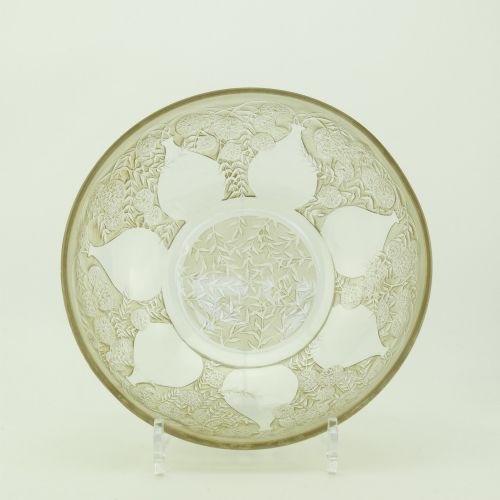
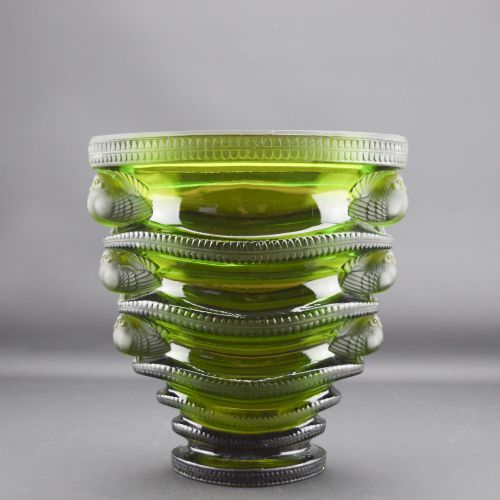
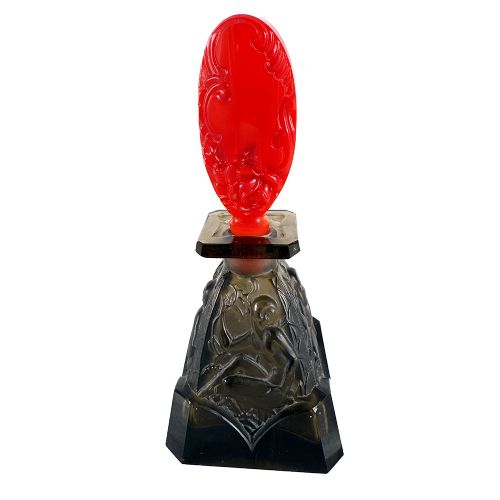
When searching for press moulded art glass, buyers encounter striking decorative objects produced predominantly during the Art Deco and Art Nouveau periods. These items range from large ornamental bowls and vases to intricate perfume bottles and ceiling lights.
How they were made
Makers utilised molten crystal and clear glass pressed into metal moulds to achieve sharp relief and complex decorative motifs. The technique allowed for uniform production while retaining intricate surface details.
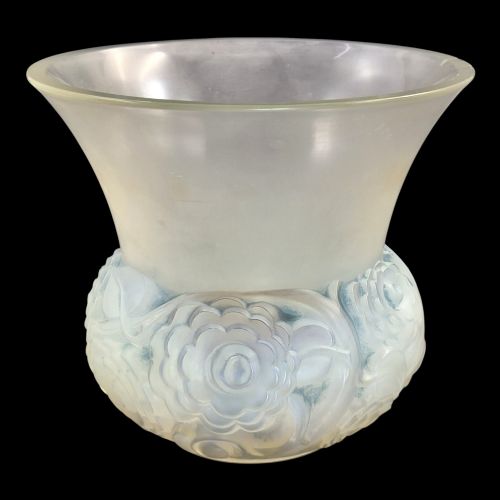
Specialised treatments such as frosted finishes, sepia staining, and opalescent effects were applied to enhance the dimensionality of floral and figurative designs. Copper mounts and bronze fixtures frequently accompany the glass in lighting pieces.
Listings feature items exclusively from the early twentieth century, spanning the Edwardian era through the nineteen-thirties.
What varies in quality
The standard of an item rests on the crispness of the moulded relief and the subtlety of the opalescence within the glass. Superior examples display precise execution in motifs such as flora, fauna, and human figures.
The integration of surface stains and coloured highlights dictates the visual depth of the piece. Strong definition in signature areas and clean casting edges distinguish exceptional studio output from standard commercial production.
Rene Lalique·G Vallon·Marius Ernest Sabino·Jean Gauthier·Etling
The Press Moulded Art Glass Glossary
- Opalescent Glass
- Glass that diffuses light to display milky, bluish tones across raised surfaces. This effect creates a striking visual contrast against darker backgrounds.
- Pressed Glass
- Glass formed by mechanical pressure in a metal mould rather than free-blowing. It permits consistent repetition of complex patterns.
- Plafonnier
- A ceiling-mounted bowl light fixture popular during the Art Deco period. These fixtures distribute diffused illumination through decorated glass.
- Frosted Glass
- Glass treated to achieve a matte, non-reflective surface texture. This finish softens light and highlights sculptural details.
- Sepia Stain
- A brownish pigment applied to recesses in the glass to accentuate relief work. It adds contrast and depth to moulded designs.
Press Moulded Art Glass: Frequently Asked Questions
What is press moulded art glass?
These items are decorative and functional glass objects shaped using metal moulds under pressure. They emerged prominently during the early twentieth century.
Production focussed on decorative vessels, lighting fixtures, and tableware that embraced prevailing Art Nouveau and Art Deco styles.
How do I identify Art Deco pieces?
Art Deco designs rely on symmetrical geometric patterns, stylised floral motifs, and strong vertical lines. The glass often incorporates frosted or opalescent treatments.
Objects from this movement frequently combine moulded glass with metals such as bronze or copper, particularly in lighting applications.
Were these items used daily?
Many objects served practical purposes in households, including perfume bottles, bowls, shot glasses, and pendant lights. Their aesthetic value meant they also functioned as purely decorative display pieces.
Durability varied by form, with thicker pressed vessels withstanding routine handling better than delicate perfume stoppers.
How should I clean opalescent glass?
Gentle cleaning with lukewarm water and a soft cloth protects the delicate surfaces and any applied staining. Harsh chemicals and abrasive materials damage the distinct frosted or opalescent finishes.
Careful handling prevents chipping on the moulded edges and preserves the historical integrity of the piece.