


Pottery Cheese Keeper
These pottery cheese keeper pieces are Victorian domestic servants for storing dairy, offering collectors sturdy earthenware and majolica domes that keep the table tidy.
Pottery Cheese Keeper
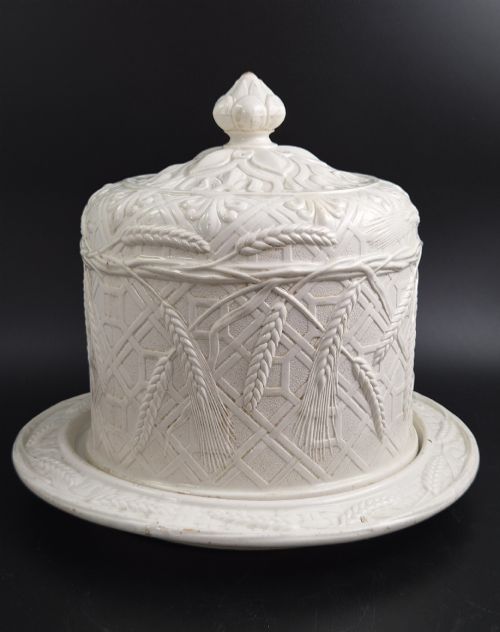
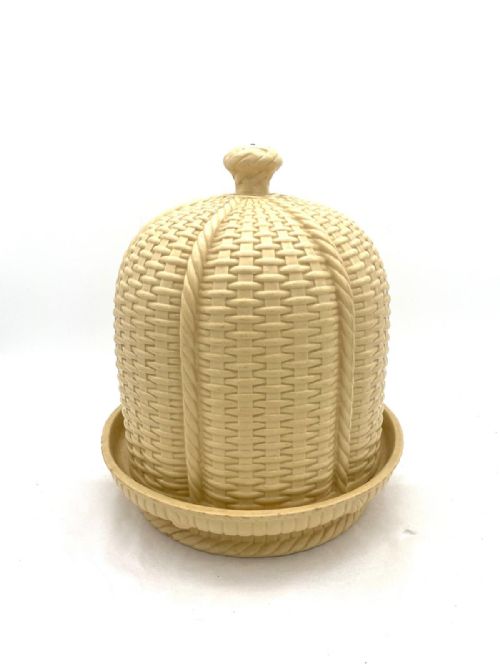
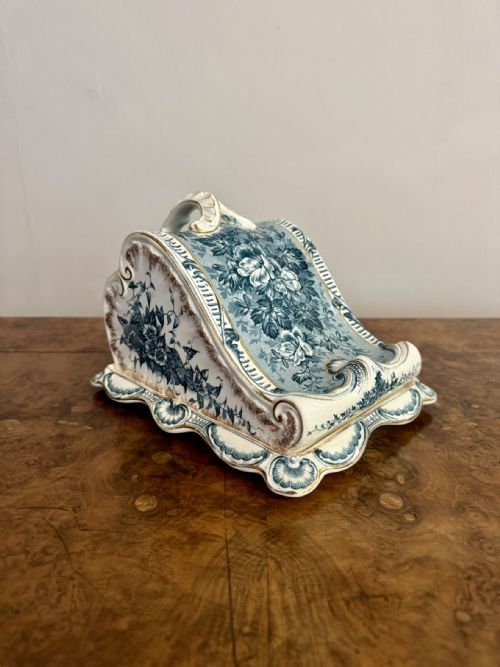
A pottery cheese keeper usually comprises a large domed cover and a matching stand or base, designed specifically to protect a wedge of cheese on the dining table. These pieces emerge from the nineteenth century, with Victorian examples dominating the selection through distinct earthen forms.
Makers produced these domestic items in various styles, ranging from plain white ironstone to ornate majolica and drabware. Buyers frequently encounter pieces featuring traditional motifs such as wheat and lattice patterns, basket weave textures, and classical jasperware reliefs.
How potters shaped the clay
Potters relied upon earthenware, ironstone, and stoneware bodies to shape the heavy domes and stands required for daily use. These dense ceramic fabrics provided the necessary weight and durability to withstand regular handling in Victorian households.
Craftsmen applied specialised glazes, including colourful majolica pigments and smooth white finishes, to seal the porous clay bodies. Some finer decorative items also received subtle gilt accents to highlight the moulded surface details.
The listings exclusively feature nineteenth-century items, spanning the Victorian period with dates concentrated around eighteen-eighty.
What separates the finest examples
The distinction between standard domestic items and superior examples lies in the crispness of the moulding and the richness of the glaze. Pieces featuring intricate basket weave textures or deep majolica colouring demonstrate a higher level of ceramic artistry.
The completeness of the set also dictates the standing of the piece, as both the dome and the original matching stand must survive together. Heavier ironstone and fine jasperware variants command attention through their robust construction and well-defined relief work.
James Dudson
The Pottery Cheese Keeper Glossary
- Ironstone
- A dense, durable type of earthenware patented in the nineteenth century to rival true porcelain. It provided a sturdy white body well suited for heavy domestic tableware.
- Majolica
- A colourful Victorian lead-glazed earthenware fired with vibrant metallic oxides. This technique produced rich greens, browns, and blues on moulded decorative surfaces.
- Drabware
- A nineteenth-century unglazed or slip-glazed pottery featuring muted grey-brown or olive tones. It often appeared in utilitarian kitchen and dairy wares.
- Jasperware
- A fine-grained, unglazed stoneware developed with contrasting coloured backgrounds and white moulded reliefs in the classical taste. It remains instantly recognisable on Victorian cheese bells.
- Cheese dome
- A large ceramic cover designed to fit snugly over a matching base plate. It trapped moisture and protected the cheese from insects in the dining room.
Pottery Cheese Keeper: Frequently Asked Questions
What is a pottery cheese keeper?
A pottery cheese keeper is a Victorian ceramic serving vessel consisting of a domed cover and a matching base plate. It was designed to protect cheese on the dining table and keep it moist between meals.
These pieces typically appear in earthenware, ironstone, or majolica, often decorated with moulded patterns like basket weave or wheat and lattice motifs.
How were these cheese domes used?
Victorian households utilised these domes during breakfast and dinner services to house large blocks of cheese, particularly hard varieties like Stilton. The heavy ceramic cover helped contain strong odours and kept the dairy cool.
Servants would place the cheese on the matching stand, cover it with the dome, and bring the entire ensemble directly to the dining table for guests to serve themselves.
How do I date a Victorian cheese dish?
Dating these items involves examining the ceramic body, glaze type, and stylistic markers such as nineteenth-century registration marks or specific maker names like James Dudson. Pieces from the Victorian era frequently display heavy earthenware fabrics and distinct moulded decoration.
Earthenware, white ironstone, and coloured majolica glazes were particularly prevalent during the middle and late nineteenth century, specifically around the eighteen-eighties.
Are both the dome and stand required?
Collecting these items is most satisfying when the original domed cover and matching base stand remain together as a complete pair. Because the two components were easily separated or broken during use, matched sets are valued by buyers.
When examining a piece, checking that both elements share the same ceramic body and glaze ensures historical consistency.