


Portable Wooden Desk Box
A portable wooden desk box provides a sturdy writing surface and storage for correspondence, designed for travel during the Georgian and Victorian eras.
Portable Wooden Desk Box
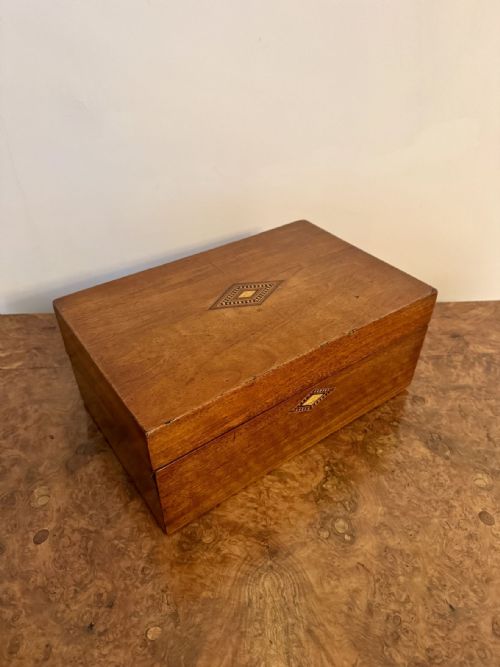
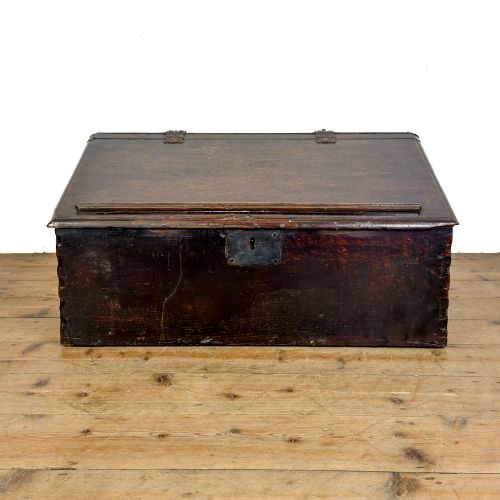
A portable wooden desk box encompasses writing slopes, lap desks, and campaign boxes designed for writing while travelling or stationed away from home. These pieces date from the 18th century through the late 19th century, covering the Georgian, Regency, and Victorian periods.
The most common forms on this page are Victorian and 19th-century campaign writing slopes constructed from dense timbers and fitted with internal compartments for stationery and inkwells.
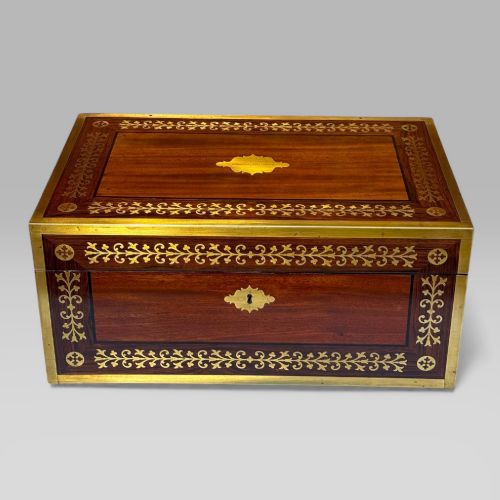
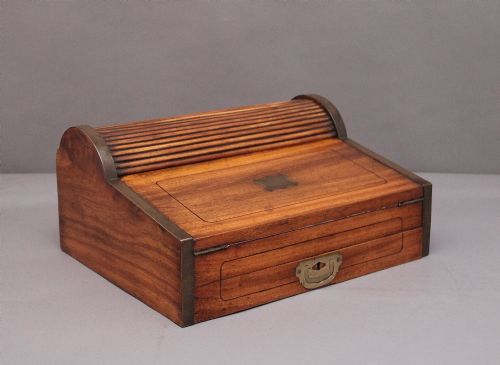
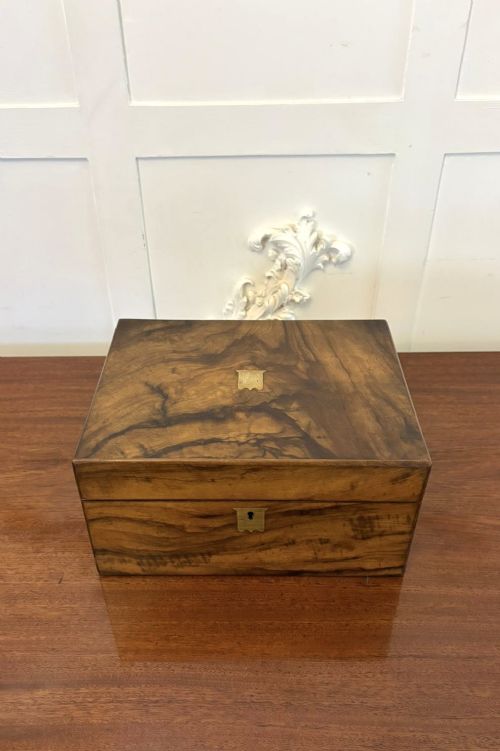
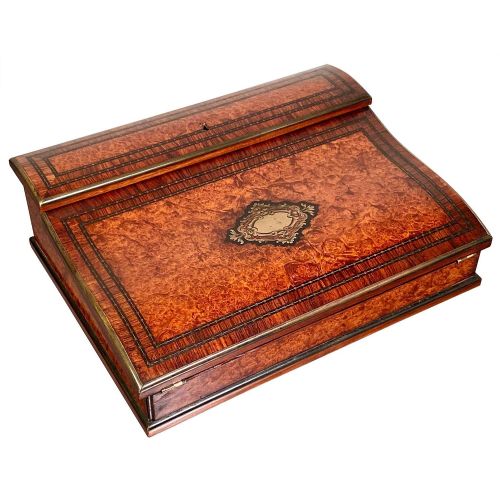
Examples range from plain mahogany and camphor wood utility boxes used by military officers to highly decorative rosewood, walnut, and coromandel boxes featuring brass inlay and secret drawers.
Materials and construction
Cabinet makers utilised dense hardwoods such as mahogany, rosewood, walnut, and camphor wood to withstand the rigours of travel and changes in climate.
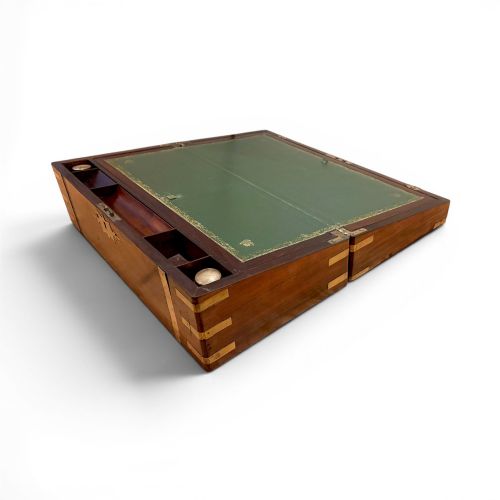
Boxes were strengthened with brass corners, edge banding, and flush-fitting carrying handles, which defined the campaign style intended for military and naval use.
Interiors combined fitted wooden compartments with velvet or leather writing surfaces, often incorporating secret drawers accessed via hidden spring mechanisms.
Listings feature portable wooden desk boxes spanning the 18th, 19th, and Victorian centuries, constructed from mahogany, rosewood, camphor wood, and walnut.
Judging quality
The standard of timber selection and cabinet work separates standard utility boxes from exceptional pieces, particularly in the figuring of burr walnut, pollard oak, or coromandel veneers.
Hardware quality indicates the grade of the original commission, with heavy cast brass mounts, flush hinges, and branded locks by makers like Bramah marking superior production.
Internal complexity and secondary detailing, such as intricate Tunbridgeware mosaic work, ivory inlay, or specialised stationery fittings, elevate the execution of the box.
Mappin & Webb
The Portable Wooden Desk Box Glossary
- Writing slope
- A portable box with a hinged, slanted lid that folds down to provide a sloping surface for writing when opened.
- Campaign box
- A piece of furniture or a box reinforced with brass banding and corners designed for military officers on active service.
- Secret drawers
- Concealed compartments hidden behind removable panels or triggered by secret catches within the interior fittings.
- Tunbridgeware
- Wooden items decorated with mosaic patterns created from tiny blocks of naturally coloured timbers arranged to form pictorial designs.
- Bramah lock
- A high-security cylindrical lock patented in the late 18th century, frequently found on superior quality boxes and writing slopes.
Portable Wooden Desk Box: Frequently Asked Questions
What is a portable wooden desk box?
A portable wooden desk box is a hinged writing case designed to hold paper, ink, and pens while travelling. These boxes open to reveal a sloping writing surface lined with leather or velvet.
Many examples feature internal compartments, inkwells, and secret drawers for secure storage of personal documents.
How were campaign writing slopes used?
Campaign writing slopes were utilised by military officers, diplomats, and travellers on active service during the Georgian and Victorian eras. Their robust construction allowed them to endure long journeys by land and sea.
The brass corners and flush handles protected the timber from knocks during transit.
How do I identify a Victorian writing slope?
Victorian writing slopes typically date from the mid to late 19th century and often feature walnut, coromandel, or rosewood veneers with brass inlay. They frequently include fitted stationery sections and working locks.
Earlier Georgian and Regency examples tend to use simpler mahogany construction with flush brass strapwork.
Can I use an antique writing slope today?
Many antique writing slopes remain fully functional for modern use as laptop desks, stationery organisers, or decorative desktop accessories. The sloping surfaces provide a comfortable angle for reading or handwritten notes.
Care should be taken to protect the historical wood finishes and leather inserts from moisture and direct sunlight.