

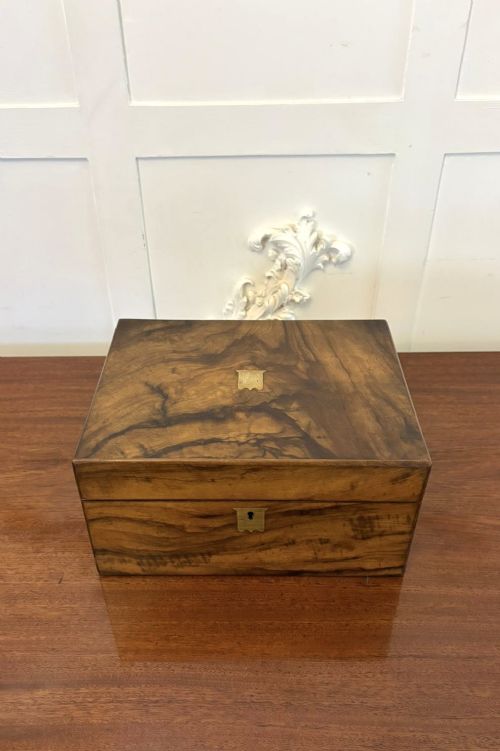

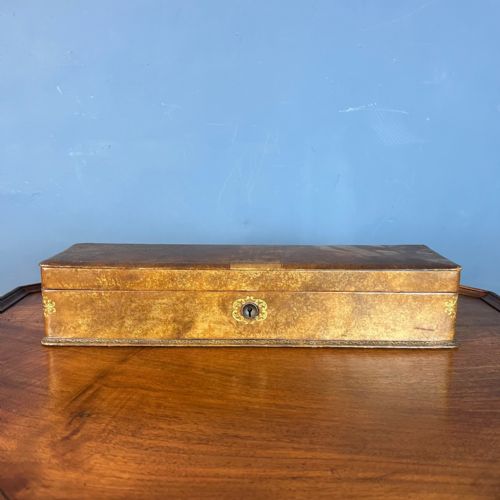


Nineteenth Century Writing Box
A nineteenth century writing box is a portable desk designed for correspondence, offering a fitted interior and compartments for ink and paper.
Nineteenth Century Writing Box
A nineteenth century writing box encompasses portable writing slopes, lap desks, and correspondence boxes created during the Victorian and Regency eras. These pieces served as personal writing desks for travellers and households before the widespread availability of fitted library furniture.
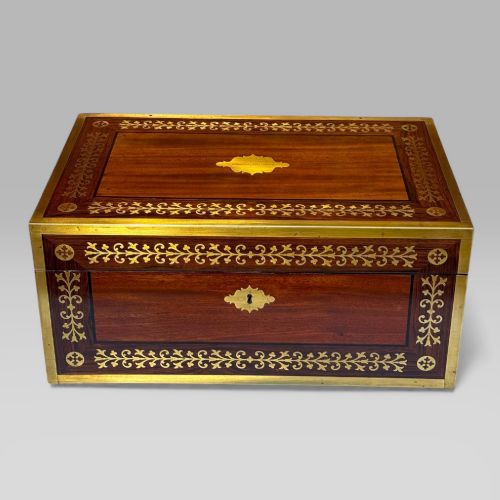
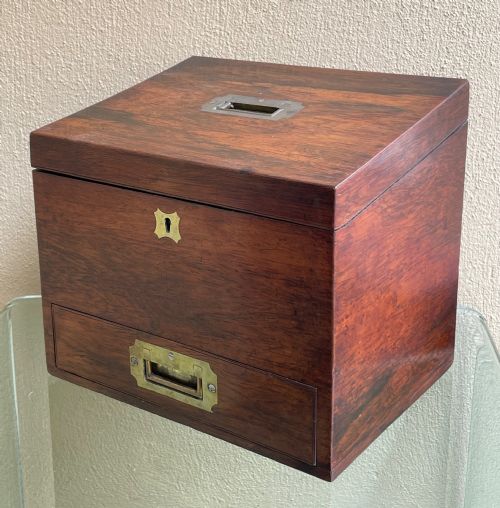
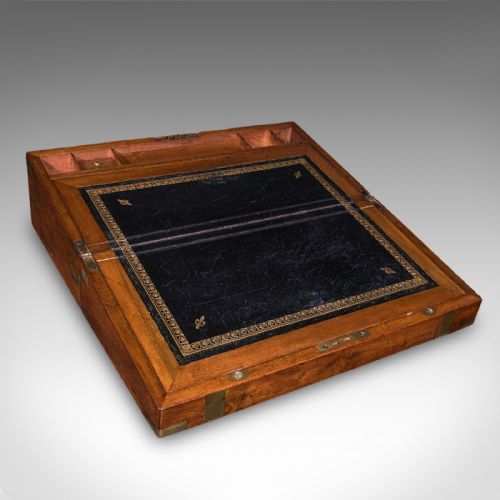
The version most commonly met on this page is the brass-bound mahogany or rosewood writing slope, opening to reveal a sloping writing surface lined with leather or velvet. These boxes often incorporate concealed drawers, inkwell recesses, and compartments for stationery.
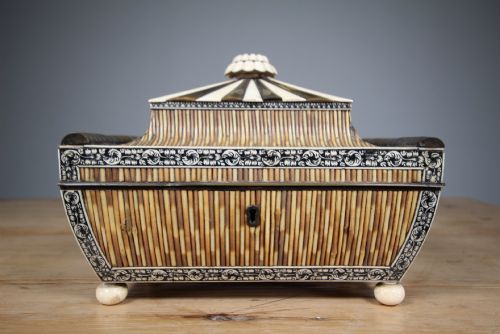
Alongside standard slopes, the selections span related desk accessories including stationery boxes, letter cases, and desk sets in walnut, satinwood, and French Second Empire styles. Some examples reflect global trade through Anglo-Indian craftsmanship utilising materials such as antler and Vizagapatam work.
Materials and Construction Techniques
Cabinet makers utilised dense hardwoods including mahogany, walnut, rosewood, and burr walnut, frequently applying brass banding, corner mounts, and inlay to reinforce corners and edges for travel. Satinwood and ebony also appear in specific examples, demonstrating varied wood-working traditions across the period.
Internal components demand precise joinery to house folding writing surfaces, secret drawers, and fitted compartments for inkwells and pens. Leather and tooled surfaces line the folding slopes, whilst specialised decorative elements incorporate Tunbridge ware, porcelain plaques, and agate cabochons.
Listings feature eighteenth and nineteenth century styles including Regency, Victorian, and French Second Empire designs in mahogany, walnut, rosewood, and brass.
Distinctions in Quality
Quality rests upon the selection of timber figures, such as burr walnut or figured mahogany, and the precision of the brass inlay and corner strapping. Superior boxes retain their original fitted interiors, secret compartments, and matched glass inkwells without extensive replacement parts.
Construction methods also differentiate standard production items from exceptional pieces, visible in the smoothness of the folding slope mechanism and the tightness of the dovetail joints in hidden drawers. Decorative execution, whether through fine Tunbridge ware mosaic or hand-painted porcelain inset panels, elevates the standing of individual desk sets and boxes.
The Nineteenth Century Writing Box Glossary
- Writing Slope
- A portable box with a hinged, slanted lid designed to provide a comfortable writing angle. When opened, it reveals a flat or folding writing surface and internal storage.
- Campaign Box
- Furniture constructed for military use or travel, characterised by brass corners, flush handles, and robust timber frames designed to withstand transit.
- Tunbridge Ware
- Small wooden objects decorated with intricate mosaic patterns made from many tiny pieces of naturally coloured woods. This technique originated in Kent during the nineteenth century.
- Sarcophagus Shaped
- A box design featuring a stepped, domed lid and flared base resembling a classical stone sarcophagus. This silhouette appears on substantial Regency quill boxes and writing boxes.
Nineteenth Century Writing Box: Frequently Asked Questions
What is inside a writing box?
A typical box opens to reveal a sloping writing surface, often covered in leather or velvet, which folds down to access storage spaces underneath. Additional fitted compartments hold inkwells, nibs, stamps, and stationery.
Many examples include secret drawers hidden behind removable partitions or dummy pencil trays. These compartments kept private papers and valuables secure during travel.
How do I date a writing box?
Dating relies on timber choices, brass hardware styles, and construction techniques characteristic of Regency and Victorian periods. Regency boxes often feature sarcophagus silhouettes and elaborate brass inlay, whilst mid-Victorian pieces frequently display robust brass corner strapping and mahogany or rosewood surfaces.
Internal fittings and paper linings can also offer clues, though many interiors were updated or relined during the nineteenth century. Examining the construction of secret drawers and lock mechanisms helps narrow the decade of manufacture.
Were these boxes used for travel?
Writing boxes served as portable desks for officers, diplomats, and travellers who needed to write letters on the move. Campaign variations featured flush brass handles and reinforced edges to endure frequent transport.
Smaller lap desks could be placed on ordinary tables or knees, providing a stable writing surface away from a permanent study. Wealthy Victorians carried fitted travelling writing slopes on extended journeys.
How do I care for a wood writing box?
Keep wooden boxes away from direct sunlight and sudden temperature changes to prevent the timber from warping or splitting. Maintaining stable indoor humidity preserves both the solid wood carcases and the delicate veneer.
Apply a traditional beeswax polish occasionally to nourish the wood and protect the polished finish. Avoid excess moisture on leather writing surfaces and brass mounts.