



Porcelain Musician Statues
Porcelain musician statues are sculpted figures depicting players of instruments, captured in glazed or bisque finishes across multiple centuries of European manufacture.
Porcelain Musician Statues
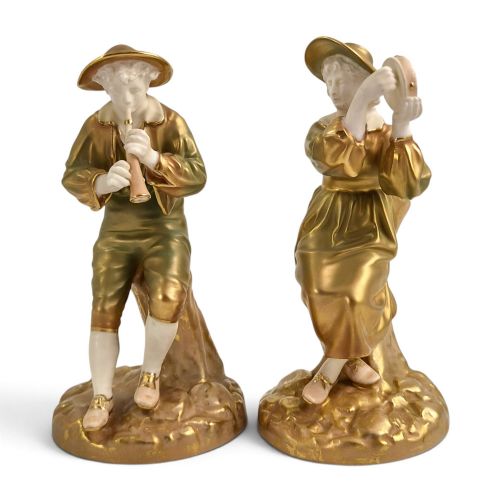
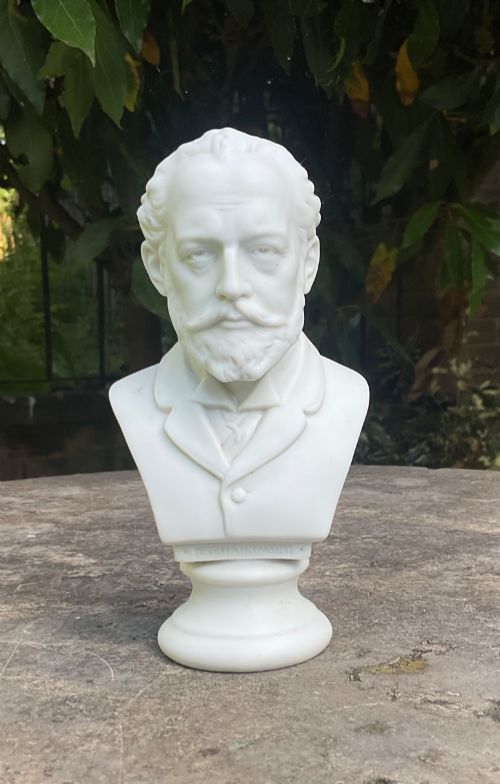
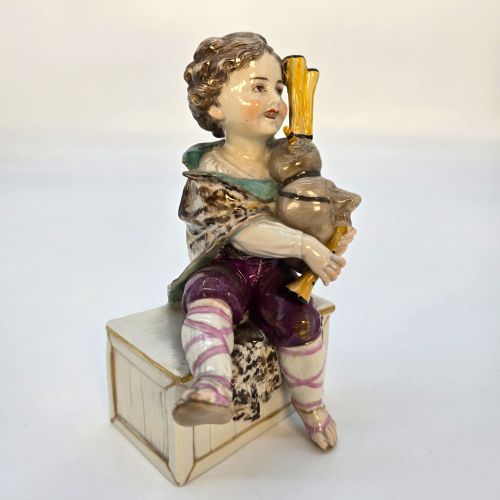
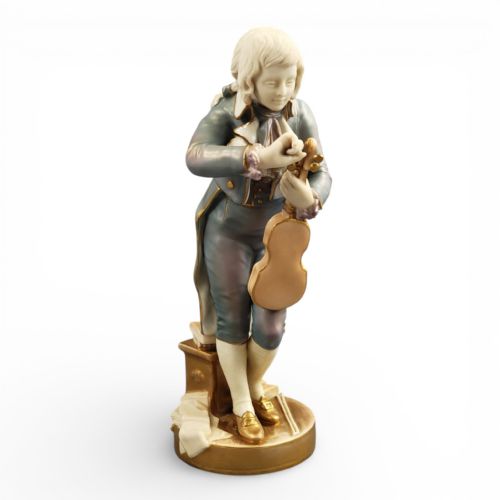
Porcelain musician statues encompass glazed and bisque figures depicting instrumentalists, ranging from romantic shepherd pairs to portrait busts of composers. When buyers search for porcelain musician statues, they encounter works modelled as historic pastoral figures, literary characters, and specific historical artists.
The pieces appearing on this page span the nineteenth and twentieth centuries, originating from English and continental European factories. Collectors most frequently meet Victorian and Edwardian examples alongside earlier revival pieces from the Regency period.
Makers approach the subject through diverse stylistic lenses, incorporating Rococo Revival curves, Victorian Orientalism, and Art Nouveau details. The forms include single figurines, paired compositions, and sculptural busts representing notable cultural figures.
Materials and construction
Manufacturers utilise hard-paste and soft-paste porcelain, bone china, and parian ware to build these figural works. Parian ware provides a matte finish resembling marble, whilst bone china allows for delicate, thin-walled casting.
Surface decoration relies on polychrome enamel painting, applied glaze, and hand-gilding with gold leaf. Bisque porcelain remains unglazed, preserving crisp surface textures achieved during the primary firing stages.
Porcelain Musician Statues Retail Price Guide 2026
Typical asking prices for porcelain musician statues among the pieces listed under this phrase on Sellingantiques today, from the lower quarter to the upper quarter. They describe what is for sale here now, not the wider market.
Listings feature works in bisque porcelain, bone china, and parian ware alongside glazed porcelain.
Quality factors
The degree of refinement in the modelling separates standard production from superior examples. Finely finished pieces display sharply defined facial expressions, detailed hand-painting on garments, and intricate rendering of musical instruments.
The integrity of the paste and the precision of the kiln work dictate structural stability. Superior statues maintain clean joints, balanced proportions, and controlled application of enamel or gilt highlights.
Royal Worcester·Volkstedt Rudolstadt Factory·Volkstedt Richard Eckert·Samson Paris·Eichwald Royal Dux·Derby Porcelain
The Porcelain Musician Statues Glossary
- Bisque porcelain
- Unfired or once-fired unglazed porcelain possessing a matte, fine-grained texture similar to marble. This finish is frequently utilised for portrait busts and detailed figural groups.
- Parian ware
- A type of fine white biscuit porcelain developed in the nineteenth century to imitate carved marble. It is particularly valued for its smooth surface and capacity to hold fine detail.
- Gold leaf
- Extremely thin gold beaten into sheets and applied to details such as instrument trim and costume borders. This embellishment is often sealed with a low-temperature firing.
- Bone china
- A type of soft-paste porcelain containing bone ash, noted for its high mechanical strength and milky translucency. It permits the creation of slender limbs and delicate instrument components.
Porcelain Musician Statues: Frequently Asked Questions
What periods do these figures come from?
The pieces span from the nineteenth century into the mid-twentieth century. Examples include Regency-era models and late Victorian productions.
Later works extend into Edwardian and 1940s interpretations of earlier eighteenth-century styles.
How do I care for antique porcelain?
Display figures away from direct sunlight to protect enamel colours and gilt highlights from fading. Dust gently using a soft, dry brush.
Avoid using water or chemical cleaners on bisque surfaces, as moisture can penetrate the unglazed ceramic body.
What is the difference between glazed and bisque?
Glazed porcelain receives a glassy coating that seals the ceramic body and creates a shiny, reflective surface. This finish protects the underlying enamel colours.
Bisque porcelain remains unglazed, offering a matte appearance that highlights the sculptural details and contours of the figure.
How do I identify the manufacturer?
Makers often applied factory marks, numbers, or painter ciphers to the underside of the base. These stamps and incised numbers help determine the origin and production date.
Stylistic markers, such as the specific palette used by Parisian revivalists or the paste composition of English bone china, also indicate the source.