



Porcelain Figural Vase Pair
These porcelain figural vase pair items bring character to a room, offering distinct regional artistry from East Asian and continental traditions.
Porcelain Figural Vase Pair
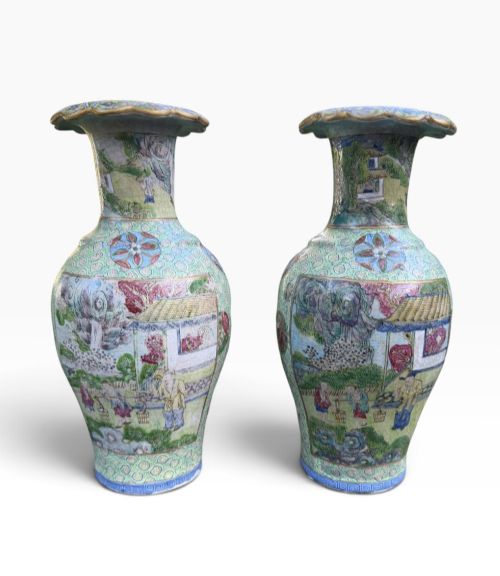
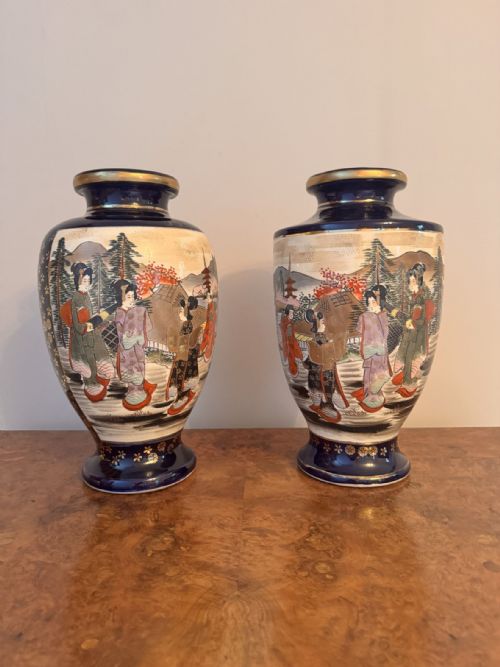
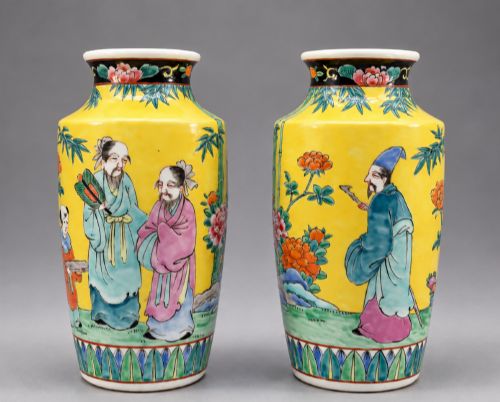
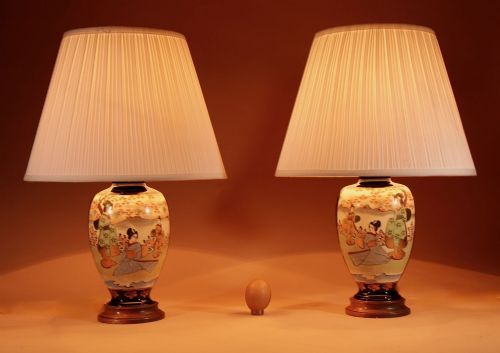
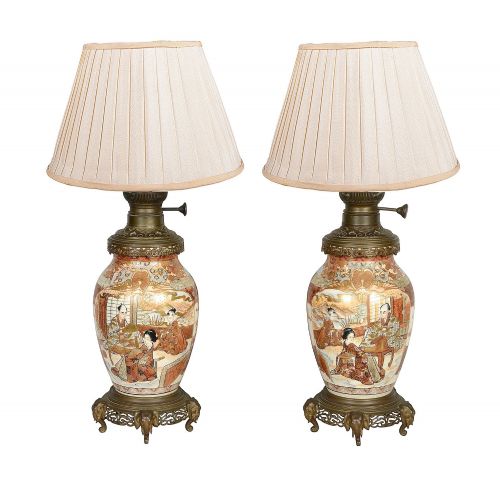
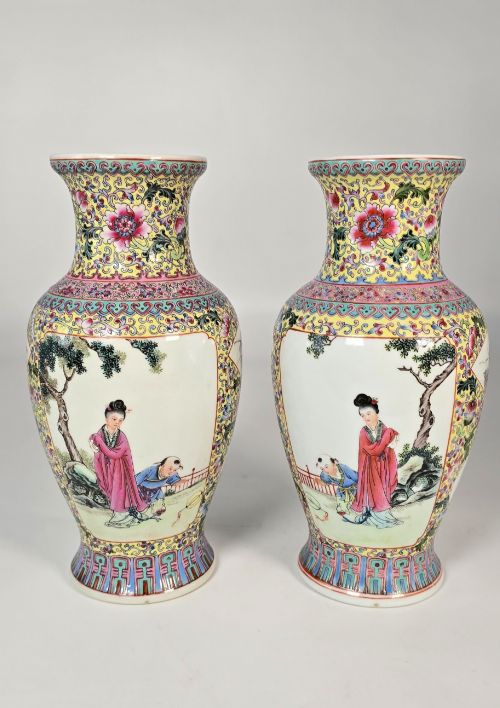
A porcelain figural vase pair consists of matching vessels adorned with human figures, often created as decorative centrepieces or subsequently adapted into table lamps. These matched sets originate predominantly from nineteenth and early twentieth-century workshops in China and Japan, alongside continental European makers.
Buyers seeking a porcelain figural vase pair encounter forms ranging from baluster vases and ginger jars to Satsuma and Imari wares. Chinese examples frequently display Kangxi style painting, Qing dynasty motifs, or Republican period scenes, while Japanese counterparts draw upon Meiji period aesthetics.
What varies in quality
The refinement of the hand-painted brushwork defines the upper tier of these pieces, particularly in the rendering of facial expressions and robes on figural panels. Firmer control over enamel application and more balanced compositions distinguish superior examples from standard production.
The precision of the porcelain body and the crispness of secondary materials, such as gilding or hand-carved wooden stands, indicate the standard of craftsmanship. Pairs that retain their original matched proportions and uniform surface preservation command greater appreciation.
Porcelain Figural Vase Pair Retail Price Guide 2026
Typical asking prices for porcelain figural vase pair among the pieces listed under this phrase on Sellingantiques today, from the lower quarter to the upper quarter. They describe what is for sale here now, not the wider market.
Periods represented span the nineteenth century through the 1930s, encompassing Meiji and Qing dynasty traditions.
Kinkozan
The Porcelain Figural Vase Pair Glossary
- Famille rose
- A prominent palette of opaque pink and rose enamel colours introduced to Chinese ceramics during the Qing dynasty. This palette allowed for nuanced shading in figural robes and floral motifs.
- Satsuma
- A type of Japanese earthenware featuring a crackled ivory glaze decorated with polychrome enamels and rich gilding. These pieces frequently depict historical figures and scholarly scenes.
- Kangxi style
- An aesthetic referring to the artistic standards of the Kangxi Emperor's reign, characterised by vibrant blue and white porcelain or brilliant enamel painting. Later makers emulated these balanced compositions.
- Baluster
- A vase shape featuring a bulbous lower body that tapers toward a narrow neck, resembling an architectural baluster. This form provides a substantial canvas for narrative figural decoration.
Porcelain Figural Vase Pair: Frequently Asked Questions
How do I style a porcelain figural vase pair?
Position them symmetrically on a sideboard, mantelpiece, or console table where their balanced forms can anchor the space.
Ensure adequate lighting reaches the hand-painted surfaces to highlight the enamel details and gold leaf work.
Were these vases made as lamps originally?
Many examples began life purely as decorative vessels and were converted into table lamps during the nineteenth or twentieth centuries.
Fittings such as brass hardware and silk shades were added later while preserving the main ceramic body.
How do I identify a Meiji period piece?
Look for dense, intricate enamel work and characteristic Japanese motifs associated with the Meiji era of craftsmanship.
Satsuma and Kutani wares from this period often combine finely crackled glazes with rich figural narration.
What is the difference between famille rose and famille verte?
Famille rose relies primarily on a distinctive opaque pink enamel derived from colloidal gold, allowing for soft tonal gradations.
Famille verte centres on a vibrant green enamel palette, often paired with cobalt blue and iron red to create contrasting, vivid imagery.