


Antique Porcelain Table Centrepieces
These antique porcelain table centrepieces bring theatrical presence to dining tables through sculptural figures, intricate gilding and painted ceramic bowls.
Antique Porcelain Table Centrepieces
When you search for antique porcelain table centrepieces, you encounter grand decorative bowls, figural comports and multi-arm candelabra designed to anchor a formal dining arrangement. These items emerge primarily from nineteenth-century European factories, spanning Victorian, Rococo Revival and Art Nouveau aesthetic movements.
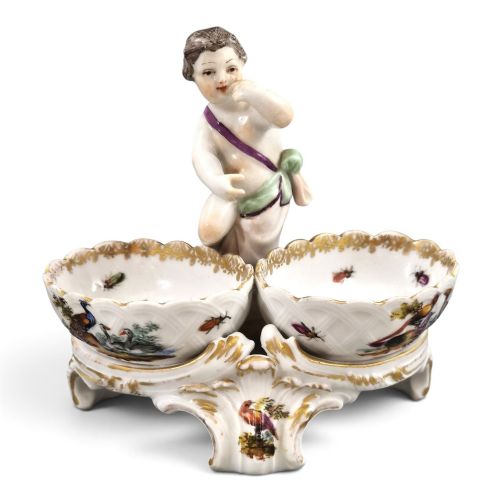
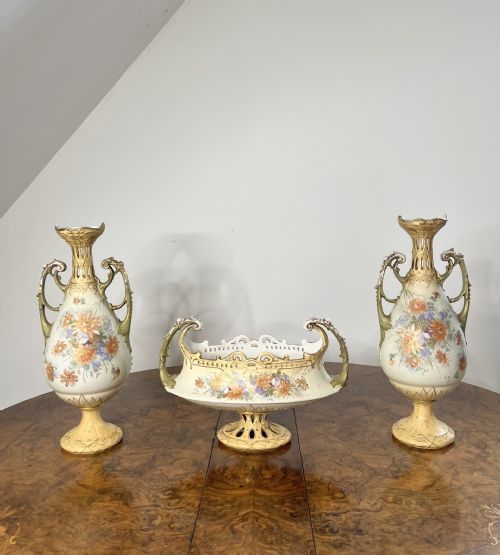
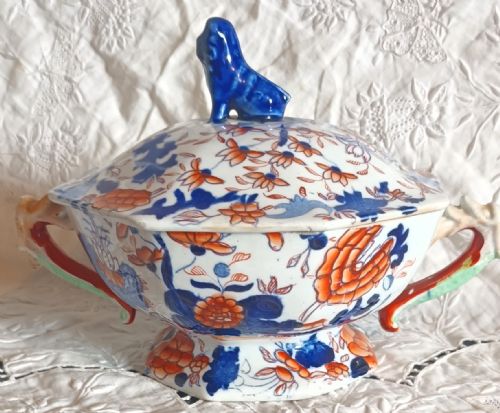
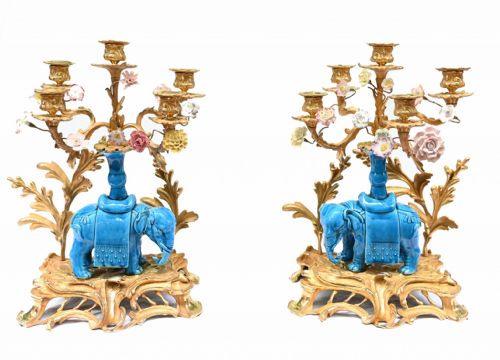
The most common formats on this page include elaborate centrepiece bowls supported by cherubs, figural flower carts, and candelabra set with hand-painted porcelain birds or figures. Continental potteries from Germany, France and Austria dominate the selection alongside English factories.
Forms range from simple glazed ceramic dishes to large figurative groupings featuring putti, animals and mythological figures. These centrepieces served both ornamental and functional roles in historic dining rooms, holding fruit, sweets or floral displays.
Materials and manufacture
Manufacture relies on hard-paste or soft-paste porcelain shaped through moulding and hand-modelling, finished with detailed hand-painting and enamel decoration. Factories utilised intricate glazes to achieve smooth surfaces before applying gold leaf or gilding to highlights and borders.
Many larger centrepieces incorporate mixed media, combining porcelain figures with ormolu mounts, silver plate or gilt bronze structures. Artisans built complex figural groups in sections, firing the porcelain multiple times to set the vibrant colours and metallic accents.
Materials recorded across the selection include hard-paste and soft-paste porcelain, ceramic, enamel, gold leaf, gilding, ormolu and silver plate.
Assessing craftsmanship and design
Quality separates in the crispness of the modelling and the precision of the hand-painted details on faces, garments and foliage. Finer examples display delicate, lifelike expressions on figural elements like cherubs and birds, whereas lesser pieces show heavy moulding and flat brushwork.
The integrity of the gilding and the preservation of delicate porcelain petals or extremities dictate the standing of a piece. Superior centrepieces maintain complex structural balance without heavy restoration across prominent figural or floral elements.
KPM Berlin·Royal Vienna·Mason's Ironstone·Worcester·Doulton Burslem·Schierholz·Sitzendorf·Ridgway·Royal Dux·Meissen·Sevres·Royal Crown Derby·Coalport·Samson·Carl Thieme Dresden
The Antique Porcelain Table Centrepieces Glossary
- Comport
- A decorative dish raised on a high foot, used for serving fruit or sweets at the table. These often feature moulded porcelain bowls.
- Putto
- A plump, naked child figure, frequently winged, commonly sculpted supporting bowls or clambering over nineteenth-century centrepieces.
- Gilding
- The application of gold leaf or powdered gold to porcelain surfaces or mounts. This technique highlights raised scrollwork and borders.
- Candelabra
- A branched candlestick holding multiple lights. Many examples combine porcelain figures with gilt metal arms.
- Sweetmeat stand
- A small tiered or partitioned dish designed for holding confectioneries. These appear in porcelain from eighteenth and nineteenth-century factories.
Antique Porcelain Table Centrepieces: Frequently Asked Questions
What were antique porcelain table centrepieces used for?
These pieces served as the decorative focal point for formal dining tables during the eighteenth and nineteenth centuries. They held fruit, sweetmeats or floral arrangements while displaying the host's taste and wealth.
Beyond dining tables, large centrepieces and garniture sets decorated sideboards, mantelpieces and drawing-room furniture. Their sculptural presence brought colour and narrative scenes into domestic interiors.
How do I date an antique porcelain centrepiece?
Dating relies on factory marks stamped or painted on the underside of the porcelain base, combined with stylistic clues. Rococo Revival forms often point to the mid-nineteenth century, while flowing asymmetrical lines indicate the Art Nouveau period.
Comparing the modelling style, colour palette and gilding techniques to documented factory production periods helps narrow down the decade of manufacture. Material composition, such as soft-paste versus hard-paste porcelain, also guides chronological placement.
How should I display a centrepiece safely?
Place the centrepiece on a stable, level surface away from heavy foot traffic or direct sunlight that might fade delicate enamel colours. Ensure the furniture supporting the piece can bear the combined weight of the ceramic and any metal mounts.
Avoid placing large centrepieces near heat sources or in areas prone to vibrations, which can stress delicate porcelain appendages like fingers, wings or flower petals. Use felt pads beneath the base if displaying on polished wood.