
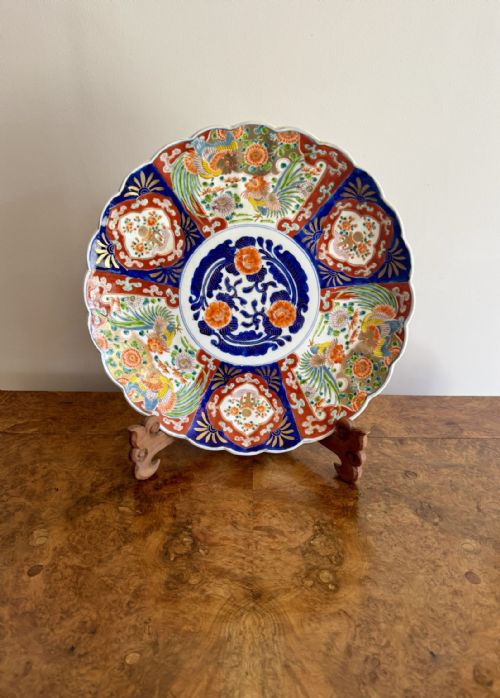
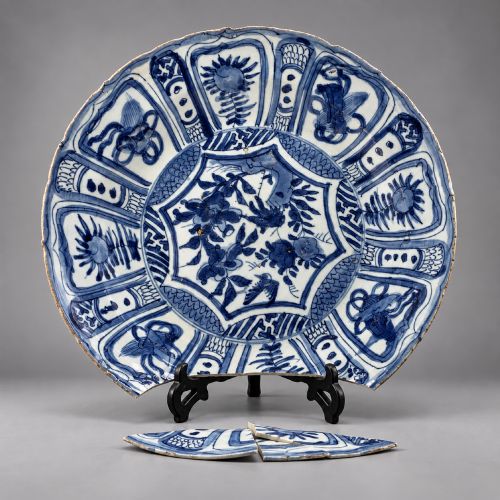
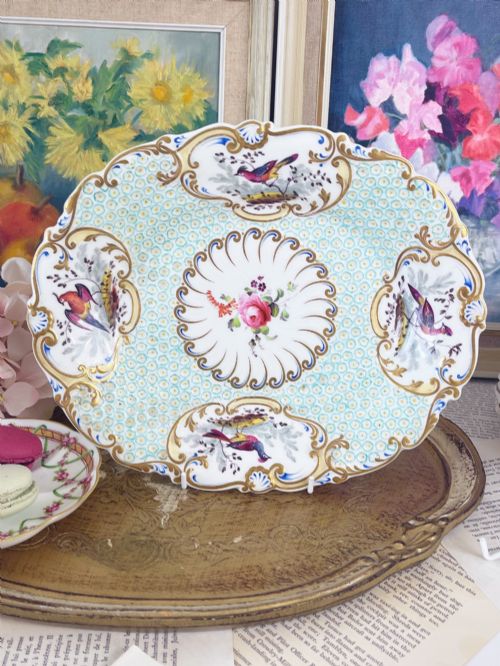

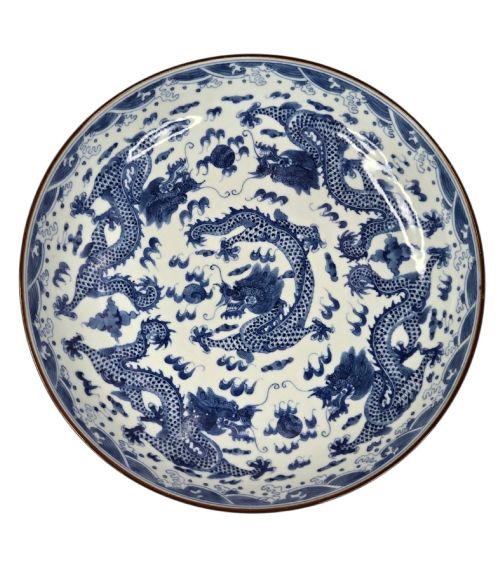







Porcelain Display Platter
A porcelain display platter brings cabinet presence and vibrant hand-painted colour to a room, turning utilitarian serving forms into pure decoration.
Porcelain Display Platter
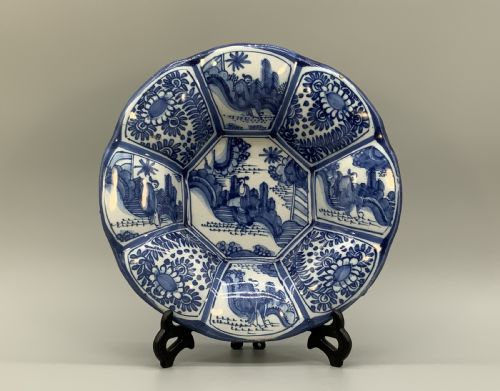
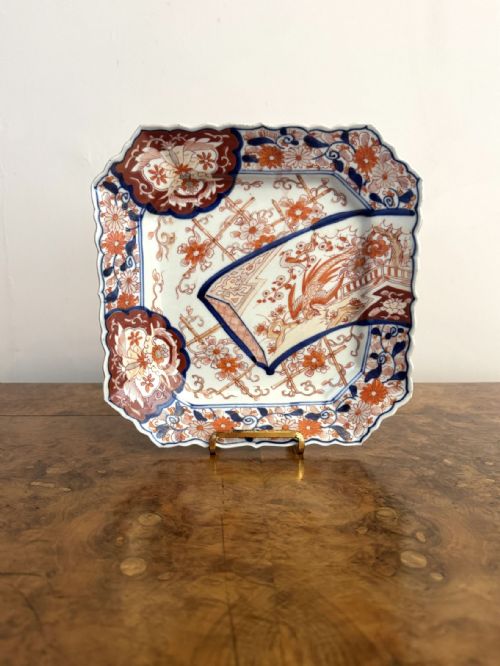
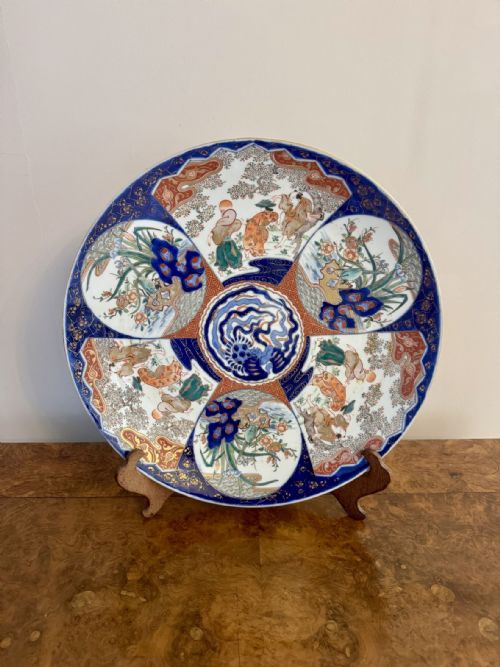
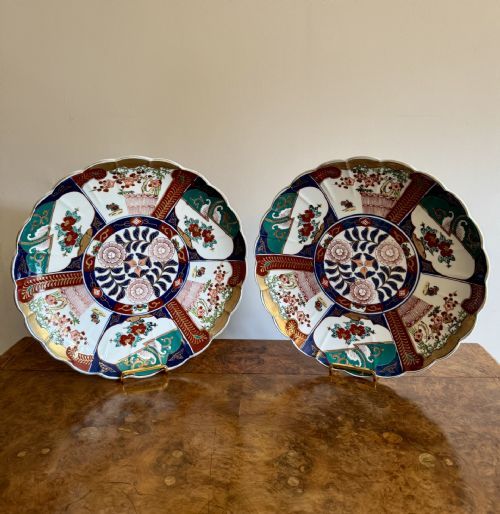
A porcelain display platter, often catalogued as a charger, cabinet plate, or decorative dish, is designed principally for visual exhibition rather than dining use. These pieces span from the late eighteenth century through the Edwardian period, encompassing both European porcelain manufactories and Asian export wares.
The Japanese Imari charger dominates the selection, alongside Chinese blue and white dragons, Dutch Delft earthenware, and hand-painted English cabinet plates depicting birds and castles. Forms range from traditional circular chargers to square, scalloped, fan-shaped, and lobed serving dishes.
Originating across diverse cultural traditions, these decorative plates bring together European floral scenes, botanical studies, and intricate Japanese motifs such as the Seven Lucky Gods and Koi carp. They sit easily on plate stands or hang directly on walls to anchor a traditional interior scheme.
Materials and Manufacture
The backbone of these items is hard-paste or soft-paste ceramic and porcelain, frequently enhanced with cobalt underglaze pigments that withstand high kiln temperatures. Overglaze enamels in iron red, green, and blue provide the vibrant pictorial layers seen on Imari and Famille Verte wares.
Gilding and gold leaf accent highlights, combined with tactile techniques such as cloisonné tree bark on Japanese Totai Shippo bodies, add texture and reflective depth. Artisans applied hand-painted details freehand, ensuring each platter bears the subtle variations characteristic of studio production.
Listings feature porcelain display platters spanning the Victorian, Edwardian, and Meiji periods, utilising cobalt underglaze, enamel, and gold leaf.
Assessing Quality and Execution
Superior examples separate themselves through the crispness of the hand-painted brushwork and the clarity of the cobalt underglaze, where finer pieces display precise linework without smudging in the kiln. The complexity of the composition also dictates worth, particularly multi-figure scenes or densely populated botanical and bird motifs.
Deeper glazing, heavier application of gold leaf, and unusual moulding - such as lobed, square, or fan-shaped edges rather than simple circles - signal more ambitious workshop output. Preservation of the enamel colours over centuries maintains the visual impact intended by the maker.
H & R Daniel·Coalport·Mason·Bluett and Sons
The Porcelain Display Platter Glossary
- Charger
- A large decorative plate or platter, traditionally measuring over twelve inches, used primarily for display on sideboards or walls rather than dining.
- Imari
- A style of Japanese porcelain exported from Arita, characterised by a palette of underglaze blue, iron red, and supplementary gold leaf.
- Famille Verte
- A Chinese porcelain palette dominated by green enamel overglaze, frequently depicting court life, birds, and floral arrangements.
- Cabinet Plate
- A small or medium decorative plate manufactured for display in a glass-fronted cabinet or on a dedicated stand.
- Cobalt Underglaze
- A blue pigment applied to ceramic bodies before glazing and firing, producing a permanent colour integrated into the surface.
Porcelain Display Platter: Frequently Asked Questions
How do I hang a porcelain charger on the wall?
Wall display requires a secure, non-scratching spring-loaded plate hanger that grips the rim evenly without putting undue pressure on the ceramic body. Ensure the wall fixing is anchored securely, as large chargers carry substantial weight.
Position the platter at eye level where natural light catches the enamel colours and gilding without exposing the piece to direct, harsh sunlight that might fade delicate pigments over time.
What is the difference between a plate and a charger?
A charger is substantially larger than a standard dining or cabinet plate, typically measuring well over twelve inches in diameter. They were made to dominate a sideboard or central wall space.
Smaller plates focus on intricate miniature details like botanical studies or individual birds, whereas chargers feature expansive narrative scenes and dense border patterns.
How should I clean my display platter?
Dust the surface regularly with a soft, dry microfibre cloth or a gentle feather duster to prevent particulate buildup in the recessed glaze lines. Avoid chemical cleaners entirely.
If deeper cleaning is necessary, wipe gently with a damp cloth and dry immediately, taking extra care around areas of applied gold leaf or overglaze enamel which can flake.
How do I tell Japanese Imari from Chinese export porcelain?
Japanese Imari relies on a dense, heavy porcelain body with a distinct palette of deep cobalt blue, rusty iron red, and abundant gold leaf highlights. The motifs often feature floral arrangements, fans, and brocade patterns.
Chinese export wares, such as Famille Verte, tend toward translucent green enamels, fine narrative court scenes, and different clay formulations that feel lighter in the hand.