


Porcelain Dial Clock
These porcelain dial clock examples bring nineteenth-century French and Victorian mechanical precision and domestic utility straight to the mantelpiece.
What porcelain dial clock pieces are
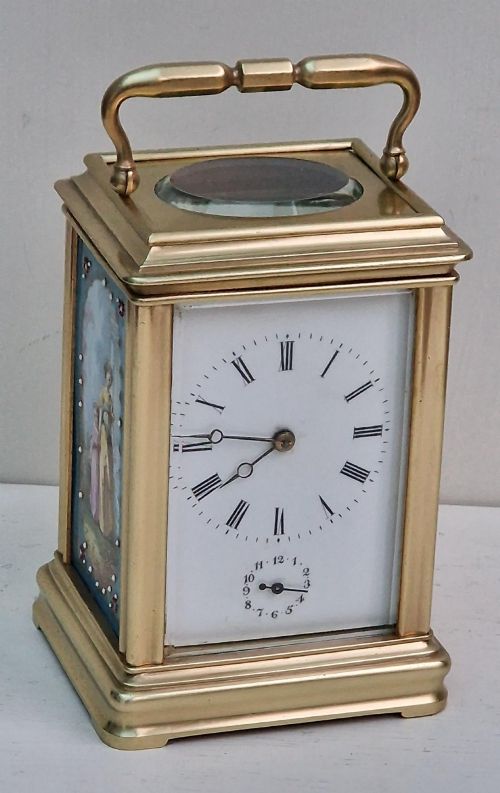
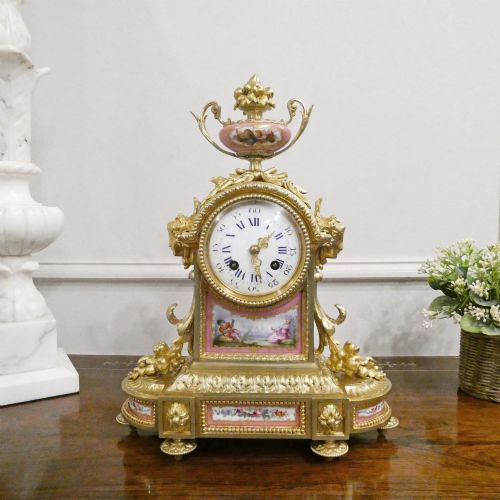
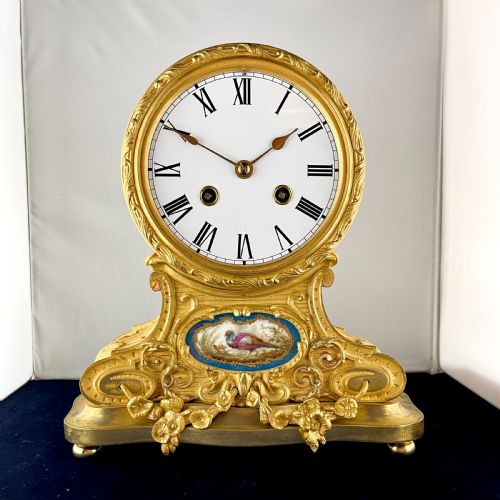
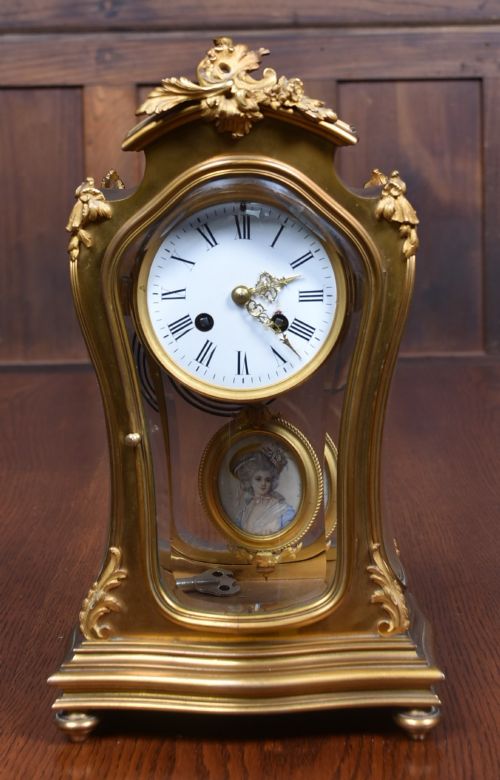
A porcelain dial clock brings together nineteenth-century horology and domestic decorative arts, appearing across Victorian and 19th Century French styles. These timepieces take the form of mantel clocks, carriage clocks, and crystal regulator clocks, designed to keep time while serving as a prominent room centrepiece.
Buyers browsing this selection frequently encounter carriage clocks and mantel clocks featuring exposed mechanical elements, glazed panels, and distinctive dials. The forms range from miniature skeleton movements to substantial architectural cases decorated with columns and frets.
The origins span French workshops and Victorian production, drawing on styles such as French Chateau. Pieces integrate functional timekeeping with elaborate housing in brass, gilt brass, and wood, creating varied visual impacts within domestic interiors.
How they were made
Construction relies on structural materials including brass, gilt brass, and wood to form the exterior housing and internal plates. Glass and crystal panels provide protection while offering unobstructed views of the interior escapement and gear trains.
Dials employ porcelain and enamel techniques to present clear numerical markers and decorative details. Some designs incorporate twelve-part dials featuring porcelain cartouches to depict the hours, mounted within lacquered brass or gilt frames.
Listings feature items dated from 1870, 1880, and 1900, spanning Victorian and French Chateau styles.
What varies in quality
Quality differences emerge in the complexity of the movement and the intricacy of the case decoration, separating straightforward timepieces from highly articulated architectural examples. The inclusion of frets, columns, and crystal regulator panels denotes greater ambition in design and execution.
The finish of the metalwork and the crispness of the porcelain dial painting distinguish finer workshops from standard production. Lacquering, gilding, and the precision fit of glass panels indicate the level of care invested by the original makers.
The Porcelain Dial Clock Glossary
- Crystal Regulator
- A clock housed in a brass and glass case that exposes the movement and pendulum from multiple angles. This style became popular in late nineteenth-century France.
- Carriage Clock
- A portable spring-driven timekeeper traditionally equipped with a swinging handle and glazed sides. These pieces often feature a platform escapement visible through the top or front glass.
- Skeleton Clock
- A timepiece with an open framework that exposes the gear train and escapement without a traditional dial surround. This design allows observers to watch the mechanical interaction of the wheels directly.
- Cartouche
- A distinct plaque or panel applied to a dial, often bearing individual hour numerals. In these clocks, porcelain cartouches are typically arranged radially around a central face.
Frequently Asked Questions
How do I wind a carriage clock?
Most mechanical carriage clocks require a specialised key inserted into the winding arbour at the back or base of the movement. Turning the key clockwise tightens the mainspring until firm resistance indicates full tension.
Care must be taken not to overwind the mechanism, as this can strain the internal spring. Regular, gentle winding keeps the timekeeping consistent.
Where should I place a crystal regulator?
Crystal regulator clocks need a stable, level surface away from direct sunlight and heavy foot traffic. Placing them on a solid mantelpiece or sideboard prevents vibrations that might interfere with the pendulum or balance wheel.
Because glass and crystal panels form much of the housing, a secure location minimises the risk of accidental impacts.
How do I clean a porcelain dial?
Maintenance of porcelain dials involves gentle dusting with a soft, dry brush or microfiber cloth. Moisture and chemical cleaners should be avoided to prevent damage to painted numerals and glazed surfaces.
For deeper cleaning around delicate hands and bezels, consultation with a professional horologist ensures the fragile dial remains protected.
What powers a 19th-century mantel clock?
Nineteenth-century mantel clocks typically rely on a mechanical spring-driven movement regulated by a balance wheel or pendulum. The potential energy stored in the mainspring drives the gear train to move the hands across the dial.
Escapement mechanisms control the release of this energy in regular intervals, producing the characteristic ticking sound.