


French Crystal Regulator Clock
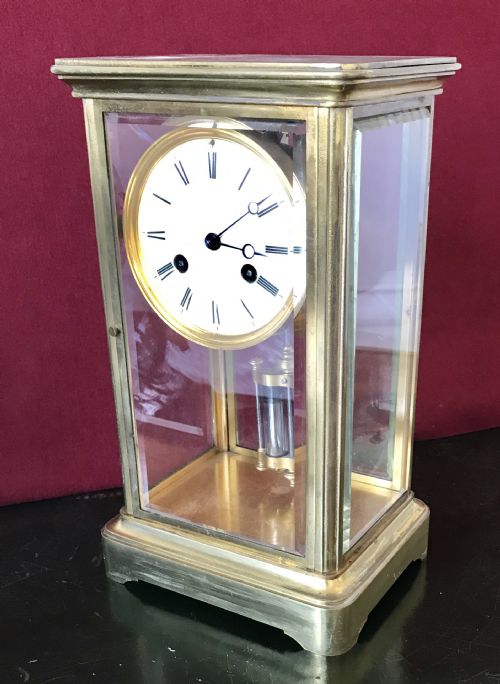
A french crystal regulator clock brings heavy bevelled glass and polished brass together to showcase a visible pendulum on the mantelpiece.

French Crystal Regulator Clock
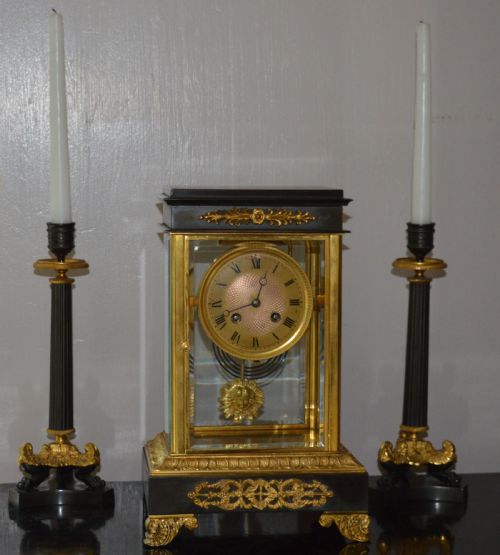
A french crystal regulator clock is a mantel timepiece housed in a glazed brass or ormolu case that reveals the movement from all sides. These pieces mostly date from the late nineteenth century, spanning periods from the 1870s through to the early decades of the twentieth century. They take various forms, including oval cases, bow-fronted designs, and traditional rectangular four-glass configurations.
The version you are most likely to meet on this page is a late nineteenth century brass-framed mantel clock with bevelled glass panes and a decorated enamel dial. Many of these examples incorporate painted enamel panels depicting floral scenes or classical motifs beneath the dial and around the pendulum bob. Some pieces also appear as part of a clock set accompanied by matching side ornaments.
Materials and construction methods
Makers built the structural frames of brass, gilt brass, ormolu, or gilt bronze, casting and chasing the metalwork to produce crisp architectural details. Heavy bevelled glass panels fitted snugly into the brass channels of the case to protect the delicate movement while allowing an unobstructed view of the interior.
The dials relied on white enamel painted with Arabic or Roman numerals, frequently complemented by polychrome enamel decorations on the centre face and the matching mercurial or spring-suspended pendulum bobs. Paste stones sometimes embellished the bezels of finer models to catch the light around the dial perimeter.
Some models feature painted pink or green enamel panels that match the colourful pendulum bobs swinging silently behind the glass.
Distinctions in craftsmanship and design
Quality separates standard production mantel pieces from exceptional horological examples through the weight of the cast bronze or ormolu frame and the crispness of the chased decoration. Superior models exhibit thick, heavy bevelled glass with accurately mitred corners and substantial brass pillars that support the entire structure without flex.
The refinement of the enamel dial and the painted panels also determines the grade of the piece, with hand-painted floral or figural details showing superior artistry compared to transfer-printed substitutes. Movement quality further distinguishes the makers, particularly when signed by established horologists whose escapements and striking trains maintain precise engineering standards.
Samuel Marti et Cie·L Epee France·Henry Marc Paris
The French Crystal Regulator Clock Glossary
- Crystal regulator
- A mantel clock housed in a glazed case with bevelled glass panes on four sides, designed to display the movement and pendulum.
- Ormolu
- Gilt bronze created by applying a mercury and gold amalgam to a bronze base, producing a rich golden finish characteristic of French luxury objects.
- Bevelled glass
- Glass panes with angled edges ground and polished to a specific slope, adding depth and catching light around the perimeter of the clock case.
- Enamel dial
- A metal dial face coated with fused glass powder and fired in a kiln, providing a durable white ground for painted numerals.
- Pendulum bob
- The weighted disk suspended at the lower end of the pendulum rod, often decorated with enamel or matching paintings in these clocks.
French Crystal Regulator Clock: Frequently Asked Questions
What is a french crystal regulator clock?
A french crystal regulator clock is a mantel timepiece enclosed within a brass and bevelled glass case that displays the internal mechanism from every angle. These decorative objects gained popularity in France during the late nineteenth century.
They sit on mantelpieces and tabletops, functioning as both accurate timekeepers and ornate decorative items. The design allows light to pass completely through the case, illuminating the swinging pendulum.
How do you wind these clocks?
These clocks utilise a dedicated winding key inserted directly into winding holes on the enamel dial face. The key tightens the mainsprings that power the timekeeping and striking trains.
Careful winding ensures the movement operates correctly without overwinding the internal springs. Most examples require attention once a week to maintain proper time.
Where were these clocks made?
These pieces were produced primarily in France by skilled horologists and bronze-founders working during the Victorian and Belle Epoque eras. Workshops in Paris and other manufacturing regions supplied these luxury goods internationally.
Many movements carry stamps or signatures from the specific firms that manufactured them. Names like Samuel Marti and Henry Marc appear on the mechanism plates of finer examples.
How do you style a crystal regulator clock?
Place the clock in a prominent position on a mantelpiece, console table, or desk where light can pass through the glass panels. Ensure the surface is level so the pendulum swings freely without catching on the sides.
Keep the piece away from direct sunlight and excessive moisture to protect the delicate enamel and gilt metal surfaces. Pair the clock with matching garniture sets or neutral decor to let the brass and glass frame stand out.