






Porcelain Bocage Figures
Porcelain bocage figures bring exuberant 18th-century theatre and pastoral charm into a room through elaborate flowering backgrounds.
Porcelain Bocage Figures
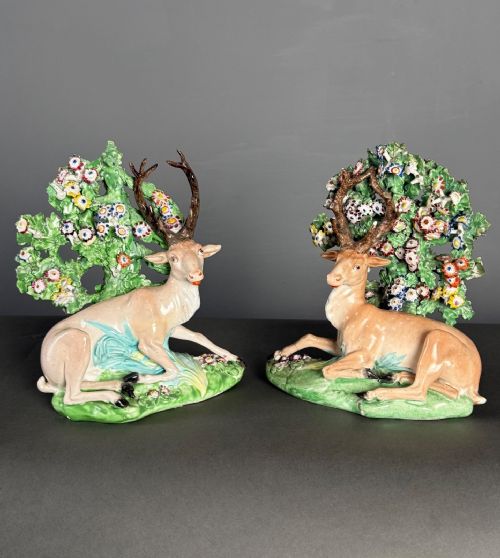
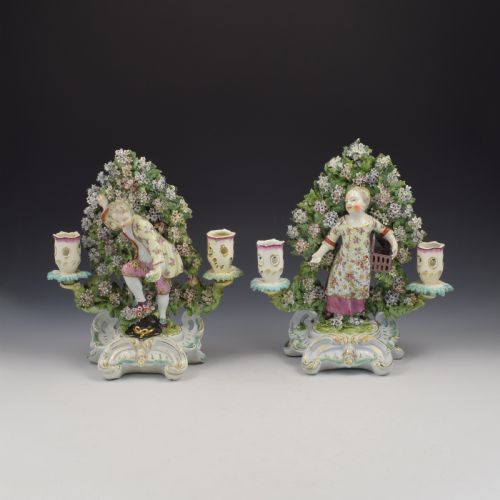
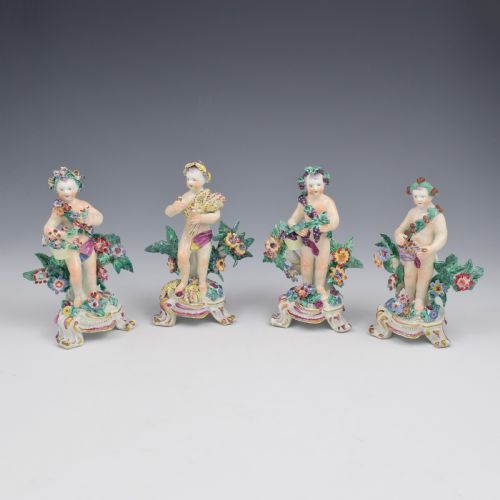
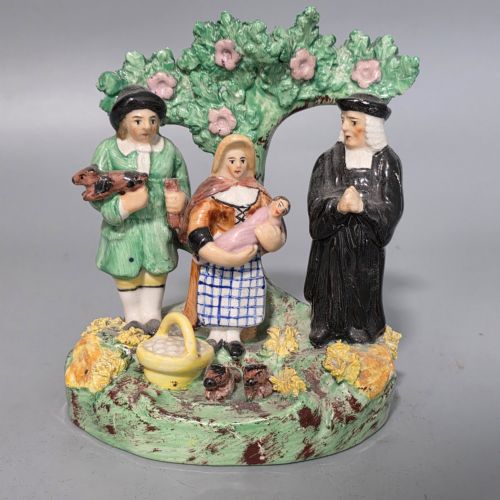
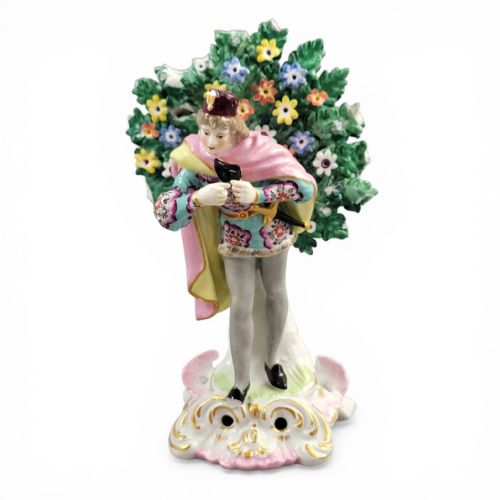
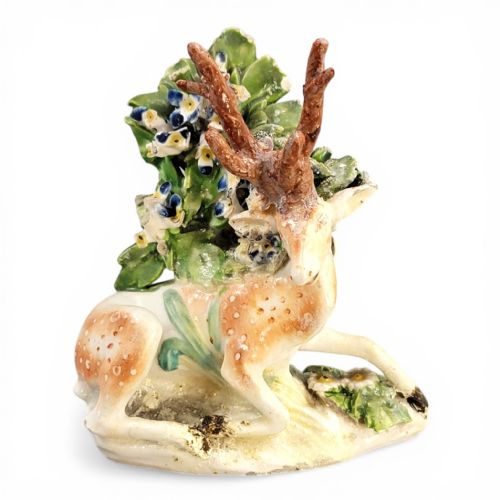
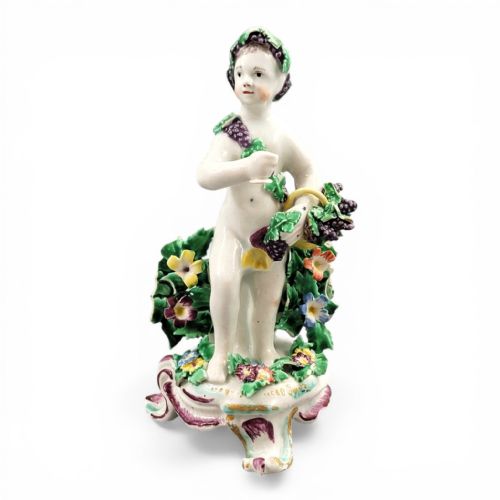
Porcelain bocage figures depict mythological characters, musicians, dancers, children, and animals nestled within dense thickets of leaves and blossoms. When you search for porcelain bocage figures, you encounter both foundational 18th-century English works from factories such as Derby, Bow, and Chelsea, and later 19th-century interpretations from Samson of Paris and continental makers.
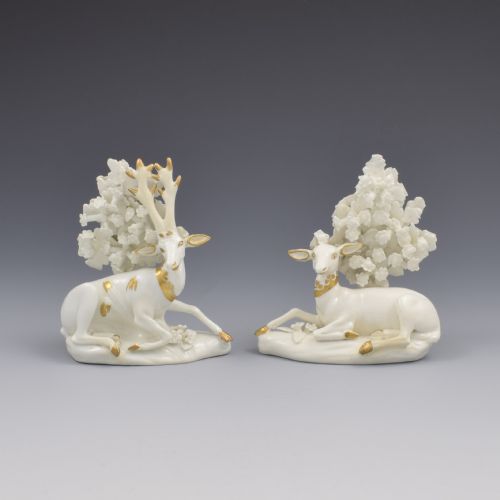
The forms span individual figurines, paired musicians, recumbent stags, spill vases, and multi-light candlesticks or candelabra. Eighteenth-century examples often employ soft-paste porcelain with hand-painted enamel decoration, while Victorian successors revive these pastoral scenes using hard-paste bodies and vibrant gilding.
Materials and Manufacture
Potters shaped these sculptural groups using clay bodies like soft-paste porcelain or earthenware, frequently pressing them into multi-part moulds. Artisans then hand-modelled individual leaves, petals, and branches of the leafy background separately before applying them to the main figure.
Colour came from hand-painted enamel pigments applied beneath or over the glaze, occasionally complemented by gold leaf or gilding. Firing such complex, delicate compositions required immense skill to prevent the sprawling porcelain foliage from slumping or cracking in the kiln.
Seated bagpipers, court hairdressers, and sheep populate these leafy thickets, proving that 18th-century porcelain makers enjoyed a wonderfully theatrical imagination.
Assessing Quality
The ambition of the composition also separates standard items from exceptional ones. Single figures sit at the simpler end, while complex pairs of candlesticks incorporating animals, musicians, and extensive scrolling bocage demand far greater technical mastery from the potter.
Derby·Bow·Chelsea·Edme Samson Paris·Meissen·Dresden
The Porcelain Bocage Figures Glossary
- Bocage
- An ornamental background of applied porcelain leaves, branches, and flowers that frames the central figures. This sculptural foliage mimics a sheltering forest canopy.
- Soft-Paste Porcelain
- An artificial ceramic body invented before true hard-paste porcelain, composed of clay, glass frit, and white sand. It yields a warm, slightly translucent texture under the glaze.
- Putto
- A plump, winged child figure frequently depicted in mythological or allegorical scenes. In these groups, putti often accompany musicians or gather grapes.
- Patch Mark
- A small unglazed scar on the underside of a porcelain piece left by the kiln support props during firing. These marks are characteristic of certain 18th-century English factories such as Derby.
- Gilding
- The application of gold leaf or gold paint to highlights, bases, and candle sockets. It adds a reflective finish to the pastoral designs.
Porcelain Bocage Figures: Frequently Asked Questions
What is a bocage figure?
A bocage figure is a ceramic sculpture surrounded by applied porcelain leaves and flowers. These botanical backgrounds frame human or animal subjects in pastoral settings.
Originating in European factories during the 18th century, these pieces translate theatrical and mythological scenes into decorative table ornaments.
How do I care for antique porcelain?
Keep these fragile items away from direct sunlight and areas subject to sudden temperature shifts. Dust them gently using a soft, dry brush rather than liquid cleaners.
Because the applied foliage and delicate limbs are vulnerable to knocks, place them on stable surfaces away from high-traffic zones.
What is soft-paste porcelain?
Soft-paste porcelain is an early artificial ceramic composition containing glass frit rather than hard kaolin clay. It has a distinctive warm appearance and softer glaze.
Many 18th-century English figures utilise this body, which reacts differently to light than later hard-paste German or French wares.
How do I distinguish 18th-century pieces from 19th-century copies?
Eighteenth-century examples typically show the lighter weight and characteristic glaze pooling of early soft-paste bodies. They often bear period patch marks or early anchor symbols.
Nineteenth-century revival pieces, such as those by Parisian makers, generally employ brighter gilding and harder porcelain pastes while imitating earlier styles.