
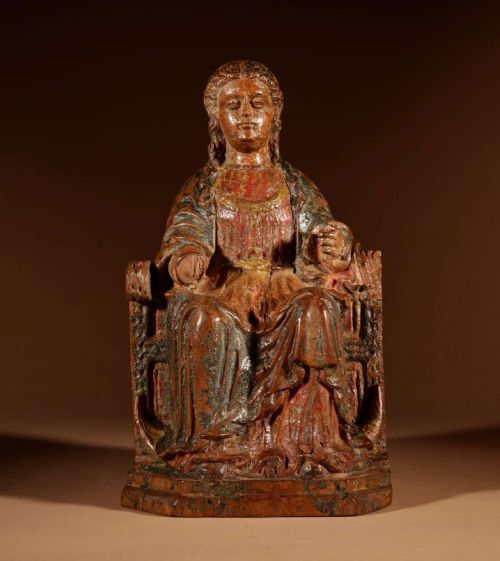
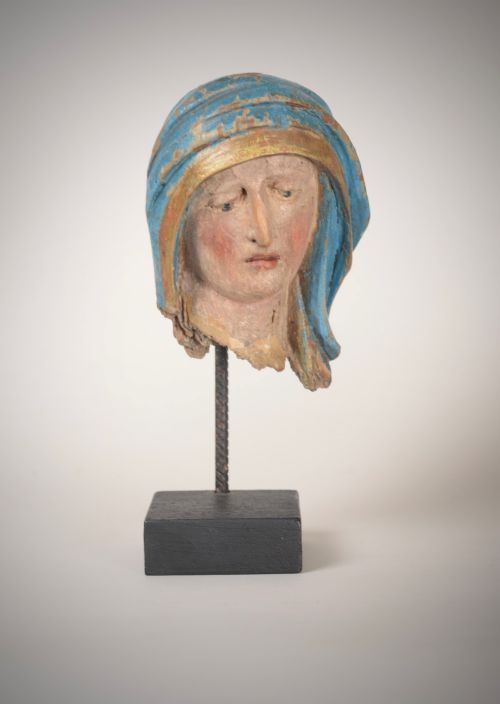
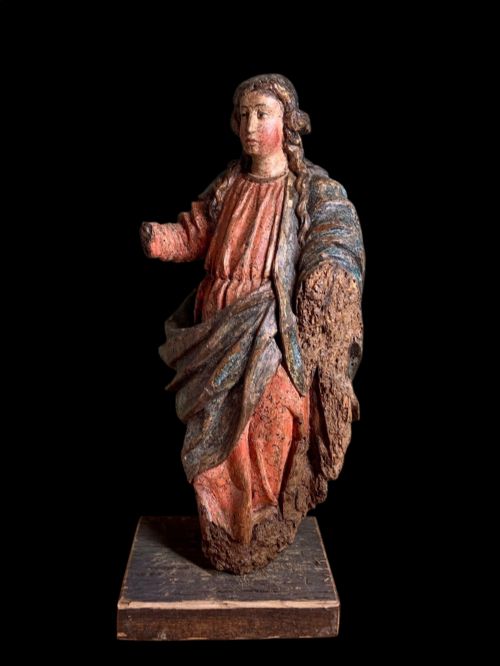
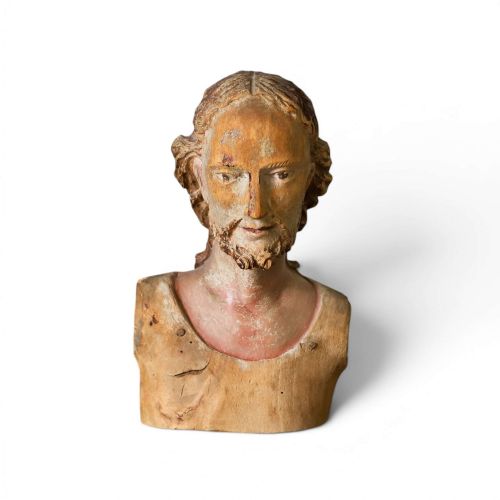


Polychrome Wooden Religious Figure
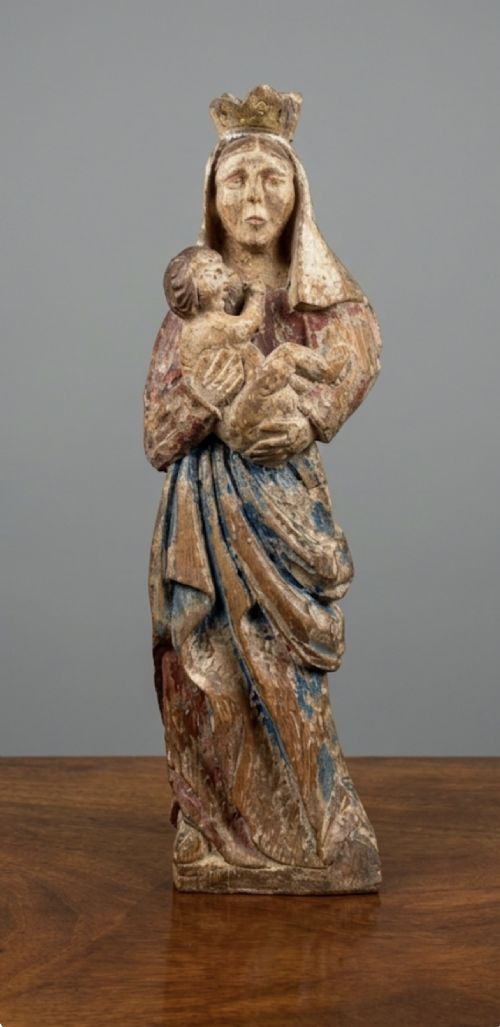
A polychrome wooden religious figure brings devotional presence into a room through centuries of layered pigment, gilt and carved timber.
Polychrome Wooden Religious Figure
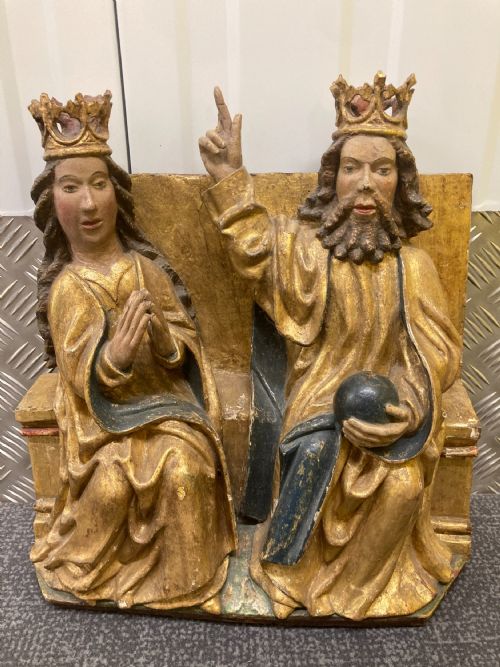
A polychrome wooden religious figure represents saints, angels, deities and biblical figures carved from timber and finished with painted surfaces. These works span domestic devotional objects to monumental temple guardians and church sculptures from European and Asian traditions.
The selection ranges from pre-sixteenth century medieval fragments and Renaissance Madonnas to Baroque processional figures and nineteenth-century temple deities. Walnut, pine, oak and lime wood frequently form the structural foundation of these pieces.
Regional styles emerge clearly across the grouping, moving from Spanish and Italian Baroque expressions to German giltwood saints and Chinese ritual figures. Buyers encounter both full-length statues and expressive busts or fragments originating from larger devotional groups.
Materials and construction
Application of gesso over the bare timber created a smooth preparation layer for polychrome pigment, paint and gold leaf. Artisans then applied rich colour palettes and metallic leaf to simulate garments, flesh tones and divine radiance.
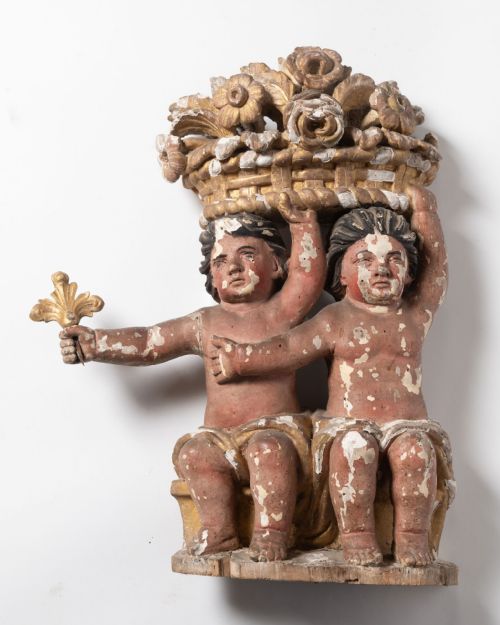
Several listings capture cherubic putto figures resting perpetually upon carved wooden clouds.
Assessing the craftsmanship
Quality rests in the anatomical precision of the carving and the vitality retained in the painted surface. Superior examples demonstrate confident chisel work in the rendering of hair, hands and fabric folds rather than rigid mechanical repetition.
The preservation of the original gesso, pigment and gold leaf directly influences the visual impact of a piece. Fine works maintain their layered chromatic depth, allowing the historical brushwork to define the character of the subject.
Bohumil Kafka
The Polychrome Wooden Religious Figure Glossary
- Polychrome
- Decorated in multiple colours. This term describes sculpture and woodcarving finished with paint, pigment or stain.
- Gesso
- A plaster mixture used as a base. It creates a smooth surface for painting and gilding on wooden carvings.
- Giltwood
- Timber coated with gold leaf. Artisans applied thin sheets of gold over gesso to highlight divine attributes.
- Capipote
- A Spanish devotional figure with a carved head and hands attached to a framework. These statues were traditionally dressed in real textiles for processions.
- Putto
- A figure of a small chubby child. Often depicted as a cherub in religious art, frequently found in pairs upon clouds.
Polychrome Wooden Religious Figure: Frequently Asked Questions
How were these figures originally displayed?
These sculptures stood upon church altars, inside household shrines or participated in outdoor religious processions.
Many larger works also functioned as architectural elements within temples and chapels before entering private collections.
How do I distinguish regional styles?
Spanish and Italian Baroque examples often display dramatic emotional intensity and rich drapery. German and Flemish pieces frequently utilise lime wood to achieve sharp, angular Gothic details.
Chinese temple figures exhibit distinct ritual iconography and traditional garment styling executed in high relief.
Are the painted surfaces original?
Many pieces retain their original layered gesso and pigment, though centuries of devotion often resulted in historical overpainting or touch-ups.
Close inspection under natural light reveals the relationship between the underlying wood grain and the uppermost decorative strata.
How should I care for a wooden sculpture?
Keep these pieces away from direct sunlight, heating vents and damp environments to protect the fragile timber and gesso layers.
Avoid chemical cleaning products and dust the surface gently with a dry, soft brush to preserve the historic pigment.