




Polychrome Wooden Blackamoor
A polychrome wooden blackamoor brings theatrical Venetian sculpture into a room, combining carved wood with vivid painted surface detail.
Polychrome Wooden Blackamoor
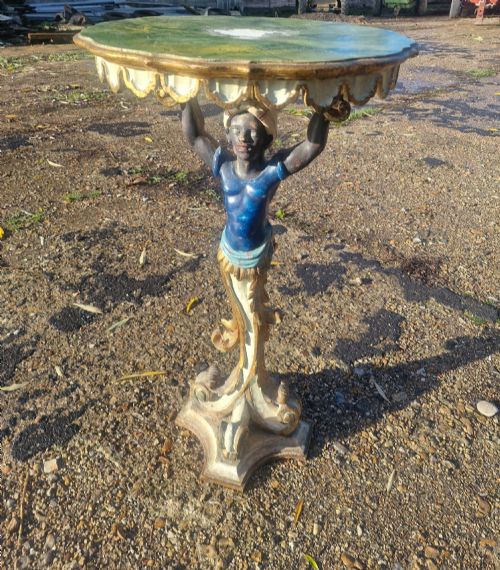
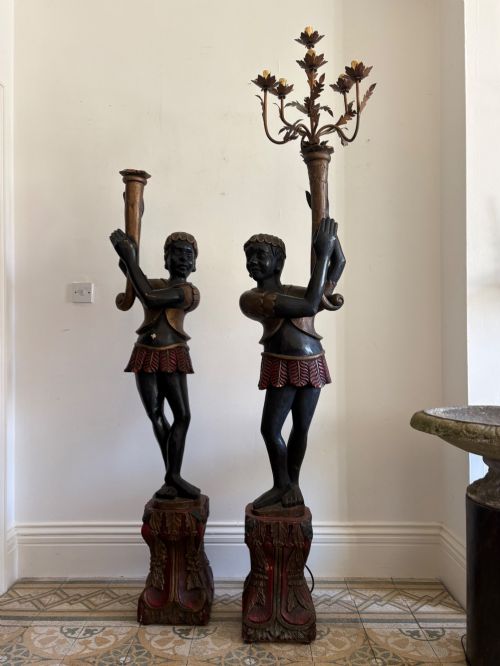
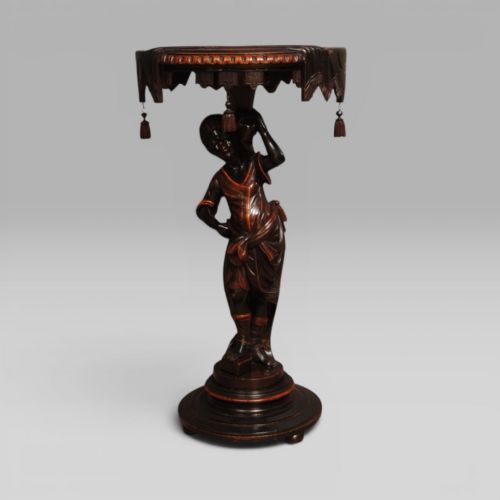
When you search for a polychrome wooden blackamoor, you encounter sculptural figures and functional furnishings rooted in Venetian design traditions. The selection comprises side tables, floor lamps, candelabras, waiter figures, and decorative statues.
Most examples date from the nineteenth century, with specific dates spanning from eighteen-fifty to nineteen-twenty. These pieces predominantly reflect Venetian Baroque and Venetian Rococo styles, often taking the form of figures on stands or pedestals.
Functional pieces combine sculptural carvings with utilitarian forms, such as tables and candelabras. Purely decorative statues and figures also appear frequently across the listings.
Materials and construction methods
Makers shaped these pieces from carved wood, applying gesso to prepare surfaces for subsequent decoration. Polychrome paint and gold leaf or giltwood finishes were then applied to create rich surface decoration and contrasting tones.
Original paint surfaces and parcel-gilt details distinguish the historical execution of these works. Glass elements occasionally supplement the wooden and painted components in specific forms.
Polychrome Wooden Blackamoor Retail Price Guide 2026
Typical asking prices for polychrome wooden blackamoor among the pieces listed under this phrase on Sellingantiques today, from the lower quarter to the upper quarter. They describe what is for sale here now, not the wider market.
Some figures double as waiters, holding out trays as if eternally prepared to serve tea.
Judging quality in carved wooden figures
Quality rests upon the crispness of the wood carving and the preservation of the original polychrome paint and gilding. Finer pieces retain their early surface decoration intact without extensive overpainting.
The Polychrome Wooden Blackamoor Glossary
- Polychrome
- Decorated in multiple colours. This term describes surfaces painted with various hues alongside gilding.
- Gesso
- A plaster mixture applied to wood surfaces. It provides a smooth base for subsequent painting and gilding.
- Giltwood
- Wood carved and covered with gold leaf or gilt. This finish appears frequently on Venetian decorative furnishings.
- Baroque
- An ornate artistic style originating in Italy. It influences many nineteenth-century Venetian revival pieces.
- Waiter
- A small tray or stand held by a figure. Several examples incorporate this functional feature.
Polychrome Wooden Blackamoor: Frequently Asked Questions
Where were these figures made?
The pieces originate primarily from Venice, reflecting local stylistic traditions.
Craftsmen produced them across the nineteenth and early twentieth centuries.
What functions do they serve?
Many examples function as side tables or supportive bases for bowls and trays.
Others operate as candelabras, floor lamps, or standalone decorative sculptures.
How do I identify original paint?
Original finishes show consistent wear and ageing beneath the polychrome and gold leaf.
Examination under magnification helps distinguish untouched surfaces from later overpainting.
Which styles predominate?
Venetian Baroque and Rococo revivals dominate the decorative vocabulary of these pieces.
Carvers utilised classical Italian motifs adapted for nineteenth-century interiors.