

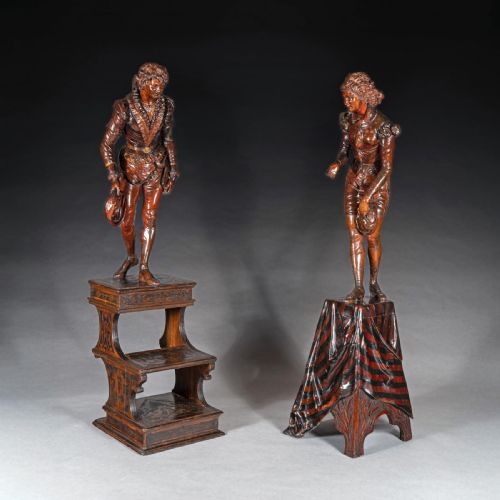


Decorative Pedestal Statue
A decorative pedestal statue brings dramatic form and height to a room, offering classical presence through carved wood, plaster, and painted timber.
Decorative Pedestal Statue
A decorative pedestal statue combines sculptural figures with structural stands, creating imposing focal points for interiors. The pieces on this page span the Victorian era, the nineteenth century, and the early twentieth century, reflecting grand historical revivals.
Most commonly, you encounter carved wood figures finished with polychrome paint and gold leaf, alongside faux marble pedestals and portrait busts. Venetian figures and classical representations dominate the forms available.
Originating largely from Italian and British workshops, these sculptures range from life-sized gondoliers and attendants to classical gentlemen and biblical rulers on stands.
How they were made
Makers shaped these decorative pedestal statue pieces primarily from carved timber, plaster, and gesso, employing traditional joinery and sculptural carving techniques. Artisans then applied layers of polychrome paint and gold leaf to achieve rich, textured surfaces.
Finishes include ebonised wood and faux marble effects, where painters laboriously mimicked stone or applied original pigments directly over the carved wood基.
Support elements like plinths and stands were constructed to bear the weight of heavy busts and figures while maintaining elaborate decorative vocabularies.
Materials recorded across the inventory include carved wood, gesso, gold leaf, glass, plaster, and polychrome paint.
What varies in quality
Survival of original gilt and polychrome paint significantly elevates an object's integrity. Pieces retaining their untouched nineteenth-century paint layers demonstrate superior historical authenticity compared to later or overpainted surfaces.
Valentino Besarel·John Wenlock Rollins
The Decorative Pedestal Statue Glossary
- Polychrome paint
- Decoration applied in several colours to wood or plaster surfaces. This technique adds vibrant realism to historical figures and architectural ornaments.
- Gesso
- A plaster-like mixture applied as a base for painting or gilding on wood. It provides a smooth, absorbent ground for gold leaf.
- Plinth
- A heavy base supporting a statue or bust. It raises the sculpture to eye level and anchors the decorative composition.
- Ebonised
- Timber finished to resemble ebony through dark staining or painting. This process was widely favoured in Victorian cabinetmaking for dramatic contrast.
- Gilt
- Covered thinly with gold leaf or gold paint. It reflects light and highlights carved details on pedestals and figures.
Decorative Pedestal Statue: Frequently Asked Questions
Where should I place a pedestal statue?
These pieces demand a prominent position where their height and three-dimensional form can be appreciated without obstruction. Hallways, corners of principal reception rooms, or landing spaces provide ideal architectural framing.
Ensure the floor is level and stable, as heavy wooden figures and plaster busts require secure foundations to prevent tipping.
How do I care for painted wood sculptures?
Dust surfaces gently with a soft, dry brush to prevent particulate accumulation in carved recesses. Avoid liquid cleaners, alcohol, or abrasive cloths, which strip fragile historic polychrome and gold leaf.
Keep pieces away from direct sunlight and radiators to prevent timber splitting and paint flaking.
What defines a faux marble pedestal?
A faux marble pedestal uses painted timber or plaster treated to imitate the veining and tonal variation of natural stone. Artisans built up layers of colour and glaze to trick the eye while reducing the immense weight of genuine marble.
These columns served as lighter, versatile display stands for portrait busts and smaller bronzes.
How do I distinguish Victorian pieces?
Victorian decorative sculpture often draws heavily on Neoclassical and Venetian Baroque revivals, using dark ebonised finishes, rich gilding, and expressive figural carving. The materials typically combine solid carved timber with applied gesso and detailed polychrome.
Look for nineteenth-century construction methods, hand-mixed pigments, and patination consistent with age.