


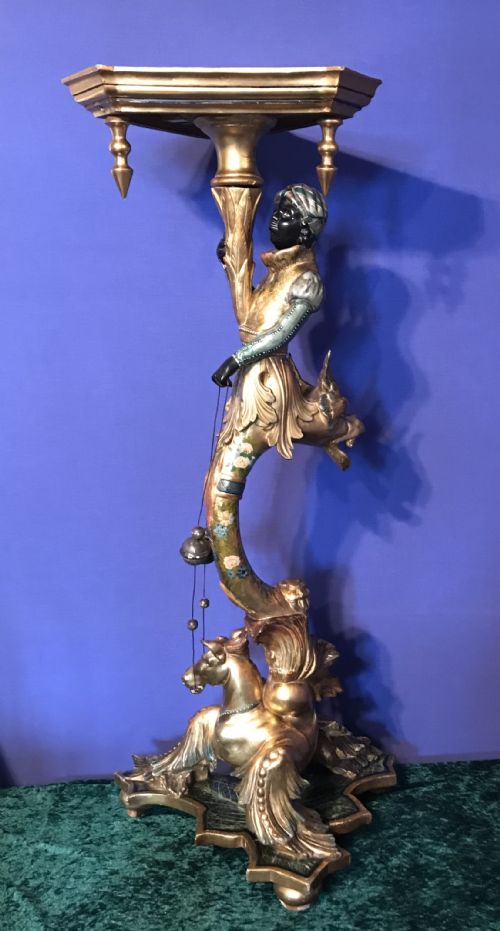


Venetian Torchere Figure
These striking venetian torchere figure works bring grand Italian coastal style to an interior, combining practical display space with dramatic sculptural presence.
Venetian Torchere Figure
A venetian torchere figure acts as both a sculptural stand and a functional surface, holding lights or plants within a room. Most examples found here date from the nineteenth century, ranging across Victorian and baroque revival interpretations.
The dominant forms are carved wooden figures of gondoliers or exotic figures supporting pedestals, tables, or trays. These pieces serve primarily as dramatic accent furniture rather than everyday utilitarian stands.
Materials and construction
Makers shaped these stands from carved wood, utilising walnut or softer timbers that accepted intricate detailing. Artisans then applied layers of gesso to build up the surfaces before adding polychrome paint and gold leaf.
Several figures hold out trays, effectively acting as silent, permanent hosts ready to receive visiting calling cards.
Judging quality and execution
The vitality of the carving sets the finest figures apart, distinguishing expressive anatomical work and detailed drapery from stiffer, more hurried production. Finer examples display subtle transitions in the polychrome paint and careful application of gold leaf.
Proportion and stance dictate the overall presence of the object, with superior pieces maintaining balance and stability despite complex cantilevered trays or torchere arms. The integrity of the underlying carved wood structure governs longevity.
The Venetian Torchere Figure Glossary
- Torchere
- A tall ornamental stand intended to carry a light or candle, evolving over time to support planters and decorative objects. These often take human form in Venetian furniture traditions.
- Giltwood
- Wood that has been treated with gold leaf or powder using a sizing adhesive. This finish provides the metallic highlights characteristic of Venetian baroque design.
- Gesso
- A plaster mixture applied to wood surfaces to create a smooth base for painting or gilding. It allows for sharp relief details in the final ornamentation.
- Parcel-gilt
- Partially gilded, leaving portions of the underlying wood or paint exposed for contrast. This technique accentuates specific carved details on the figures.
Venetian Torchere Figure: Frequently Asked Questions
What is a venetian torchere figure?
A venetian torchere figure is a carved wooden sculpture depicting a human figure, such as a gondolier, supporting a tray, pedestal, or light fitting. They combine sculptural art with functional display furniture.
Originating largely in nineteenth-century Italy, these pieces brought theatrical Venetian style into grand European drawing rooms and hallways.
How were these stands used originally?
In period interiors, these figures functioned as torch stands, plant holders, or small serving tables placed in reception rooms and entryways. Their primary purpose was visual display and theatrical illumination.
They stood against walls or in corners to catch the light from candles or oil lamps, illuminating the surrounding space.
How do I care for original polychrome paint?
Original painted surfaces require gentle dusting with a soft, dry cloth and protection from direct sunlight and moisture. Avoid all chemical cleaning agents that might lift the delicate gesso and pigment layers.
Maintaining a stable room temperature prevents the underlying wood from expanding and cracking the historic finish.
How can I tell nineteenth-century pieces apart?
Nineteenth-century pieces vary from mid-century Venetian works to later Victorian revival interpretations, showing shifts in carving depth and paint palette. Examining the wood type beneath the gesso helps determine the age of the structure.
Earlier examples often display more elaborate parcel-gilt detailing and dynamic postures compared to later production.