





19th Century Venetian Figure
A 19th century venetian figure brings dramatic Italian presence into a room, taking the form of elaborately dressed blackamoor stands, carved gondoliers, and bronze lions.
19th Century Venetian Figure
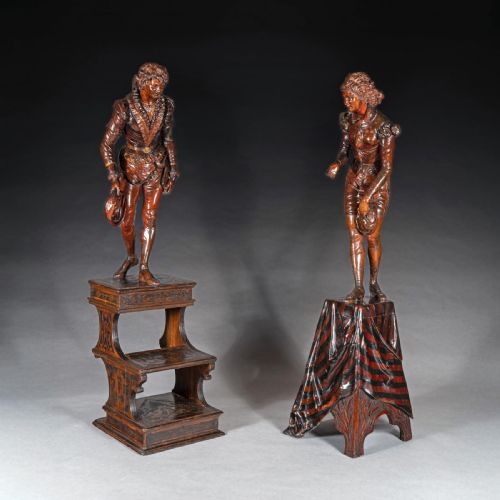
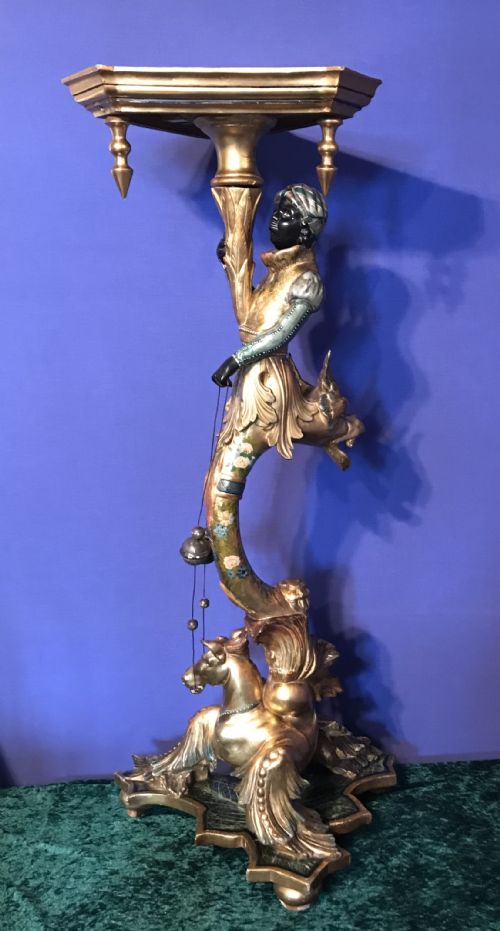
A 19th century venetian figure encompasses a striking range of decorative forms, most frequently appearing as carved wood blackamoor figures, torchere stands, and pedestals. Buyers encounter works rendered in styles spanning Venetian Baroque, Venetian Rococo, and Grand Tour classical revivals.
The objects serve functional as well as decorative roles within domestic spaces, frequently functioning as plant stands, floor lamps, or side tables. Sculptural depictions of winged lions, satyrs, and musicians also feature prominently among these Italian works.
How they were made
Carved wood forms the structural foundation for the majority of these pieces, utilising walnut and various softwoods shaped by hand. Artisans applied polychrome paint and gold leaf directly to the timber surfaces to achieve rich colour and ornate surface decoration.
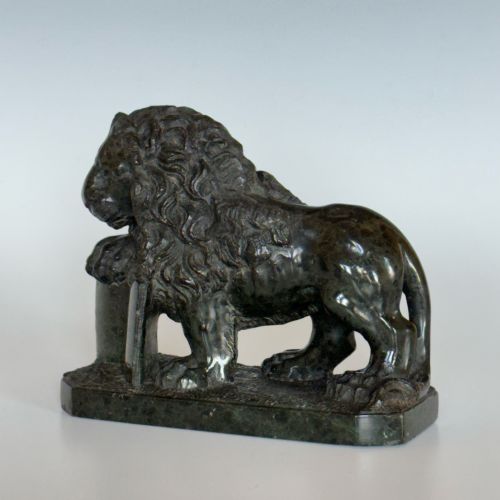
Bronze casting represents another principal method of production, particularly for Grand Tour statuary and architectural figures. Marble and serpentine materials additionally appear in specific sculptural works, shaped through stone-cutting and polishing techniques.
Certain horned satyr and devil figures occasionally emerge among the standard gondoliers and torchere stands.
What varies in quality
The preservation of original surface finishes dictates the visual integrity of painted and gilded examples. Pieces retaining untouched polychrome decoration and authentic gold leaf hold greater authority than heavily restored or repainted items.
Valentino Besarel
The 19th Century Venetian Figure Glossary
- Blackamoor
- A decorative sculptural figure often depicted in exotic costume, frequently utilised as a torchere, stand, or table base in 19th-century interiors. These figures typically display elaborate polychrome paint and gilding.
- Torchere
- A tall ornamental stand designed to support a light fixture, candle, or decorative object. In Venetian pieces, these stands often take human or mythological form.
- Polychrome
- Decorated in multiple colours, referring specifically to the painted surface treatments applied to carved wood sculptures. This technique enhances the theatricality of the figures.
- Grand Tour
- A cultural journey undertaken by wealthy Europeans in the 19th century, resulting in the acquisition of classical bronzes and marbles such as the Lion of Saint Mark.
- Giltwood
- Timber that has been coated with a thin layer of gold leaf or gold paint. It provides a luminous surface that catches the light in grand interiors.
19th Century Venetian Figure: Frequently Asked Questions
What rooms suit a 19th century venetian figure?
These pieces command attention in hallways, drawing rooms, and studies where their theatrical presence can anchor the space. Tall torchere stands and pedestals also function effectively to display plants or lamps.
Smaller bronze figures and table pieces integrate naturally onto sideboards or mantelpieces. Their rich colours and carved details complement both traditional period interiors and eclectic modern rooms.
How do I care for polychrome carved wood?
Protect wooden figures and stands by keeping them away from direct sunlight and steady heat sources that can dry out the timber. Dust the carved surfaces gently with a soft, dry cloth without applying modern chemical polishes.
Maintain stable indoor humidity to prevent the underlying wood from expanding or contracting. This protects both the structural joinery and the delicate layers of original paint and gold leaf.
What distinguishes Grand Tour bronzes?
Grand Tour bronzes relate directly to classical Italian antiquities collected by travellers during the 19th century. Subjects such as the Lion of Saint Mark reflect Venetian heritage and Renaissance sculpture.
These metal pieces contrast with the carved and painted wooden figures produced by local Venetian workshops during the same period. They demonstrate a distinct casting tradition focused on classical revival forms.
Are these figures functional or decorative?
Many examples were designed to serve a dual purpose within the wealthy Victorian home. Torchere stands and blackamoor figures frequently incorporate plant holders, trays, or lighting supports.
Other items exist purely as sculptural statuary or decorative table pieces. Even functional stands prioritize ornate visual impact over utilitarian simplicity.
How can I tell the period?
Dating relies on examining the construction methods of the wood, the characteristics of the bronze casting, and the composition of the paint layers. Nineteenth-century pieces often display hand-carved tool marks and authentic age patination.
Stylistic cues such as the specific interpretation of Venetian Baroque or Rococo revival aesthetics also help narrow the date. Comparing pieces against documented archive examples provides further chronological context.