


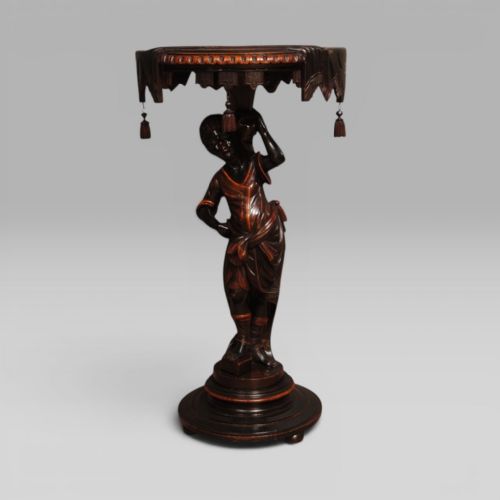


Antique Venetian Blackamoor
Antique Venetian blackamoor figures bring dramatic Italian theatricality into a room through carved and painted forms that serve as stands, torchieres, and tables.
Antique Venetian Blackamoor
When you search for antique Venetian blackamoor, you are looking at figurative wooden sculpture created in Italy, predominantly taking the form of stands, torchieres, side tables, and candelabras. These pieces function simultaneously as decorative sculpture and functional furniture, often depicting figures in ornate costume holding trays, lights, or pedestals.
The versions you are most likely to meet on this page date from the nineteenth century, including Victorian and Edwardian interpretations of Venetian Baroque and Rococo styles. They appear singly or as pairs, ranging from small table-standing figures to large floor-standing torchieres and plant stands.
How they were made
Carved wood forms the structural core of these pieces, utilising materials such as walnut alongside gesso layers prepared to receive decorative surfaces. Artisans shaped the timber into detailed human figures and supporting elements before applying polychrome paint and gilding.
Gold leaf and polychrome paint define the rich surface decoration characteristic of Venetian workshop traditions. Original paintwork and parcel-gilt finishes require careful handling during creation to achieve the striking contrast between dark skin tones and brightly coloured, gilded garments.
Materials recorded across the selection include carved wood, gesso, gold leaf, polychrome paint, cast brass, and glass.
What varies in quality
The preservation of original surface finishes dictates desirability, with intact polychrome paint and genuine gold leaf holding more aesthetic integrity than later repainting. Well-executed proportions in functional items like torchieres and tables ensure stability alongside sculptural presence.
The Antique Venetian Blackamoor Glossary
- Torchere
- A tall ornamental stand designed to support a lamp, candle, or decorative object. These stands often feature figural supports holding platforms or light fittings aloft.
- Polychrome
- Painted in several colours. This surface treatment brings vivid realism and decorative richness to carved wooden garments and accessories.
- Gesso
- A plaster-like mixture applied to wood surfaces as a base for paint or gold leaf. It provides a smooth ground that accepts fine detail and gilding.
- Giltwood
- Wood that has been coated with gold leaf or gold paint. This technique adds reflective warmth and luxury to structural elements and decorative frames.
- Parcel-gilt
- Partially gilded with gold leaf, leaving areas of painted wood or exposed material visible. This method creates visual contrast between gilded ornamentation and coloured surfaces.
Antique Venetian Blackamoor: Frequently Asked Questions
What is an antique Venetian blackamoor?
These pieces are carved wooden figural sculptures from Italy, typically created during the nineteenth century in Venetian styles.
They serve functional roles as tables, torchieres, plant stands, and candelabras while depicting ornate human figures.
How were these figures used originally?
Wealthy households utilised them in grand interiors as functional furniture and lighting supports, placing them in halls and reception rooms.
They held candles, serving trays, clam shell planters, or lamps while displaying dramatic theatrical presence.
How do I care for original painted wood?
Keep these pieces away from direct sunlight and fluctuating humidity to protect the delicate gesso and polychrome paint layers.
Dust gently with a dry, soft cloth and avoid liquid cleaners that might damage the historic surface finish.
How can I tell the period of a piece?
Examine the timber, the style of carving, and the composition of the underlying gesso beneath the paint layers.
Nineteenth-century examples often reflect Victorian or Edwardian revivals of Venetian Baroque and Rococo design aesthetics.