






Venetian Figure Pedestal
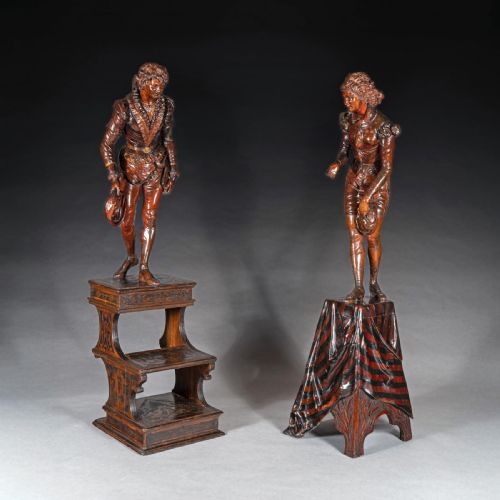
These carved Venetian figure pedestals bring sculptural presence and rich historical ornament to a room.
Venetian Figure Pedestal
A venetian figure pedestal combines functional display surfaces with carved figurative sculpture, typically taking the form of torchere stands, plant stands, or tables. Buyers seeking a venetian figure pedestal encounter nineteenth-century works ranging from grand Victorian interpretations to revival styles.
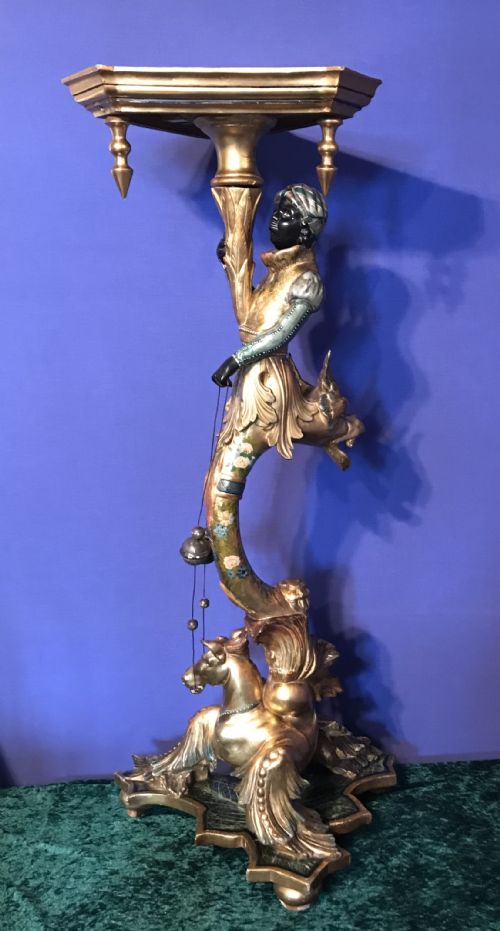
The sculptural forms frequently depict exotic figures such as blackamoors or gondoliers, holding aloft trays, torchere branches, or display platforms. These pieces bridge the gap between fine art sculpture and decorative furniture.
Most examples originate from Italian workshops operating during the nineteenth century, utilising traditional figurative motifs derived from Venetian Baroque and Rococo traditions. They function as dramatic focal points in entrance halls and principal reception rooms.
How they were made
Carved wood forms the primary structural foundation, utilising timber varieties such as walnut and ebonised wood shaped by skilled hands. Artisans applied intricate hand-carved details to capture the complex folds of garments and facial expressions.
Surface decoration relies heavily on polychrome paint and applied gold leaf to create rich, textured finishes. Original gilt polychrome schemes remain integral to authentic nineteenth-century examples, combining metallic lustre with vibrant pigments.
Carved gondoliers stand ready to pole phantom canals straight into your hallway.
What varies in quality
The refinement of the carving dictates the visual success of the piece, separating masterwork anatomy and drapery from mechanical execution. Superior examples display subtle facial modelling and energetic posture rather than stiff rigidity.
The preservation of original surface finishes determines collector value, particularly the survival of authentic polychrome paint and gold leaf without heavy overpainting. Original patination across the walnut or ebonised elements provides tangible evidence of age and handling.
Valentino Besarel
The Venetian Figure Pedestal Glossary
- Torchere
- A tall ornamental stand designed to support a light source or candelabrum. These stands evolved into decorative pedestals for plants and sculptures.
- Polychrome
- The practice of decorating architectural elements or sculptures in a variety of colours. This technique enhances the theatrical realism of nineteenth-century Italian figures.
- Giltwood
- Wood that has been treated with a thin layer of gold leaf or powder. This finish catches candlelight and ambient room illumination.
- Blackamoor
- A decorative art term describing European representations of figures from North or Sub-Saharan Africa, frequently rendered as servants or torch-bearers. These figures date predominantly from the seventeenth to the nineteenth centuries in Venetian design.
- Ebonised
- Wood finished with a dark stain or lacquer to imitate expensive ebony. This treatment provides a dramatic contrast against gilded details.
Venetian Figure Pedestal: Frequently Asked Questions
What rooms suit a venetian figure pedestal?
These sculptural stands suit grand entrance halls, libraries, or drawing rooms where they serve as independent focal points. They function effectively as plant stands or torchere displays.
Position them against plain walls to allow the carved polychrome details and gilded surfaces to register fully without visual competition from surrounding furniture.
How do I clean a painted wooden figure?
Dust these delicate surfaces gently using a soft, dry brush to prevent abrasive particles from damaging the historic paint layers. Avoid commercial chemical cleaners entirely.
Moisture can lift nineteenth-century gold leaf and flaking polychrome pigments, so professional conservation advice should be sought for any deeper cleaning.
Are these pedestals structurally stable for display?
Nineteenth-century stands are generally robust, but their carved wooden bases and slender uprights require careful placement away from heavy foot traffic. Uneven floors can cause tall torchere stands to wobble.
Ensure that heavy ceramic planters or bronze sculptures placed on top are balanced evenly to prevent tipping.
How can I tell nineteenth century pieces apart?
Examine the tooling marks beneath the base and the composition of the gesso beneath the gold leaf to assess period authenticity. Nineteenth-century Italian workshops relied on hand chisels and traditional animal glues.
Stylistic cues such as Venetian Baroque Revival details or naturalistic walnut grain help separate genuine nineteenth-century production from later reproductions.