

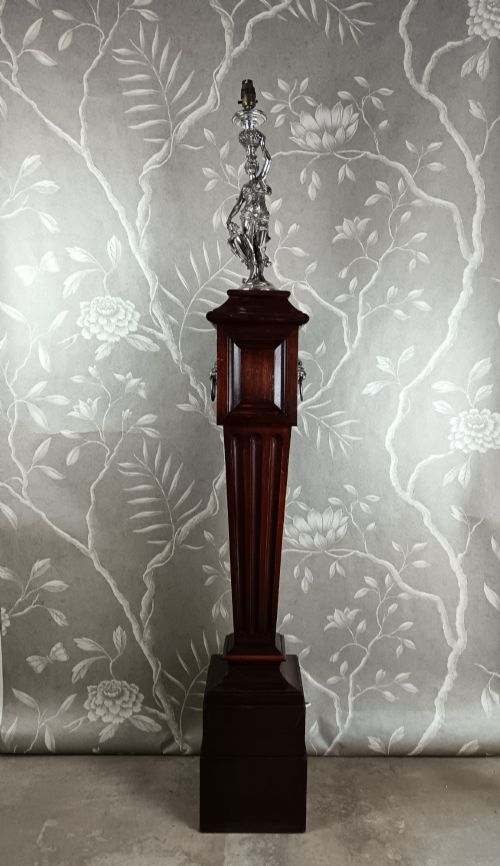


Antique Floor Statue
These antique floor statue pieces bring architectural presence and sculptural scale to a room, ranging from carved wooden figures to monumental bronze torcheres.
Antique Floor Statue
When you search for an antique floor statue, you encounter substantial works designed to occupy floor space rather than sit upon furniture. The selection on this page centres on large decorative figures, torcheres, and figural lamps that often incorporate integrated stands or pedestals. These pieces function simultaneously as sculpture and as practical furnishings such as lamps, plant stands, or butlers.
The materials span carved wood, heavy bronze, plaster, and marble, originating from diverse European and Asian traditions. Nineteenth-century examples dominate the selection, alongside items from the early twentieth century. You frequently encounter Venetian figures with polychrome paint, Blackamoor figures, and classical personifications such as libertas figures or muses.
Scale defines this category, with many pieces standing over a metre tall and demanding generous interior proportions. Some survive as matched pairs, while others exist as singular focal points with distinct regional characteristics, such as Swedish alabaster or Tibetan bronze temple lions.
Materials and Construction Methods
The production of these large figures relies heavily on traditional casting and carving techniques appropriate to the chosen medium. Bronze works employ the lost-wax casting method, often chased and finished with patination or gold leaf gilding. Wood figures receive hand-carved detailing before the application of polychrome paint and parcel-gilt highlights.
Plaster and alabaster pieces utilise skilled moulding or direct carving, frequently mounted onto dedicated pedestals to support their substantial weight. Metal components incorporate silver-plating or patination to achieve contrast, while electrical adaptations in later figural lamps integrate with the original sculptural metalwork.
A thirty-five-kilogram pair of Tibetan bronze temple lions keeps watch alongside a nineteenth-century court jester and an amiable bookworm.
Distinguishing Quality in Monumental Sculpture
The integrity of the structural support, whether an integrated wooden stand, a marble plinth, or a bronze base, dictates the stability and overall success of the piece. Maker signatures or foundry marks on bronze works elevate historical interest, while the crispness of detail in carved timber or cast metal separates workshop productions from mass output.
Humphrey Hopper·WMF·F. De Luca·Coutan
The Antique Floor Statue Glossary
- Torchere
- A tall ornamental stand or candelabrum designed to hold a light source or display an object. In these listings, they frequently combine figural sculpture with functional illumination.
- Polychrome
- Decorated in several colours. This surface treatment appears frequently on carved wooden figures and architectural ornaments to create lifelike garments and decorative patterns.
- Blackamoor
- A European artistic genre depicting figures from North or Sub-Saharan Africa, often rendered as decorative servants or torchere bearers. These pieces typically date from the nineteenth and early twentieth centuries.
- Caryatid
- A sculpted female figure serving as an architectural support taking the place of a column or a pillar. Pairs of these figures often support cornices or pedestals.
- Patination
- The surface coloration developed on metal or wood through age and chemical treatment. A well-preserved patination indicates genuine antiquity and careful preservation.
Antique Floor Statue: Frequently Asked Questions
How were antique floor statues originally used?
These large figures served primarily as decorative status symbols in grand interiors, often functioning as lighting supports or torchere stands in hallways and reception rooms. Some examples incorporated trays or surfaces to act as functional butler figures or plant stands.
Their substantial scale meant they were permanent fixtures of interior design rather than movable ornaments, often commissioned to match specific architectural schemes.
Can these figural lamps be used safely today?
Many pieces designed as torcheres or figural lamps have been adapted for modern electrical standards during their lifetime. It is standard practice to have older wiring inspected by a qualified electrician before daily use.
Retaining the original structural integrity while updating the electrical components allows these sculptures to function safely as ambient floor lighting.
How do I care for carved wood and polychrome surfaces?
Maintenance requires gentle dusting with a soft, dry brush and the avoidance of chemical polishes that can damage fragile nineteenth-century paint layers. Keeping pieces away from direct sunlight and stable humidity levels prevents the timber from splitting.
Original gilt and polychrome surfaces are delicate and should be handled minimally to preserve their historical integrity.
How do I distinguish nineteenth-century bronzes from later reproductions?
Nineteenth-century bronze figures exhibit crisp chasing work, heavy weight, and natural patination built up over decades. Foundry stamps, artist signatures, and the method of assembly provide key evidence for dating.
Older casts display a depth of detail and hand-finished nuances that modern reproductions fail to replicate accurately.