
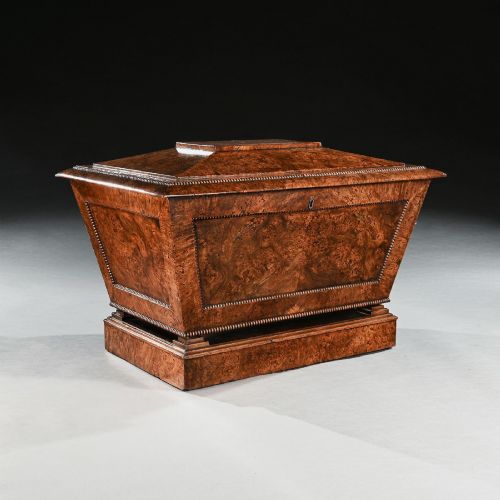


Pollard Oak Box
A pollard oak box brings deep, mottled grain and rich warmth into a room, offering a tactile piece of historic craftsmanship.
Pollard Oak Box
A pollard oak box is a storage piece defined by its distinctive timber, harvested from trees that were cut back to promote a dense, knotty head of growth. The resulting wood displays intense, swirling clusters of knots and eyes that catch the light differently from straight-grained timber.
On this page, pieces span the Georgian, Regency, and Victorian periods, alongside later Arts and Crafts examples, taking forms that range from small stationery chests to large cellarettes and work tables.
Makers utilised this striking veneer for functional luxury, creating travelling boxes, tea caddies, and writing slopes that were designed to sit prominently in a study or drawing room.
Materials and Construction
Craftsmen applied pollard oak as a decorative veneer over solid carcases of standard oak or ash, cutting the burr timber into thin sheets to display the complex grain patterns across lids and drawer fronts.
Many examples incorporate brass mounts, campaign handles, and lock escutplements, while interior fittings often include glass crystal decanters, fabric linings, or fitted compartments for writing implements.
Listings feature pieces spanning the Georgian, Regency, and Victorian eras, alongside Arts and Crafts examples using pollard oak, brass, and cut crystal.
Assessing Quality
The value and distinction of these pieces rest primarily on the density and symmetry of the burr figure in the grain, as well as the depth of the natural patina developed over the centuries.
Superior items retain their original brass hardware, fitted interiors, and glass liners without replacement, demonstrating crisp joinery that has survived structural movement in the timber.
Boothroyd Sons Rimmer
The Pollard Oak Box Glossary
- Pollard oak
- Timber taken from a tree that has been pollarded, resulting in a tightly knotted and highly decorative grain pattern. This distinctive figuring makes each veneered surface unique.
- Cellarette
- A lockable container used for storing bottles of wine or spirits, often lined and fitted for domestic dining rooms. Many 19th-century examples utilise robust timber frames to support heavy glass decanters.
- Writing slope
- A portable slant-topped desk opening to reveal a velvet or leather writing surface and compartments for ink and pens. These slope-front boxes were essential writing accessories for travellers and homeowners alike.
- Purdonium
- A specialised domestic box or scuttle designed to hold coal near a fireplace, frequently featuring a sloping front and a hinged lid. Victorian versions often combined utilitarian metal liners with decorative wood exteriors.
- Tantalus
- A locking beverage cabinet that holds decanters securely in a wooden frame while displaying the crystal through a visible metal bar. The mechanism prevents guests from accessing the contents without a key.
Pollard Oak Box: Frequently Asked Questions
What is a pollard oak box used for?
These boxes served various domestic purposes, from holding tea and documents to storing writing equipment, coal, or wine decanters.
Today, they function well as decorative desktop storage or statement accent pieces in traditional and contemporary interiors.
How do I care for pollard oak furniture?
Keep the timber away from direct heat sources and strong sunlight to prevent the veneer from drying out or lifting over time.
Apply a traditional beeswax polish sparingly to maintain the natural lustre and protect the historic patina of the grain.
How can I tell the period of a box?
Dating relies on examining the construction methods, interior fabrics, and hardware styles, such as Regency brass inlay or Victorian dovetailing.
Comparing the form and lock mechanisms against documented examples from the 18th and 19th centuries helps confirm the era of manufacture.
Are the interiors original?
Many surviving pieces retain their fitted compartments, glass liners, or fabric pads, though some writing slopes show replacements to the leather.
Inspect the interior fittings for signs of consistent wear that match the age and exterior condition of the outer wooden case.