




Edwardian Oak Caddy
These Edwardian oak caddy pieces combine heavy timber with bright metal mounts to hold your dry stores, papers, and drinks securely on the table.
Edwardian Oak Caddy
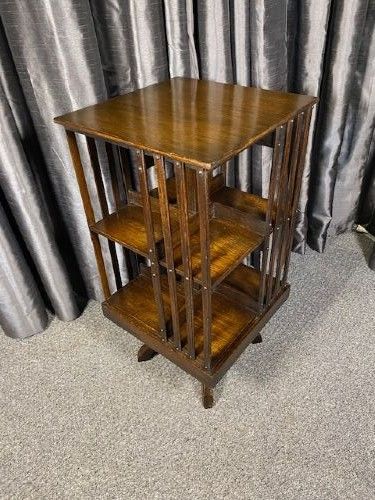
An Edwardian oak caddy brings robust timber construction to domestic storage, taking forms ranging from drinks tantalus cabinets and biscuit barrels to desktop revolving bookcases and desktop boxes. When you search for this phrase, you meet items spanning the Edwardian and Victorian eras, along with later variations reaching into the nineteen-thirties.
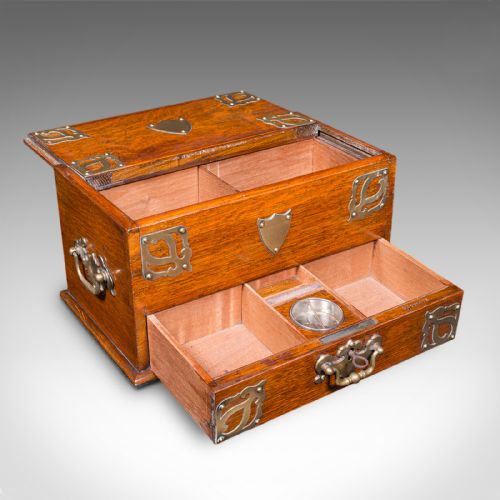
The practical domestic function of these objects dictates their shape, whether built as heavy-lidded boxes for tobacco and correspondence or fitted with cut glass decanters and silver plate. The selection here reflects both formal entertaining rooms and quieter studies, showing how British households managed dry goods and valued literature.
While the label caddy traditionally suggests small tea vessels, the pieces found under this heading frequently include larger tantalus frames, biscuit barrels, and humidor boxes built from the same sturdy timber. The material remains consistently solid, grounding domestic objects in a dense grain that survived generations of daily handling.
Construction and Materials
Makers built these pieces using solid oak, frequently augmented by pollard oak veneers or fitted interior compartments that demonstrate robust cabinetmaking traditions. The structural timber provides a heavy, durable shell designed to withstand constant opening and closing in busy household settings.
Silver plate and brass mounts reinforce the corners, secure the lids, and form locking mechanisms that kept valuable contents safe from unauthorized access. Cut glass decanters, mirror glass panels, and iron fittings appear across the surviving inventory to complete the functional hardware of each piece.
Quality Variations
The distinction between ordinary utility items and finer examples rests upon the precision of the joinery and the integration of metal mounts. Superior pieces display crisp carving, well-fitted hinges, and unblemished silver plate that retain their structural integrity over decades of use.
Material selection further defines the tier of an object, with figured pollard oak and heavy cast brass hardware marking out works intended for formal reception rooms. Lesser examples rely on simpler construction while maintaining the same fundamental utility and heavy timber frame.
John Grinsell & Sons
The Edwardian Oak Caddy Glossary
- Tantalus
- A locked frame holding decanters that displays the contents while preventing access without a key. The clever locking mechanism secures the stoppers firmly in place.
- Biscuit Barrel
- A container designed to keep baked goods fresh on the dining table. These vessels often feature silver plate mountings and ceramic or glass liners.
- Humidor
- A specialised box engineered to store cigars or tobacco at proper humidity. They frequently incorporate tight-fitting lids and metal linings.
- Pollard Oak
- Timber taken from trees pollarded to produce a dense, highly figured grain pattern. Cabinetmakers used these decorative veneers on prominent exterior surfaces.
- Silver Plate
- A thin layer of silver fused to a base metal substrate to provide a bright finish. It gives the appearance of solid silver at a lower production cost.
Edwardian Oak Caddy: Frequently Asked Questions
What is an Edwardian oak caddy?
These items are wooden storage pieces, including tantalus sets, biscuit barrels, and boxes made largely during the early twentieth century.
They combine heavy oak timber with metal mounts and glass to serve practical domestic storage needs.
How were these caddies used?
Households utilised them to lock away spirits, store tobacco, or keep biscuits and tea secure from servants and guests alike.
They sat on sideboards, desks, and club lounge tables as both functional items and decorative furnishings.
How do I tell Victorian from Edwardian pieces?
Victorian examples often feature heavier, darker timber and more ornate carving, reflecting mid to late nineteenth-century tastes.
Edwardian items tend to show lighter oak tones and cleaner lines influenced by Arts and Crafts or Art Nouveau aesthetics.
How do I care for oak and silver plate?
Keep the timber clean with gentle polishing and protect the surface from direct heat and moisture to prevent splitting.
Polish the silver plate sparingly with a soft cloth to maintain the shine without wearing through the thin metal layer.