
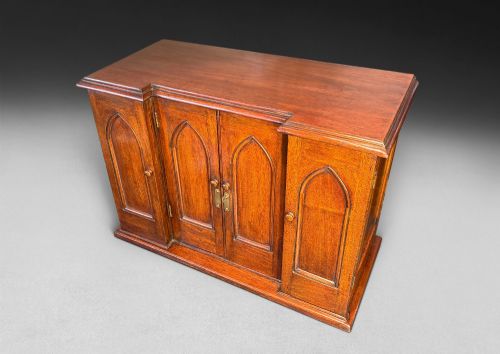
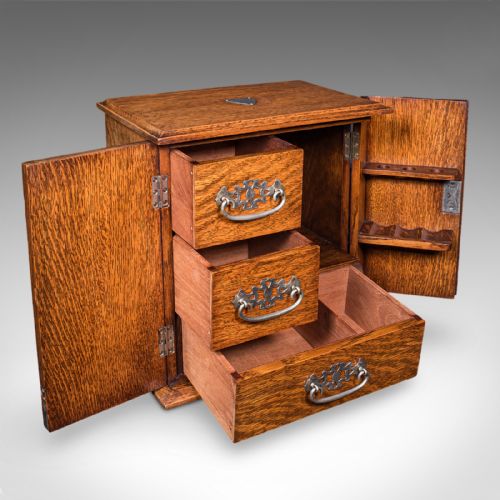


Carved Desktop Box
A carved desktop box holds papers, correspondence and small valuables close at hand, bringing genuine utility and rich texture to a study.
Carved Desktop Box
A carved desktop box encompasses small portable storage forms ranging from stationery boxes and letter racks to table cabinets and smoking cabinets intended for use on a desk or table.
The pieces seen on this page emerge from periods including the 18th century, Victorian era, Edwardian period and the 1930s, reflecting changing domestic habits across generations.
Materials and construction methods
Cabinetmakers utilised hardwoods such as oak, mahogany, walnut and pollard oak, often enhanced with brass mounts, glass panels and iron hardware.
Surface ornamentation relies on hand carving, bone inlay, holly stringing and floral inlays, demonstrating traditional joinery and decorative techniques.
Several boxes double as smoking cabinets, once dedicated to keeping fine tobacco and pipes safe from curious guests.
Distinctions in construction and detail
Quality rests in the precision of the joinery, the selection of figured timbers like burr walnut or pollard oak, and the crispness of the hand carving.
Superior examples feature fitted interiors, working locks with original keys, and harmonious proportions that balance decorative flourish with structural integrity.
Manoah Rhodes & Sons Ltd
The Carved Desktop Box Glossary
- Stationery box
- A desk accessory designed to hold writing paper, envelopes and correspondence upright in tiered compartments. These often feature sloping fall fronts or hinged lids.
- Table cabinet
- A miniature cabinet scaled to sit upon a desk, table or chest, typically fitted with internal drawers or shelves for small valuables.
- Stringing
- A narrow strip of contrasting wood inlaid into the surface of a piece to create decorative borders or geometric patterns. It appears frequently in Georgian and Victorian cabinetwork.
- Pollard oak
- Oak timber taken from trees that have been pollarded, producing a highly figured, knotted grain pattern prized for decorative veneering.
Carved Desktop Box: Frequently Asked Questions
What fits inside a carved desktop box?
These boxes accommodate letters, writing paper, stamps and small desk accessories within their compartmentalised interiors.
Larger table cabinets and watchmaker boxes house small tools, trinkets and collections of curiosities.
How do I maintain the wood surface?
Dust the exterior regularly with a soft, dry cloth to prevent the accumulation of grit in carved recesses.
Apply a traditional beeswax polish sparingly to nourish hardwoods like oak and mahogany, avoiding modern synthetic sprays.
Where should I place it?
Position the box on a sturdy desk, table or sideboard away from direct sunlight and strong heat sources that might dry the timber.
Ensure it rests safely out of reach of heavy foot traffic to protect delicate brass hardware and carved details.
How do I identify the period?
Examine the secondary woods, construction joints and overall style, such as Gothic Revival carving or Arts and Crafts simplicity.
Hardware types like brass hinges and locks often provide further clues to the date of manufacture.